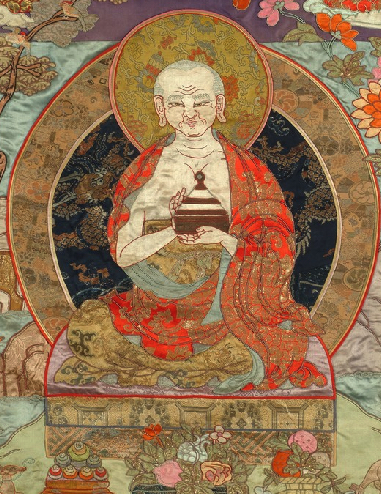
Ngok Lekpai Sherab
རྔོག་ལེགས་པའི་ཤེས་རབ་


Ngok Lekpai Sherab was a founding figure of the Kadam tradition and Tibetan Buddhist scholasticism. One of the "three heart sons" of Atiśa, along with Khuton and Dromton, his distinctive contribution was to provide the Kadam tradition with rigorous intellectual discipline combined with tantric practice. He was the founder, with his nephew Ngok Loden Sherab, of Sangpu Neutog Monastery. He was a master of pramāṇa and the guardian of Atiśa’s secret oral teachings, especially the Sixteen Drops. Many Tibetan historians and contemporary western publications have erroneously conflated him with Lochung Lekpai Sherab
... read more at 
Mentioned in
Introduction to the Traditions of Ngok and Tsen
Ostensen, Morten. "Introduction to the Traditions of Ngok and Tsen." Buddha-Nature: A Tsadra Foundation Initiative, February 28, 2020. https://buddhanature.tsadra.org/index.php/Articles/Introduction_to_the_Traditions_of_Ngok_and_Tsen.
Ostensen, Morten. "Introduction to the Traditions of Ngok and Tsen." Buddha-Nature: A Tsadra Foundation Initiative, February 28, 2020. https://buddhanature.tsadra.org/index.php/Articles/Introduction_to_the_Traditions_of_Ngok_and_Tsen.
Other names
- རྔོག་ལོ་ཆུང་ · other names (Tibetan)
- རྔོག་ལོ་ཙཱ་བ་ལེགས་པའི་ཤེས་རབ་ · other names (Tibetan)
- rngog lo chung · other names (Wylie)
- rngog lo tsA ba legs pa'i shes rab · other names (Wylie)
Affiliations & relations
- Uncle of rngog blo ldan shes rab · familial relation
- Kadam · religious affiliation
- gsang phu ne'u thog · primary professional affiliation
- Atīśa · teacher
- rin chen bzang po · teacher
- rngog blo ldan shes rab · student