Tibetan Art: Difference between revisions
((by SublimeText.Mediawiker)) |
((by SublimeText.Mediawiker)) |
||
| Line 37: | Line 37: | ||
<div class="bnw-resources"> | <div class="bnw-resources"> | ||
<div class="bnw-resource-item" id="bnw-resource-item-1">{{#evt:service=youtube|id=https://www.youtube.com/watch?v=mpzvUjR1S3s}}</div> | <div class="bnw-resource-item" id="bnw-resource-item-1">{{#evt:service=youtube|id=https://www.youtube.com/watch?v=mpzvUjR1S3s}}</div> | ||
<div class="bnw-resource-item" id="bnw-resource-item- | <div class="bnw-resource-item" id="bnw-resource-item-2">{{#evt:service=youtube|id=https://www.youtube.com/watch?v=IPKAJX-HnTo}}</div> | ||
</div> | </div> | ||
Revision as of 11:09, 24 October 2017
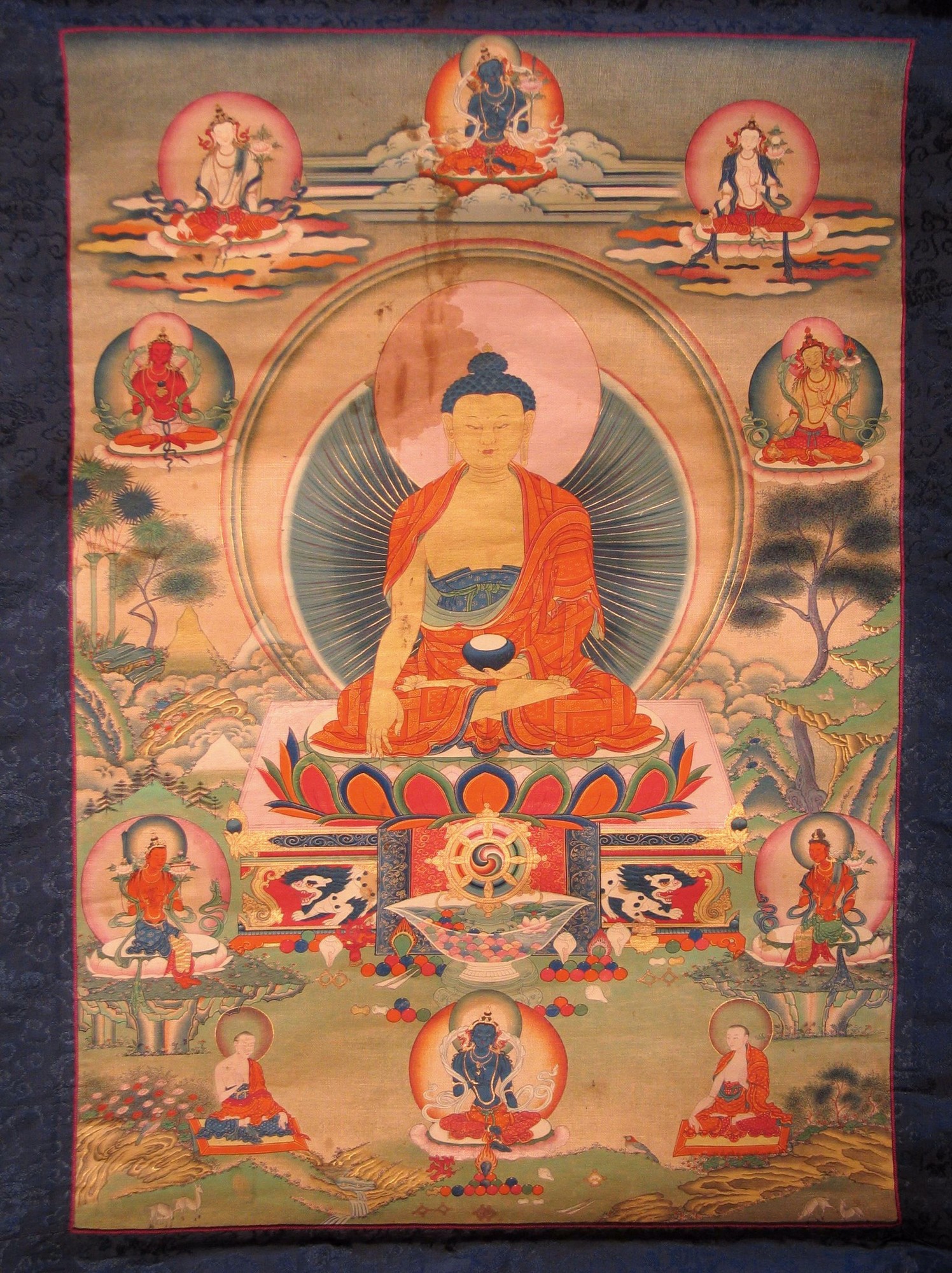
An excellent example of recently updated content available from Himalayan Art Resources is the Bodhisattva image page and associated Eight Great Bodhisattvas subject page, which provides a wealth of information about one of the most common images of Himalayan Buddhism.

The Rubin Museum has a set of fascinating interactive online art with useful descriptions and videos. Take, for example, the educational resource connected with the "All-Knowing Buddha Vairochana" exhibit:
Explore cultural connections by clicking on sections of a traditional Tibetan image and learning about what each piece means — you can even listen to examples of the musical instruments depicted in the image.