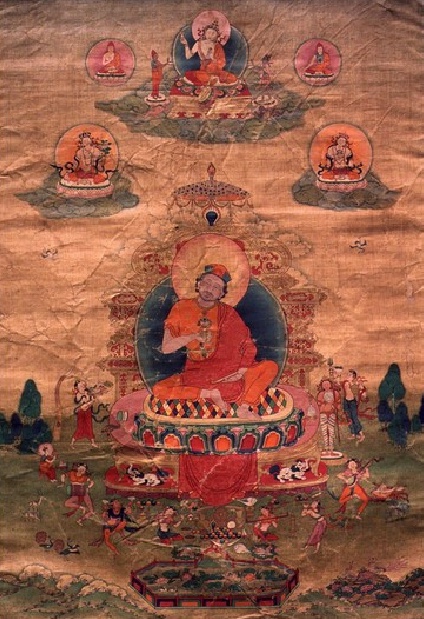
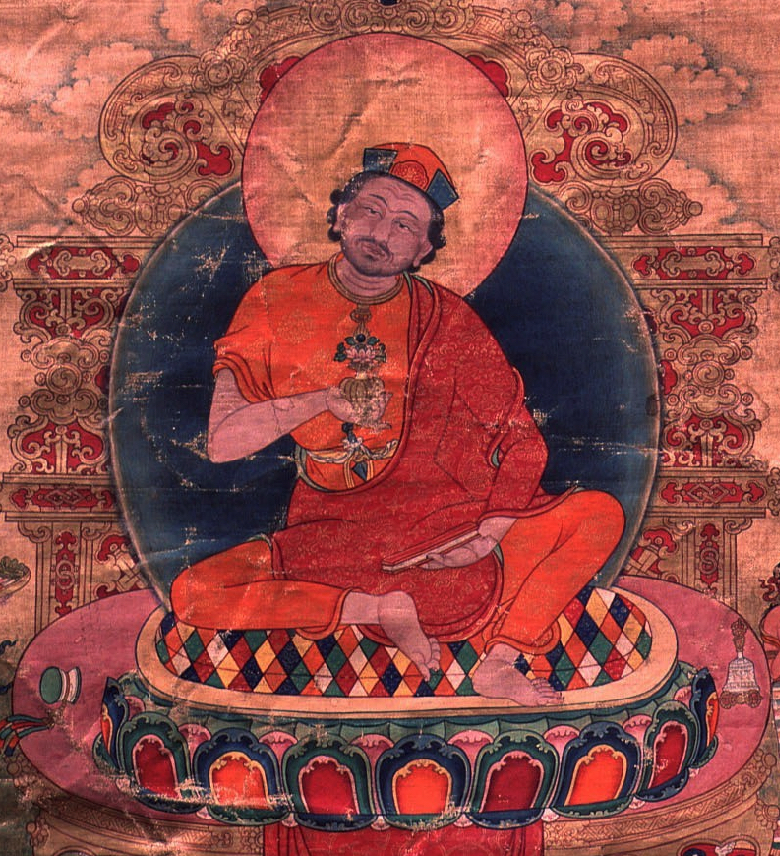
Tsewang Norbu later received the entire Jonangpa tradition's teachings from Drubchen Kunzang Wangpo (grub chen kun bzang dbang po, seventeenth century), and he is credited with bringing about a renaissance of the teachings, particularly of the Jonangzhentong, or “other emptiness” view (gzhan stong). Tsewang Norbu had first attempted to meet with Kunzang Wangpo in 1726, while en route to Nepal, but was unable to do so. When he returned to Tibet the following year, the two met, and Tsewang Norbu received the extensive transmission at the hermitage Genden Khacho (dga' ldan mkha' chos) in Tsang, which was named Rulak Drepung (ru lag 'bras spung) prior to its forced conversion to Geluk. Tsewang Norbu transmitted the Jonang teachings to many Kagyu and Nyingma lamas, most importantly to the Eighth Tai Situ, Chokyi Gyeltsen (ta'i si tu 08 chos kyi 'byung gnas, c.1699-1774), with whom he spent time at the Swayambhunath Stupa in Kathmandu in 1748. ... read more at
Mentioned in
Article
Introduction to Other-Emptiness and the Great Middle Way
Jonang - The Jonang tradition was established by Dölpopa Sherab Gyaltsen, a thirteenth-century Sakya monk famous for his Zhentong teachings. The Jonang teachings and monasteries were suppressed in Tibet in the seventeenth century but survived in Amdo. Tib. ཇོ་ནང་
gzhan stong - The state of being devoid of that which is wholly different rather than being void of its own nature. The term is generally used to refer to the ultimate, or buddha-nature, being empty of other phenomena such as adventitious defiling emotions but not empty of its true nature. Tib. གཞན་སྟོང་
gzhan stong - The state of being devoid of that which is wholly different rather than being void of its own nature. The term is generally used to refer to the ultimate, or buddha-nature, being empty of other phenomena such as adventitious defiling emotions but not empty of its true nature. Tib. གཞན་སྟོང་
gzhan stong - The state of being devoid of that which is wholly different rather than being void of its own nature. The term is generally used to refer to the ultimate, or buddha-nature, being empty of other phenomena such as adventitious defiling emotions but not empty of its true nature. Tib. གཞན་སྟོང་
gzhan stong - The state of being devoid of that which is wholly different rather than being void of its own nature. The term is generally used to refer to the ultimate, or buddha-nature, being empty of other phenomena such as adventitious defiling emotions but not empty of its true nature. Tib. གཞན་སྟོང་
Geluk - The Geluk tradition traces its origin to Tsongkhapa, who propagated a modified version of the Kadampa lojong and lamrim teachings. It is the dominant tradition of Tibet, having established its control of the government under the figure of the Dalai Lama. Tib. དགེ་ལུགས་
Kagyu - The Kagyu school traces its origin to the eleventh-century translator Marpa, who studied in India with Nāropa. Marpa's student Milarepa trained Gampopa, who founded the first monastery of the Kagyu order. As many as twelve subtraditions grew out from there, the best known being the Karma Kagyu, the Drikung, and the Drukpa. Tib. བཀའ་བརྒྱུད་
Nyingma - The Nyingma, which is often described as the oldest tradition of Tibetan Buddhism, traces its origin to Padmasambhava, who is said to have visited Tibet in the eighth century. Tib. རྙིང་མ་
gzhan stong - The state of being devoid of that which is wholly different rather than being void of its own nature. The term is generally used to refer to the ultimate, or buddha-nature, being empty of other phenomena such as adventitious defiling emotions but not empty of its true nature. Tib. གཞན་སྟོང་
gzhan stong - The state of being devoid of that which is wholly different rather than being void of its own nature. The term is generally used to refer to the ultimate, or buddha-nature, being empty of other phenomena such as adventitious defiling emotions but not empty of its true nature. Tib. གཞན་སྟོང་
Uttaratantra - The Ultimate Continuum, or Gyü Lama, is often used as a short title in the Tibetan tradition for the key source text of buddha-nature teachings called the Ratnagotravibhāga of Maitreya/Asaṅga, also known as the Mahāyānottaratantraśāstra. Skt. उत्तरतन्त्र Tib. རྒྱུད་བླ་མ་ Ch. 寶性論