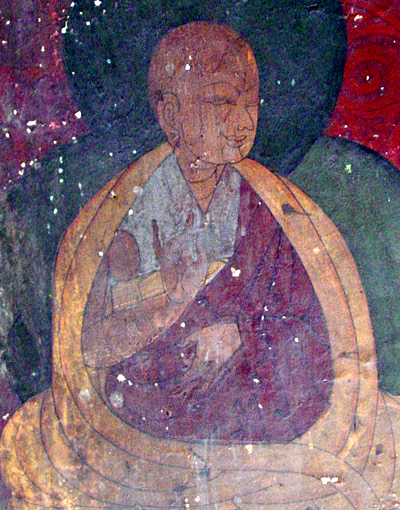
Kyotön Mönlam Tsultrim was born into the Kyo (skyod) clan at a place named Tanakyang (rta nag yang), in U (dbus), in 1219, the earth-rabbit year of fourteenth sexagenary cycle.
He studied the complete Kadam traditions under the guidance of the sixth abbot, Sanggye Gompa Sengge Kyab (sangs rgyas sgom pa seng ge skyabs, 1179-1250) and the seventh abbot of Nartang Monastery (snar thang dgon), Chim Namkha Drak (mchims nam mkha’ grags, 1210-1285).

Mentioned in
Introduction to Mahāmudrā and Buddha-Nature
Ostensen, Morten. "Introduction to Mahāmudrā and Buddha-Nature." Buddha-Nature: A Tsadra Foundation Initiative, August 23, 2019. https://buddhanature.tsadra.org/index.php/Articles/Introduction_to_Mah%C4%81mudr%C4%81_and_Buddha-Nature.
Ostensen, Morten. "Introduction to Mahāmudrā and Buddha-Nature." Buddha-Nature: A Tsadra Foundation Initiative, August 23, 2019. https://buddhanature.tsadra.org/index.php/Articles/Introduction_to_Mah%C4%81mudr%C4%81_and_Buddha-Nature.
A History of Buddha-Nature Theory: The Literature and Traditions
A lengthy historical survey of buddha-nature theory through the literature and traditions, based on academic scholarship.
Gardner, Alex. "A History of Buddha-Nature Theory: The Literature and Traditions." Buddha-Nature: A Tsadra Foundation Initiative, October 9, 2019. https://buddhanature.tsadra.org/index.php/Articles/A_History_of_Buddha-Nature_Theory:_The_Literature_and_Traditions.