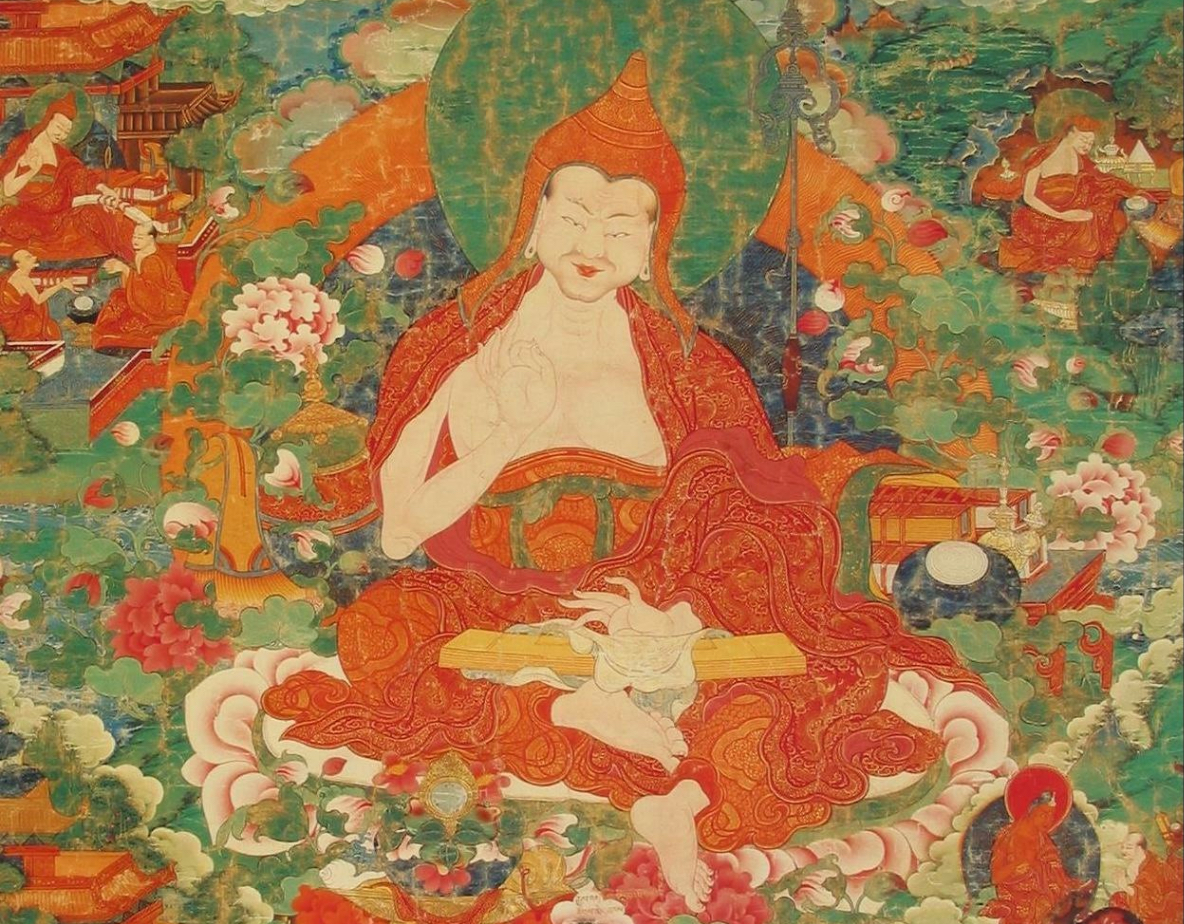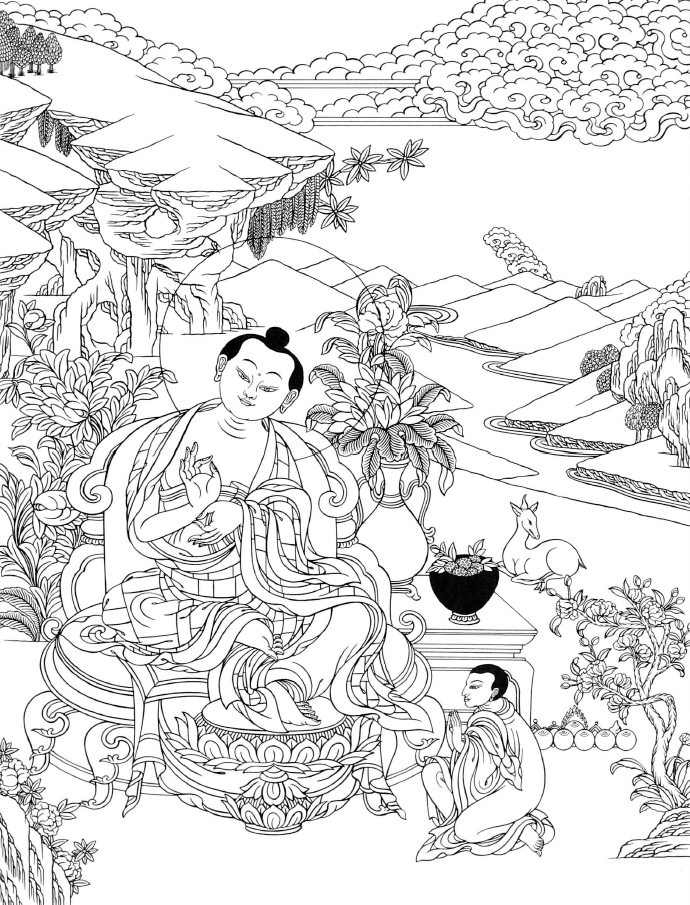
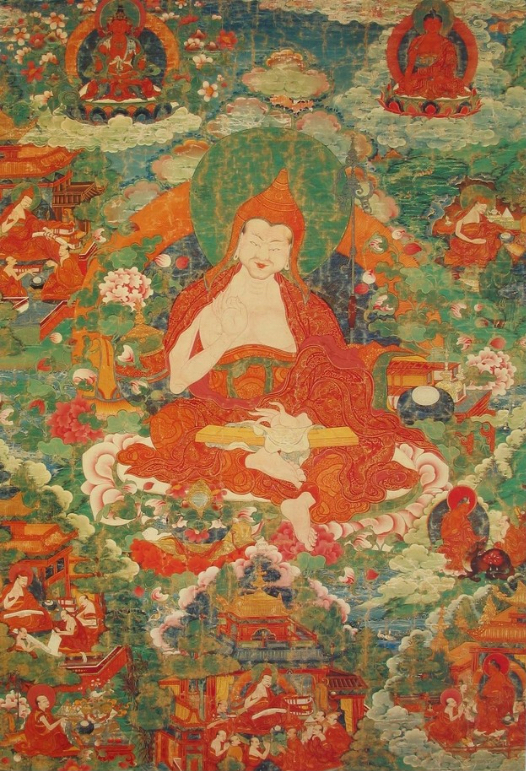
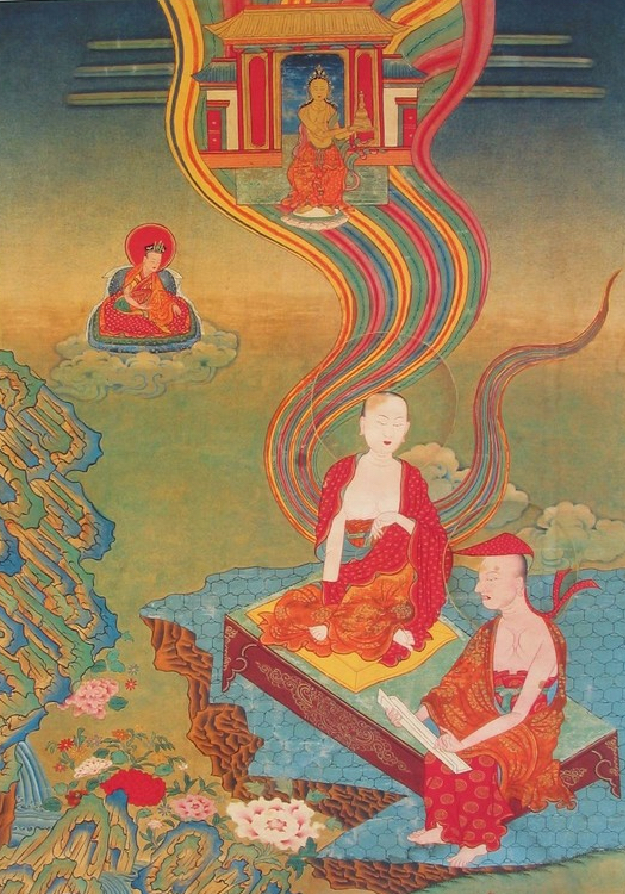

Traditionally counted among the Seventeen Great Paṇḍitas of Nālandā, Asaṅga was an illustrious Indian scholar who, along with his brother Vasubandhu, is credited with the founding of the Yogācāra school and the introduction of the associated theories of mind-only (cittamātra), the storehouse consciousness (ālayavijñāna), the three natures (trisvabhāva), and so forth, into the milieu of Indian Buddhist philosophical discourse. He is most famously eulogized in the Tibetan tradition for his association with the Five Dharma Treatises of Maitreya (Byams chos sde lnga), which he is reported to have received directly from the bodhisattva Maitreya. In terms of the Uttaratantra, the Tibetan tradition, which divides the text into two distinct works, asserts that Asaṅga was the author of the prose commentary (vyākhyā) of this work, while Maitreya, himself, is the author of the actual verses of the treatise (śāstra).
Mentioned in
The Seven Vajra Topics
The Ratnagotravibhāga is divided into five chapters. However, the treatise itself is based around the explanation of seven topics or subjects, known as the seven vajrapada. These seven are the buddha, dharma, sangha, the element (dhātu), enlightenment (bodhi), enlightened qualities (guṇa), and enlightened activities (karman). The first four are discussed in the first chapter and the following three are discussed consecutively in the second, third and fourth chapters, respectively. The treatise also mentions specific sūtras that are the sources upon which the explanation of each of the seven are based. Some of these sūtras cover more than one topic, but only the Dhāraṇīśvararājasūtra is stated to cover all seven vajrapadas. Below you will find information on these seven, including their sūtra sources and how they have been addressed in relation to the Ratnagotravibhāga.
Other-Emptiness and the Great Middle Way
The philosophical concept of other-emptiness (zhentong) has long since been a lightning rod for controversy on the Tibetan plateau. Some of its most ardent supporters have had their works banned, yet it not only endured, but gained the support of prominent adherents of almost every one of the major Tibetan schools. Its roots are intertwined with the concept of buddha-nature, though in particular it was via the so-called meditative tradition of exegesis of the Ratnagotravibhāga associated with Tsen Khawoche that zhentong's origins are traced. So much so that the label zhentongpa has been retroactively applied to various figures in this lineage that actually predate its usage—individuals that may have never heard the term, let alone utilized it in their own compositions...
Other names
- སློབ་དཔོན་ཐོགས་མེད་ · other names (Tibetan)
- slob dpon thogs med · other names (Wylie)
- Āryāsaṅga · other names
Affiliations & relations
- Vasubandhu · familial relation
- Yogācāra · religious affiliation
- Cittamātra · religious affiliation
- Vijñānavāda · religious affiliation