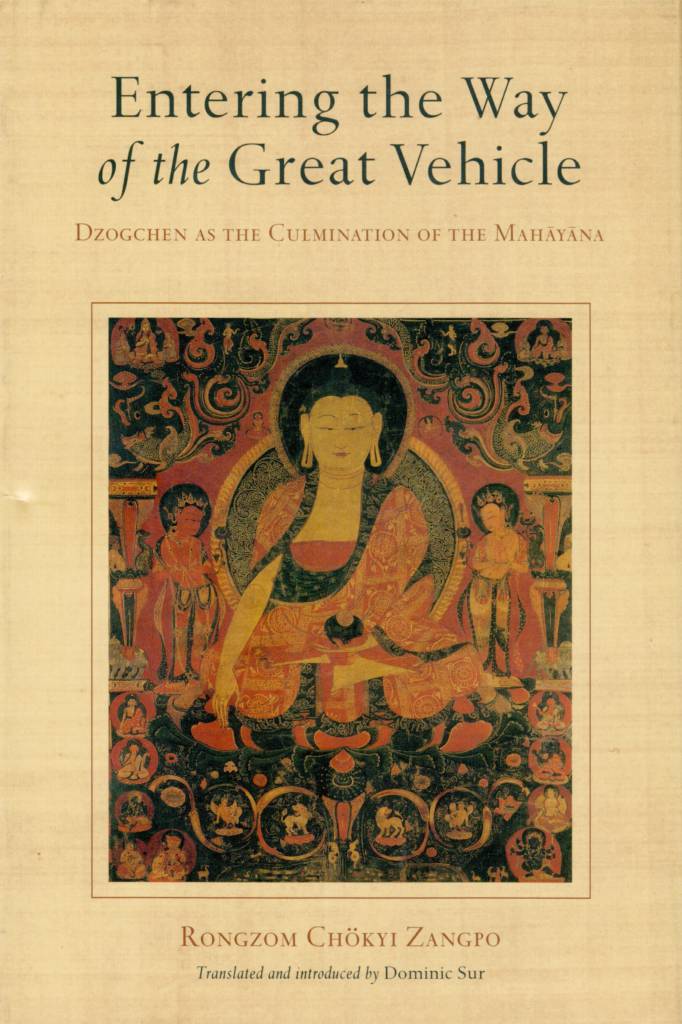
Entering the Way of the Great Vehicle

From Buddha-Nature
LibraryBooksEntering the Way of the Great Vehicle
< Books
(Created page with "{{Book |BookPerson={{Book-person |PersonPage=Sur, D. |PersonName=Dominic Sur }} |FullTextRead=No |AddRelatedTab=No }}")
 
No edit summary
Line 5: Line 5:
}}
}}
|FullTextRead=No
|FullTextRead=No
|BookToc=* {{i|Acknowledgments|ix}}
* {{i|Translator s Introduction|i}}
** {{i|The Audacity of Rongzom’s Work|i}}
** {{i|The Context for Rongzom’s Work|2}}
** {{i|The Story of Rongzom s Life|6}}
** {{i|Rongzompa’s Entering the Way of the Great Vehicle|8}}
*** {{i|Summary of Chapter 1|12}}
*** {{i|Summary of Chapter 2|15}}
*** {{i|Summary of Chapter 3|19}}
*** {{i|Summary of Chapter 4|22}}
*** {{i|Summary of Chapter 5|26}}
*** {{i|Summary of Chapter 6|31}}
** {{i|On the English Translation|34}}
The Commentarial Treatise EntitledEntering the Way
ofthe (freat Vehicle by Rongzom Chökyi Zangpo
i. The Reality ofAffliction 3 9
The Srävaka System 3 9
The Pratyekabuddha System 42
The Yogäcära System 42
The Madhyamaka System 44
The Madhyamaka and Guhyamantra Systems 5 3
Conclusion 56
2. Objections and Replies 59
First Objection: Concerning the Reality of Illusions 59
Second Objection: Concerning the Reality of Causality 63
Third Objection: Concerning the Reality of Pure Phenomena 66
Fourth Objection: Concerning the Reality of Samsara 79
3.Distinguishing the Perfected System of the Illusory in the
Great Perfection from the Other Vehicles That Retain
the Nomenclature of Illusion 89
First Objection: Concerning the Reality of Confused
Appearances 89
Second Objection: Concerning Reality in an Illusory World 91
Third Objection: Concerning the Yogäcära View of Concepts 99
Some Supplementary Explanation concerning the Differences
between the Aforementioned Views with respect
to Limitations and Power 1 o 5
Great Perfection as a Vehicle 106
Great Perfection as a Transmission 106
Great Perfection as a Doctrinal Discourse 107
Great Perfection as a Continuum 107
Great Perfection as a Hidden Intention 108
Great Perfection as Intimate Advice 108
4.TheGreat Perfection Approach to the Path Is Not
Undermined by Reason 111
Bodhicitta 111
Conceptual Frameworks, Appearance, and Nature 112
General Systems for Such Things as the Establishment
and Negation of Identity and Difference 115
On the Two Methods of [Establishing] Proofs 116
Grammatical Treatises 122
Logical Treatises 12 2
Conclusion 126
5. Writings on Great Perfection 129
The Nature of Bodhicitta 129
The Greatness of Bodhicitta 129
Deviations and Obscurations 130
Methods for Settling Bodhicitta 13 o
From the Writings of Great Perfection 13 o
Eight Additional Rubrics 131
All Phenomena Are Seen to Be Perfected within the
Single Sphere of Bodhicitta 131
All Confused Appearance Is Seen as the Play
of Samantabhadra 13 2
All Sentient Beings Are Seen as the Profound Field
of Awakening 13 2
All Domains of Experience Are Seen as Naturally Occurring
Self-Appearing Gnosis 13 3
All Phenomena Seen as Perfected within the Nature
of the Five Types of Greatness 133
The Six Great Spheres 137
The Elimination of Deviations and Obscurations 13 8
Twenty-Three Points ofDeviation 143
The Seven Obscurations 15 $
The Three Beings 15 8
The Three Great Assurances 159
The Three Fundamental Esoteric Precepts 15 9
Resolution through Bodhicitta 160
What Is Resolved in Great Perfection 160
The Disclosure of Methods for Consolidating Bodhicitta 161
Disclosing Those Points through Scriptural Sources 164
On Critical Impediments to Concentration 175
Criteria for the Attainment of Mastery over the Ordinary Mind 180
On the Signs of Warmth 184
On the Qualities of Bodhicitta 185
6. Instructions on Paths Encountered through Methods
Connected with Effort for Those Who Are Unable to Remain
Effortlessly within the Natural State according to the
Great Perfection Approach 191
Other Paths as Doors to Great Perfection 191
Six Faults Connected with Concentration 192
Conceptuality 19 3
Nine Obscurations Associated with the Path 194
The Eightfold Concentration That Eliminates the Five Faults 19 3
Six-Limbed Yoga 199
Five Signs of Mental Stability 201
After Attaining Such Signs of Mental Stability 202
Closing Verses 209
Appendix: Tibetan Names
in Phonetic and Transliterated Forms 211
Abbreviations 213
Notes 215
Works Cited 239
Index 243
|AddRelatedTab=No
|AddRelatedTab=No
}}
}}

Revision as of 13:01, 11 February 2020


Entering the Way of the Great Vehicle
Book
Book

Rongzom Chökyi Zangpo wrote this treatise in the eleventh century during the renaissance of Buddhism in Tibet that was spurred by the influx of new translations of Indian Buddhist texts, tantras, and esoteric transmissions from India. For political and religious reasons, adherents of the “new schools” of Tibetan Buddhism fostered by these new translations cast the older tradition of lineages and transmissions as impure and decadent. Rongzompa composed the work translated here in order to clearly and definitively articulate how Dzogchen was very much in line with the wide variety of sutric and tantric teachings espoused by all the Tibetan schools. Using the kinds of philosophic and linguistic analyses favored by the new schools, he demonstrates that the Great Perfection is indeed the culmination and maturation of the Mahāyāna, the Great Vehicle.

The central topic of the work is the notion of illusory appearance, for when one realizes deeply that all appearances are illusory, one realizes also that all appearances are in that respect equal. The realization of the equality of all phenomena is said to be the Great Perfection approach to the path, which frees one from both grasping at and rejecting appearances. However, for those unable to remain effortlessly within the natural state, in the final chapter Rongzompa also describes how paths with effort are included in the Great Perfection approach. (Source: Shambhala Publications)

Citation Sur, Dominic, trans. Entering the Way of the Great Vehicle: Dzogchen as the Culmination of the Mahāyāna. By Rongzom Chökyi Zangpo (rong zom chos kyi bzang po). Boulder, CO: Snow Lion Publications, 2017.


  • Acknowledgmentsix
  • Translator s Introductioni
    • The Audacity of Rongzom’s Worki
    • The Context for Rongzom’s Work2
    • The Story of Rongzom s Life6
    • Rongzompa’s Entering the Way of the Great Vehicle8
      • Summary of Chapter 112
      • Summary of Chapter 215
      • Summary of Chapter 319
      • Summary of Chapter 422
      • Summary of Chapter 526
      • Summary of Chapter 631
    • On the English Translation34

The Commentarial Treatise EntitledEntering the Way ofthe (freat Vehicle by Rongzom Chökyi Zangpo i. The Reality ofAffliction 3 9 The Srävaka System 3 9 The Pratyekabuddha System 42 The Yogäcära System 42 The Madhyamaka System 44 The Madhyamaka and Guhyamantra Systems 5 3 Conclusion 56


2. Objections and Replies 59 First Objection: Concerning the Reality of Illusions 59 Second Objection: Concerning the Reality of Causality 63 Third Objection: Concerning the Reality of Pure Phenomena 66 Fourth Objection: Concerning the Reality of Samsara 79

3.Distinguishing the Perfected System of the Illusory in the

Great Perfection from the Other Vehicles That Retain the Nomenclature of Illusion 89 First Objection: Concerning the Reality of Confused Appearances 89 Second Objection: Concerning Reality in an Illusory World 91 Third Objection: Concerning the Yogäcära View of Concepts 99 Some Supplementary Explanation concerning the Differences between the Aforementioned Views with respect to Limitations and Power 1 o 5 Great Perfection as a Vehicle 106 Great Perfection as a Transmission 106 Great Perfection as a Doctrinal Discourse 107 Great Perfection as a Continuum 107 Great Perfection as a Hidden Intention 108 Great Perfection as Intimate Advice 108

4.TheGreat Perfection Approach to the Path Is Not Undermined by Reason 111 Bodhicitta 111 Conceptual Frameworks, Appearance, and Nature 112 General Systems for Such Things as the Establishment and Negation of Identity and Difference 115 On the Two Methods of [Establishing] Proofs 116 Grammatical Treatises 122 Logical Treatises 12 2 Conclusion 126

5. Writings on Great Perfection 129 The Nature of Bodhicitta 129 The Greatness of Bodhicitta 129 Deviations and Obscurations 130 Methods for Settling Bodhicitta 13 o From the Writings of Great Perfection 13 o Eight Additional Rubrics 131 All Phenomena Are Seen to Be Perfected within the Single Sphere of Bodhicitta 131 All Confused Appearance Is Seen as the Play of Samantabhadra 13 2 All Sentient Beings Are Seen as the Profound Field of Awakening 13 2 All Domains of Experience Are Seen as Naturally Occurring Self-Appearing Gnosis 13 3 All Phenomena Seen as Perfected within the Nature of the Five Types of Greatness 133 The Six Great Spheres 137 The Elimination of Deviations and Obscurations 13 8 Twenty-Three Points ofDeviation 143 The Seven Obscurations 15 $ The Three Beings 15 8 The Three Great Assurances 159 The Three Fundamental Esoteric Precepts 15 9 Resolution through Bodhicitta 160 What Is Resolved in Great Perfection 160 The Disclosure of Methods for Consolidating Bodhicitta 161 Disclosing Those Points through Scriptural Sources 164 On Critical Impediments to Concentration 175 Criteria for the Attainment of Mastery over the Ordinary Mind 180 On the Signs of Warmth 184 On the Qualities of Bodhicitta 185

6. Instructions on Paths Encountered through Methods Connected with Effort for Those Who Are Unable to Remain Effortlessly within the Natural State according to the Great Perfection Approach 191 Other Paths as Doors to Great Perfection 191 Six Faults Connected with Concentration 192 Conceptuality 19 3 Nine Obscurations Associated with the Path 194 The Eightfold Concentration That Eliminates the Five Faults 19 3 Six-Limbed Yoga 199 Five Signs of Mental Stability 201 After Attaining Such Signs of Mental Stability 202 Closing Verses 209 Appendix: Tibetan Names in Phonetic and Transliterated Forms 211 Abbreviations 213 Notes 215 Works Cited 239 Index 243

