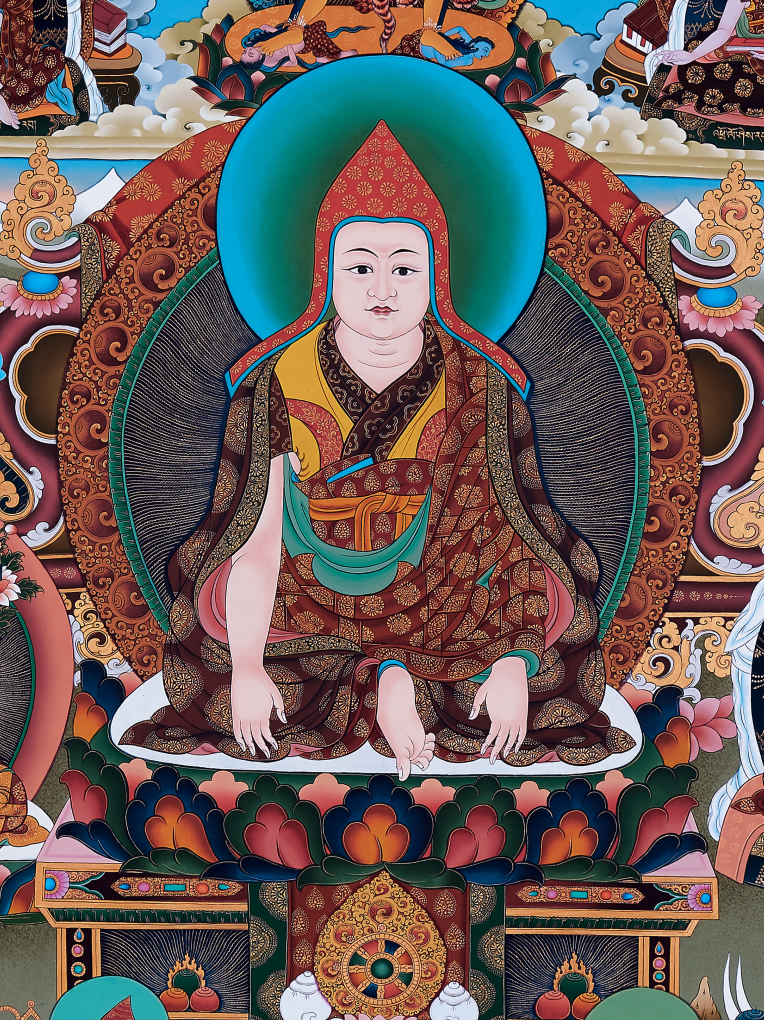
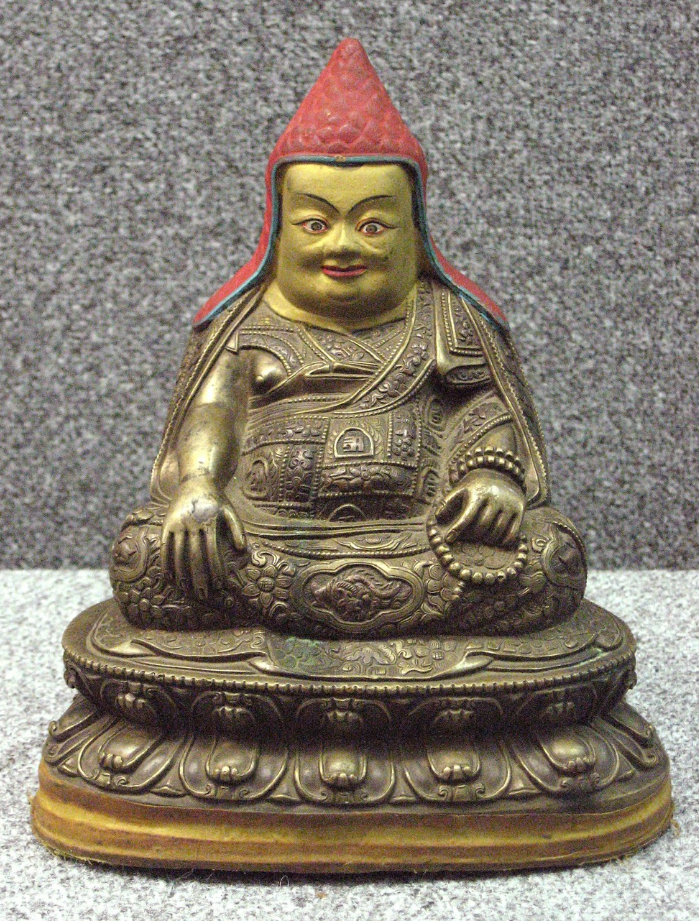
Dol po pa
Books/A Complete Session of Meditation, Articles/A Tree In The West: Competing Tathāgatagarbha Theories in Tibet, Articles/Can We Speak of Kadam Gzhan Stong? Tracing the Sources for Other-Emptiness in Early-Fourteenth-Century Tibet, Articles/Dolpopa and Gyaltsab Debate Tathāgatagarbha: Two Distinct Interpretations of Buddha-Nature in Tibet, Media/Dorji Wangchuk at the 2019 Tathāgatagarbha Symposium, Media/Filippo Brambilla at the 2019 Tathāgatagarbha Symposium, Books/Freedom From Extremes, Media/Karl Brunnhölzl: On the Views of Dolpopa, the 3rd Karmapa, and Different Views within the Kagyu School, Media/Khenpo Ngawang Jorden at the 2019 Tathāgatagarbha Symposium, Media/Klaus-Dieter Mathes at the 2019 Tathāgatagarbha Symposium, Books/Le Bouddha du Dolpo, Media/Michael Sheehy at the 2019 Tathāgatagarbha Symposium, Books/Mountain Doctrine: Tibet's Fundamental Treatise on Other-Emptiness and the Buddha-Matrix, Articles/On the Commentary on the Ratnagotravibhāga by Dol po pa, Articles/Other-Emptiness in the Jonang School: The Theo-logic of Buddhist Dualism, Media/Sina Joos at the 2019 Tathāgatagarbha Symposium, Books/The Buddha from Dolpo (2010), Books/The Other Emptiness: Rethinking the Zhentong Buddhist Discourse in Tibet, Books/The Uttaratantra in the Age of Argumentation: Dolpopa Sherab Gyaltsen and His Fourteenth-Century Interlocutors on Buddha-Lineage, Books/The Uttaratantra in the Land of Snows, Articles/Tāranātha's "Twenty-One Differences with Regard to the Profound Meaning", Media/Which Tibetans Wrote about Buddha-Nature? by Karl Brunnhölzl, Texts/Ri chos nges don rgya mtsho zhes bya ba mthar thug thun mong ma yin pa'i man ngag


... read more at

Philosophical positions of this person
"The crucial stanza [RGV] I.27, in which the three reasons for the presence of a buddha nature in sentient beings are presented, is thus explained in the following way:
Since the dharmakāya of the perfect buddha embraces and pervades all phenomena, since there is no differentiation [to be made] within the dharmatā concerning all samsāra and nirvāna, and since the potential of the tathāgata exists in all sentient beings as the natural purity of the dharmadhātu, which can be purified of hindrances, truly every being possesses, always, continuously, and throughout beginningless time, the ultimate essence of the Buddha." Mathes, K., A Direct Path to the Buddha Within, p. 82.
Dolpopa has a unique view on this issue as Wangchuk points out:
- "Dölpopa argues the following: (1) Cittamātra is categorized into Conventional Cittamātra (kun rdzob pa'i sems tsam) and Ultimate Cittamātra (don dam pa'i sems tsam); (2) Cittamātra must not be conflated with Vijnānavāda; (3) Madhyamaka is grouped into Madyamaka without Appearance (snang med dbu ma) and Madhyamaka with Appearance (snang bcas dbu ma). His Mahäyäna doxography differs significantly from that of other fourteenth-century Tibetan scholars." Wangchuk, Tsering, The Uttaratantra in the Land of Snows, p. 47.
- It seems that the simple answer is that Dolpopa espoused Great Madhyamaka (dbu ma chen mo) or Madhyamaka with Appearance (snang bcas dbu ma), which is equivalent to Ultimate Cittamātra (don dam pa'i sems tsam). See Wangchuk, Tsering, The Uttaratantra in the Land of Snows, pp. 49-50.
He was not the first to use the term, but he was the one to define and make it a central feature of his innovative philosophical position:
- "According to traditional Tibetan accounts, the revolutionary theory that the ultimate is not "empty of an own-being” (rang stong) but “empty of other” (gzhan stong) arose in Dölpopas mind during a Kālacakra retreat at Jonang. Lhai Gyaltsen informs us that Dölpopas realization was connected with the Kālacakratantra and the construction of the great stūpa in Jonang, which was consecrated in 1333. One of the first works in which Dölpopa expressed his new zhentong understanding of the Buddhist doctrine was his famous Ri chos nges don rgya mtsho. His last major work was the Bka bsdu bzhi pa (Bka' bsdu bzhi pa'i don bstan rtsis chen po, The Great Reckoning of the Doctrine That Has the Significance of a Fourth Council), which can be seen as a final summary of Dölpopas views." Mathes, K., A Direct Path to the Buddha Within, p. 75.
"He typically describes both buddha nature and the dharmakāya as being ultimately really established, everlasting, eternal, permanent, immutable (ther zug), and being beyond dependent origination. He also equates the tathāgata heart with “ālaya-wisdom” as opposed to the ālaya-consciousness." Brunnhölzl, K., When the Clouds Part, p. 68.
Other names
- ཤེས་རབ་རྒྱལ་མཚན་ · other names (Tibetan)
- ཤེས་རབ་མགོན་ · other names (Tibetan)
- རྟོན་པ་བཞི་ལྡན་ · other names (Tibetan)
- shes rab rgyal mtshan · other names (Wylie)
- shes rab mgon · other names (Wylie)
- rton pa bzhi ldan · other names (Wylie)
Affiliations & relations
- Jonang · religious affiliation
- tshul khrims snying po · teacher
- skyi ston 'jam dbyangs · teacher
- skyi ston grags pa rgyal mtshan · teacher
- sa skya slob dpon shes rab bzang po · teacher
- gzhon nu bzang po · teacher
- blo gros bstan pa · teacher
- jo gdan mkhan po bsod nams grags pa · teacher
- nag 'bum · teacher
- jo nang chos rje yon gtan rgya mtsho · teacher
- jo nang lo tsA ba blo gros dpal · student
- g.yag sde paN chen · student
- bsod nams rgyal mtshan · student
- phyogs las rnam rgyal · student
- sa bzang ma ti paN chen blo gros rgyal mtshan · student
- 'bri gung lo tsA ba ma Ni ka shrI · student
- nya dbon kun dga' dpal · student
- kun spangs chos grags dpal bzang · student