- Foreword9
- Michael Zimmermann
- Acknowledgements13
- Introduction15
- Michael Radich and Chen-kuo Lin
- Chinese Translations of Pratyakṣa33
- Funayama Toru
- Epistemology and Cultivation in Jingying
Huiyuan’s Essay on the Three Means of Valid Cognition63 - Chen-kuo Lin
- The Theory of Apoha in Kuiji's Cheng weishi lun Shuji101
- Shoryu Katsura
- A Comparison between the Indian and Chinese
Interpretations of the Antinomic Reason (Viruddhāvyabhicārin)121 - Shinya Moriyama
- The Problem of Self-Refuting Statements in Chinese Buddhist Logic151
- Jakub Zamorski
- A Re-examination of the Relationship between the Awakening of Faith
and Dilun School Thought, Focusing on the Works of Huiyuan183 - Ching Keng
- A Pivotal Text for the Definition of the Two Hindrances in East Asia:
Huiyuan's "Erzhang yi" Chapter217 - A. Charles Muller
- On the Notion of Kaidaoyi (*Avakāśadānāśraya) as Discussed in
Xuanzang's Cheng weishi lun271 - Junjie Chu
- Yogācāra Critiques of the Two Truths313
- Zhihua Yao
- Philosophical Aspects of Sixth-Century Chinese Buddhist Debates on
"Mind and Consciousness"337 - Hans-Rudolf Kantor
- The Way of Nonacquisition: Jizang’s Philosophy of Ontic Indeterminacy397
- Chien-hsing Ho
- Divided Opinion among Chinese Commentators on Indian Interpretations of the Parable of the Raft in the Vajracchedikā419
- Yoke Meei Choong
- Ideas about "Consciousness" in Fifth and Sixth Century Chinese Buddhist
Debates on the Survival of Death by the Spirit, and the Chinese
Background to *Amalavijñāna471 - Michael Radich
- The Process of Awakening in Early Texts on Buddha-Nature in India513
- Michael Zimmermann
- About the Authors529
- Index535
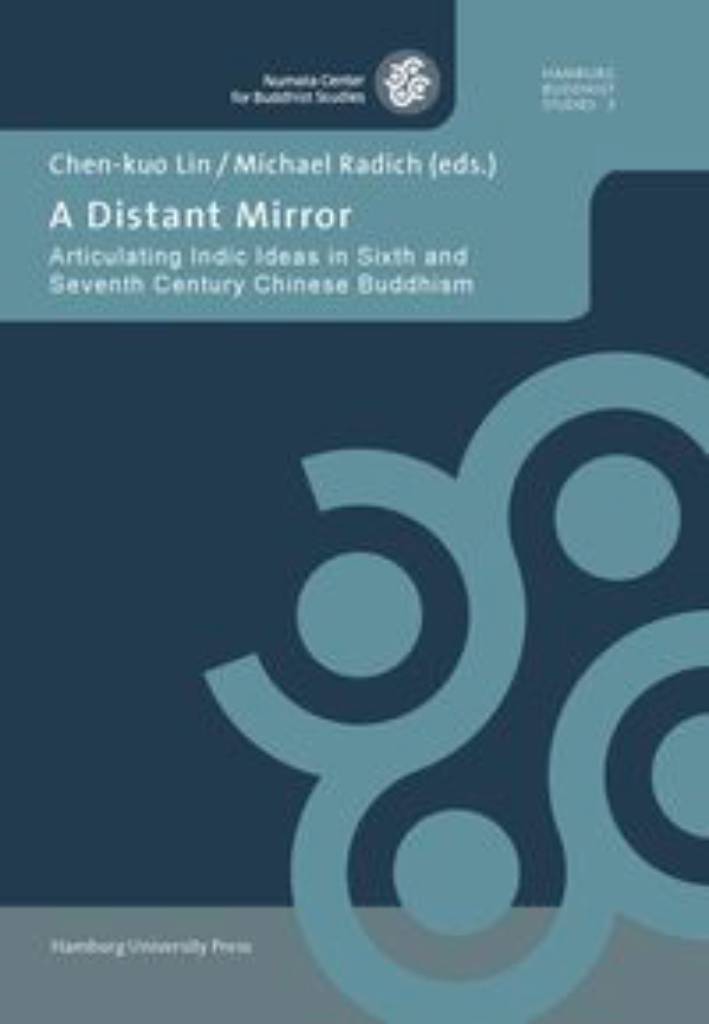
A Distant Mirror
Book
Book
In this book, an international team of fourteen scholars investigates the Chinese reception of Indian Buddhist ideas, especially in the sixth and seventh centuries. Topics include Buddhist logic and epistemology (pramāṇa, yinming); commentaries on Indian Buddhist texts; Chinese readings of systems as diverse as Madhyamaka, Yogācāra and tathāgatagarbha; the working out of Indian concepts and problematics in new Chinese works; and previously under-studied Chinese evidence for developments in India. The authors aim to consider the ways that these Chinese materials might furnish evidence of broader Buddhist trends, thereby problematizing a prevalent notion of “sinification”, which has led scholars to consider such materials predominantly in terms of trends ostensibly distinctive to China. The volume also tries to go beyond seeing sixth- and seventh-century China primarily as the age of the formation and establishment of the Chinese Buddhist “schools”. The authors attempt to view the ideas under study on their own terms, as valid Buddhist ideas engendered in a rich, “liminal” space of interchange between two large traditions. (Source: Hamburg University Press)
| Citation | Lin, Chen-kuo, and Michael Radich, eds. A Distant Mirror: Articulating Indic Ideas in Sixth and Seventh Century Chinese Buddhism. Hamburg Buddhist Studies 3. Hamburg: Hamburg University Press, 2014. https://hup.sub.uni-hamburg.de/volltexte/2014/146/pdf/HamburgUP_HBS03_LinRadich_Mirror.pdf. |
|---|---|
