|
|
| (9 intermediate revisions by the same user not shown) |
| Line 1: |
Line 1: |
| {{Book | | {{Book |
| |FullTextRead=No | | |FullTextRead=No |
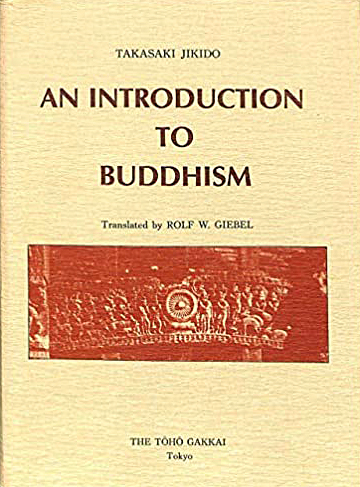
| | |BookToc=*{{i|Preface to the English Version|iii}} |
| | *{{i|A Note on Foreign Words|viii}} |
| | *{{i|Introduction: What is Buddhism?|1}} |
| | **{{i|Buddha, Dharma, and Saṃgha: The Three Constituents of Buddhism|3}} |
| | **{{i|Taking Refuge in the Three Treasures|5}} |
| | **{{i|The Absolute Nature of the Dharma|8}} |
| | **{{i|Mahāyāna and Hīnayāna: The "Greater" and "Lesser" Vehicles|11}} |
| | **{{i|The Buddhist Canon (''tri-piṭaka'')|16}} |
| | |
| | *{{i|I. The Life of Śākyamuni|23}} |
| | **{{i|The Buddha Śākyamuni|23}} |
| | **{{i|Biographies of the Buddha|25}} |
| | **{{i|Birth and Renunciation|28}} |
| | **{{i|Austerities and Enlightenment|31}} |
| | **{{i|The Beginnings of Śākyamuni's Teaching Ministry: His First Sermon|34}} |
| | **{{i|Dissemination of the Teaching and the Growth of the Community|38}} |
| | **{{i|The Great Decease|42}} |
| | **{{i|Erection of ''Stūpas'' and the First Council|45}} |
| | |
| | *{{i|II. The True Nature of the Buddha|49}} |
| | **{{i|Designations of the Buddha|50}} |
| | **{{i|Buddha and Tathāgata|53}} |
| | **{{i|The Former Lives of the Buddha|55}} |
| | **{{i|The Buddhas of the Three Ages|59}} |
| | **{{i|The Buddhas of the Ten Directions|61}} |
| | **{{i|Material Body and Dharma-Body|64}} |
| | **{{i|The Theory of Three Bodies|68}} |
| | |
| | *{{i|III. Dharma: The Buddhist Conception of Truth|70}} |
| | **{{i|The Meanings of ''Dharma''|70}} |
| | **{{i|The Basis of the Teaching: Dependent Co-arising and the Four Noble<br> Truths|76}} |
| | **{{i|Śākyamuni's: Philosophical Position: The Ten or Fourteen Unanswerables|85}} |
| | **{{i|"Dharma-seals": The Watchwords of Buddhism|89}} |
| | **{{i|''Saṃskāra'' and ''Dharma'': The Dependently Co-arisen|96}} |
| | **{{i|''Dharmatā'': The Principle of Dependent Co-arising|100}} |
| | **{{i|The Conception· of Truth in Mahāyāna Buddhism|104}} |
| | **{{i|Supreme Truth and Conventional Truth|105}} |
| | |
| | *{{i|IV. ''Sarva-dharmāh'': The Constituent Elements of Existence|107}} |
| | **{{i|The Classification of the Constituent Elements of Existence in the Early<br> Canon: The Five Aggregates, Twelve Sense-Fields, and Eighteen Realms|107}} |
| | **{{i|The Sarvāstivādin Classification of the Constituent Elements of Existence:<br> The Five Categories and Seventy-five Elements|114}} |
| | **{{i|The Sarvāstivādin Theory of the Elements: The Elements Exist Eternally|120}} |
| | **{{i|The Mahāyānist Conception of the Elements: All is Empty|126}} |
| | |
| | *{{i|V. Transmigration, Karma, and Mental Defilements|128}} |
| | **{{i|Transmigratory Existence: The Three Realms and Six Paths|128}} |
| | **{{i|Karma|137}} |
| | **{{i|Mental Defilements|141}} |
| | **{{i|The Twelvefold Chain of Dependent Co-arising|149}} |
| | |
| | *{{i|VI. The Path to Enlightenment|163}} |
| | **{{i|Nirvāṇa and Enlightenment|163}} |
| | **{{i|The Mahāyānist Conception of Nirvāṇa|168}} |
| | **{{i|The Path to Enlightenment|170}} |
| | **{{i|The Noble Eightfold Path|172}} |
| | **{{i|The Three Disciplines: Morality, Meditation, and Wisdom|174}} |
| | **{{i|Faith and Practice|188}} |
| | **{{i|Practices for· the Welfare of Others|191}} |
| | **{{i|The Practices of the Bodhisattva: The Six Perfections|193}} |
| | |
| | *{{i|VII. Mind: The Agency of Practice|198}} |
| | **{{i|No-self and Subjective Agency|198}} |
| | **{{i|Mind (''citta'', ''manas'', and ''vijñāna'')|200}} |
| | **{{i|Mind-only and Cognition-only|205}} |
| | **{{i|The Innately Pure Mind and the Embryo of the Tathāgata|215}} |
| | **{{i|Enlightenment and Salvation|223}} |
| | |
| | *{{i|VIII. The Ideal Practitioner|227}} |
| | **{{i|The Concept "Man"|227}} |
| | **{{i|Ordinary Man and Holy Man|228}} |
| | **{{i|The Stages of the Bodhisattva|233}} |
| | **{{i|"One Vehide" and "Three Vehicles"|240}} |
| | |
| | *{{i|IX. The Precepts and the Organization of the Community|246}} |
| | **{{i|The Meaning of ''Saṃgha''|246}} |
| | **{{i|The Organization of the Community|250}} |
| | **{{i|Community Regulations|255}} |
| | |
| | *{{i|X. The History of Buddhism|263}} |
| | **{{i|1. Buddhism in India and the Surrounding Lands|264}} |
| | ***{{i|The Basic Schism|264}} |
| | ***{{i|The Mauryan Dynasty and Dissemination to Sri Lanka|266}} |
| | ***{{i|The Kushan Dynasty and the Northern Tradition of Buddhism|267}} |
| | ***{{i|The Characteristics of Schismatic Buddhism|268}} |
| | ***{{i|The Birth of Mahāyāna Buddhism|269}} |
| | ***{{i|The Mādhyamika and Yogācāra Schools|270}} |
| | ***{{i|The Age of Esoteric Buddhism|272}} |
| | ***{{i|Tibetan Buddhism|275}} |
| | ***{{i|The Southern Tradition of Buddhism|277}} |
| | ***{{i|The Revival of Buddhism in India|278}} |
| | **{{i|2. Chinese Buddhism|279}} |
| | ***{{i|The Introduction of Buddhism|279}} |
| | ***{{i|Buddhism Takes Root: The Period of the Northern and Southern<br> Dynasties|280}} |
| | ***{{i|The Establishment of Chinese Buddhism: The Sui and T'ang<br> Dynasties|283}} |
| | ***{{i|Subsequent Developments|290}} |
| | **{{i|3. Korean Buddhism|290}} |
| | **{{i|4. Japanese Buddhism|293}} |
| | ***{{i|The Introduction of Buddhism and Prince Shōtoku|293}} |
| | ***{{i|The Sects of the Nara Period|294}} |
| | ***{{i|The Tendai and Shingon Sects|297}} |
| | ***{{i|The Rise of the Pure Land Teachings|300}} |
| | ***{{i|The Introduction of the Zen Sects|301}} |
| | ***{{i|The Nichiren and Ji Sects|303}} |
| | ***{{i|Buddhism since the Muromachi Period|305}} |
| | *{{i|Sources|309}} |
| | *{{i|Select Bibliography|315}} |
| | *{{i|General Index|325}} |
| | *{{i|Character Index|352}} |
| | *{{i|The Author; the Translator|375}} |
| |AddRelatedTab=No | | |AddRelatedTab=No |
| | |StopPersonRedirects=No |
| }} | | }} |