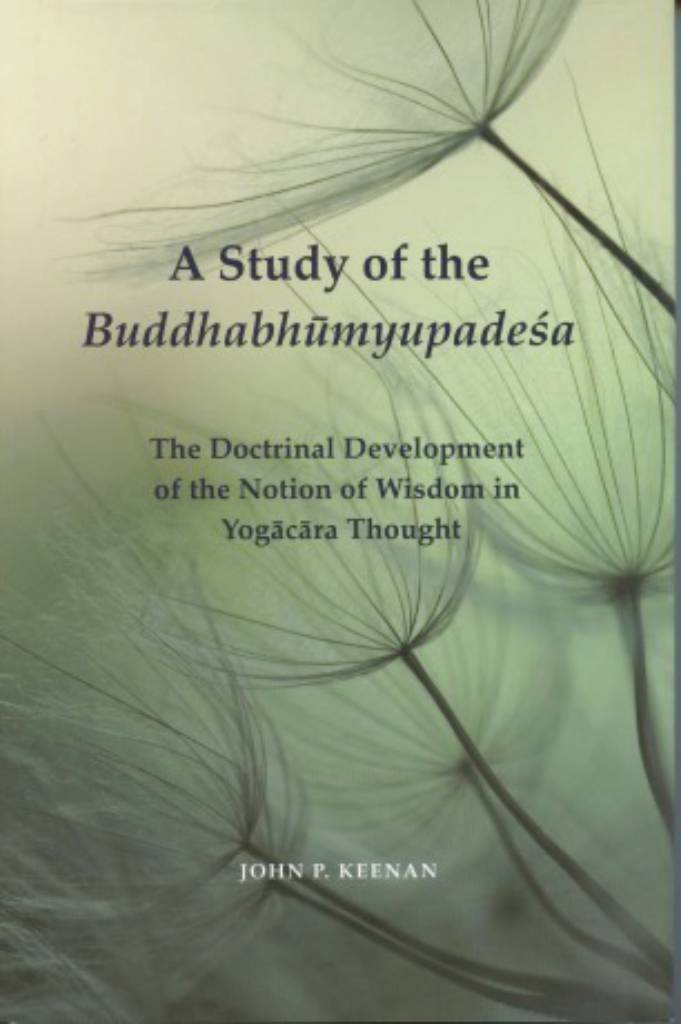
A Study of the Buddhabhūmyupadeśa: The Doctrinal Development of the Notion of Wisdom in Yogācāra Thought (2014)

From Buddha-Nature
LibraryBooksA Study of the Buddhabhūmyupadeśa: The Doctrinal Development of the Notion of Wisdom in Yogācāra Thought (2014)
< Books
No edit summary
No edit summary
 
Line 2: Line 2:
|FullTextRead=No
|FullTextRead=No
|TextTranslated=Buddhabhūmyupadeśa
|TextTranslated=Buddhabhūmyupadeśa
|BookToc=* {{i| Foreword by Richard K. Payne | vii |}}
* {{i| Preface: ''Buddhabhumi ''Reflections | ix |}}
* {{i| Introduction | xxvii |}}
* {{i| '''Part I. The Context of Indian Buddhism''' |}}
* {{i| Chapter 1. The Commonsense Understanding of the Nikāyas and the Āgamas | 3 |}}
* {{i| Chapter 2. Abhidharma: The Rise of Theory | 13 |}}
* {{i| Chapter 3. Prajñāpāramitā: The Rise of Mystic Consciousness | 25 |}}
* {{i| Chapter 4. Madhyamaka: The Notion of Emptiness | 33 |}}
** {{i| Nāgārjuna's Intent | 33 |}}
** {{i| The Meaning of Emptiness | 35 |}}
** {{i| The Meaning of Dependent Co-arising | 37 |}}
** {{i| The Two Truths | 39 |}}
** {{i| Nāgārjuna's Critique of the Means of Cognition | 42 |}}
* {{i| Chapter 5. Tathāgatagarbha: Beyond Abhidharma and Madhyamaka | 55 |}}
** {{i| The Nonorigination of Discrimination and the Originally Pure Mind | 57 |}}
** {{i| The Existence of ''Tathāgatagarbha'' | 59 |}}
** {{i| The Need for Faith | 62 |}}
* {{i| Chapter 6. Yogācāra: The Context of Interiority | 67 |}}
* {{i| Chapter 7. The Initial Yogācāra Statement | 75 |}}
** {{i| The ''Saṃdhinirmocana-sūtra'' | 75 |}}
** {{i| The ''Mahāyānābhidharma-sūtra'' | 82 |}}
* {{i| Chapter 8. The Place of the Mahāyānasūtrālaṃkāra | 87 |}}
* {{i| Chapter 9. The Classical Formulation of Yogācāra by Asaṅga and Vasubandhu | 105 |}}
** {{i| ''Vijñānapariṇāma'': The Evolutions of Consciousness | 106 |}}
** {{i| ''Trisvabhāva'': The Three Natures | 118 |}}
** {{i| '' Satyadvaya'': The Two Truths | 126 |}}
** {{i|  ''Trikāya'': The Three Bodies of Buddha | 130 |}}
* {{i| Chapter 10. An Alternative Yogācāra Synthesis: The Mind of Original Purity | 141 |}}
* {{i| Chapter 11. Dignāga's Critical Epistemology | 161 |}}
* {{i| Chapter 12. Dharmapāla's Lineage | 179 |}}
* {{i| '''Part II. Analysis of the ''Buddhabhūmi'' Texts''' |}}
* {{i| Chapter 13. The ''Buddhabhūmi-sūtra'' | 201 |}}
** {{i| The Place of the ''Buddhabhūmi-sūtra'' | 201 |}}
** {{i| Doctrinal Lineage | 211 |}}
* {{i| Chapter 14. The ''Buddhabhūmyupadeśa'' | 219 |}}
* {{i| The ''Buddhabhūmyupadeśa'': An Annotated Translation |}}
* {{i| Preface | 241 |}}
* {{i| Introduction | 243 |}}
* {{i| The Arising of the Teaching |}}
** {{i|  Chapter 1. The Arising of the Teaching | 251 |}}
** {{i|  Chapter 2. The Merits of the Pure Land | 257 |}}
** {{i|  Chapter 3. The Buddha's Merits | 287 |}}
** {{i| Chapter 4. The Merits of the Bhagavān's Retinue | 305 |}}
** {{i| Chapter 5. The Distinction between Bodhi and Nirvāṇa in Regard to the ''Mahārāvakas'' | 313 |}}
** {{i| Chapter 6. The Merits of the Bodhisattvas | 319 |}}
* {{i| The Content of the Teaching |}}
** {{i|  Chapter 7. An Analysis of the Five ''Bodhidharmas'' | 333 |}}
** {{i|  Chapter 8. Pure ''Dharmadhātu'' | 363 |}}
** {{i|  Chapter 9. Mirror Wisdom | 391 |}}
** {{i|  Chapter 10. Equality Wisdom | 417 |}}
** {{i|  Chapter 11. The Wisdom of Intellectual Mastery | 429 |}}
** {{i|  Chapter 12. The Wisdom of Duty Fulfillment | 449 |}}
* {{i| The Practice Based on the Teaching |}}
** {{i|  Chapter 13. The Experience of Wisdom | 465 |}}
** {{i|  Chapter 14. The Concluding Verses | 475 |}}
** {{i|  Chapter 15. Bandhuprabha on ''Trikāya'' | 501 |}}
* {{i|  Bibliography | 517 |}}
* {{i|  Index | 531 |}}
|StopPersonRedirects=No
|StopPersonRedirects=No
}}
}}

Latest revision as of 15:42, 5 January 2026


A Study of the Buddhabhūmyupadeśa: The Doctrinal Development of the Notion of Wisdom in Yogācāra Thought (2014)
Translation of Buddhabhūmyupadeśa
Book
Book

In this volume John Keenan provides access to an otherwise largely unstudied Mahāyāna text, the Buddhabhūmi-sūtra, along with two commentaries that interpret the sūtra in terms of Yogācāra thought: the Buddhabhūmivyākhyāna by Śīlabhadra, extant in Tibetan, and Bandhuprabha’s Buddhabhūmyupadeśa from the Chinese, which expands on Śīlabhadra’s text with additional explanation. Due to the influence of these two commentaries, the Buddhabhūmisūtra has traditionally been considered a Yogācāra text. In the course of his studies Keenan has come to understand this sūtra as an important part of the Indic literature of Pure Land Buddhism. His approach to the text thus provides a more expansive understanding of the historical origins of Pure Land thought and practice, as well as highlighting the interpretive processes through which sūtra texts can be mined for a variety of different meanings. This important study offers a resource for developing contemporary interpretations of Pure Land teachings.(Source: University of Hawaii Press)

Citation Keenen, John P. A Study of the Buddhabhūmyupadeśa: The Doctrinal Development of the Notion of Wisdom in Yogācāra Thought. Contemporary Issues in Buddhist Studies. Berkeley, CA: BDK America, 2014.


  • Foreword by Richard K. Payne vii
  • Preface: Buddhabhumi Reflections ix
  • Introduction xxvii


  • Part I. The Context of Indian Buddhism
  • Chapter 1. The Commonsense Understanding of the Nikāyas and the Āgamas 3
  • Chapter 4. Madhyamaka: The Notion of Emptiness 33
    • Nāgārjuna's Intent 33
    • The Meaning of Emptiness 35
    • The Meaning of Dependent Co-arising 37
    • The Two Truths 39
    • Nāgārjuna's Critique of the Means of Cognition 42
  • Chapter 6. Yogācāra: The Context of Interiority 67
  • Chapter 7. The Initial Yogācāra Statement 75
    • The Saṃdhinirmocana-sūtra 75
    • The Mahāyānābhidharma-sūtra 82
  • Chapter 8. The Place of the Mahāyānasūtrālaṃkāra 87
  • Chapter 9. The Classical Formulation of Yogācāra by Asaṅga and Vasubandhu 105
    • Vijñānapariṇāma: The Evolutions of Consciousness 106
    • Trisvabhāva: The Three Natures 118
    • Satyadvaya: The Two Truths 126
    • Trikāya: The Three Bodies of Buddha 130
  • Chapter 10. An Alternative Yogācāra Synthesis: The Mind of Original Purity 141
  • Chapter 11. Dignāga's Critical Epistemology 161
  • Chapter 12. Dharmapāla's Lineage 179
  • Part II. Analysis of the Buddhabhūmi Texts
  • Chapter 13. The Buddhabhūmi-sūtra 201
    • The Place of the Buddhabhūmi-sūtra 201
    • Doctrinal Lineage 211
  • Chapter 14. The Buddhabhūmyupadeśa 219
  • The Buddhabhūmyupadeśa: An Annotated Translation
  • Preface 241
  • Introduction 243
  • The Arising of the Teaching
    • Chapter 1. The Arising of the Teaching 251
    • Chapter 2. The Merits of the Pure Land 257
    • Chapter 3. The Buddha's Merits 287
    • Chapter 4. The Merits of the Bhagavān's Retinue 305
    • Chapter 5. The Distinction between Bodhi and Nirvāṇa in Regard to the Mahārāvakas 313
    • Chapter 6. The Merits of the Bodhisattvas 319
  • The Content of the Teaching
    • Chapter 7. An Analysis of the Five Bodhidharmas 333
    • Chapter 8. Pure Dharmadhātu 363
    • Chapter 9. Mirror Wisdom 391
    • Chapter 10. Equality Wisdom 417
    • Chapter 11. The Wisdom of Intellectual Mastery 429
    • Chapter 12. The Wisdom of Duty Fulfillment 449
  • The Practice Based on the Teaching
    • Chapter 13. The Experience of Wisdom 465
    • Chapter 14. The Concluding Verses 475
    • Chapter 15. Bandhuprabha on Trikāya 501


  • Bibliography 517
  • Index 531
