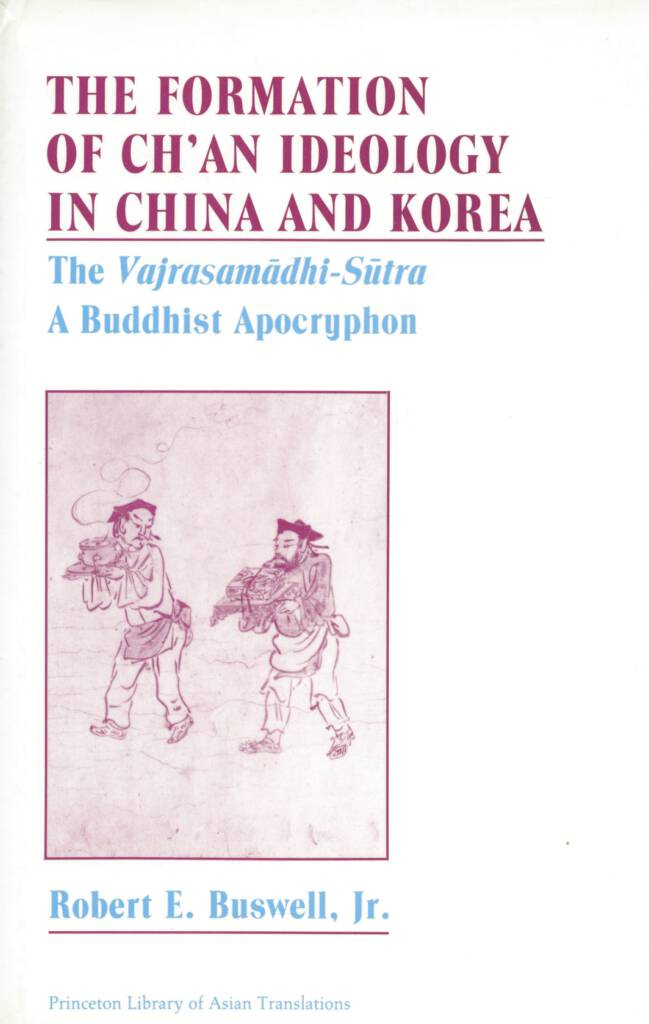
The Formation of Ch'an Ideology in China and Korea

From Buddha-Nature
LibraryBooksThe Formation of Ch'an Ideology in China and Korea
< Books
Revision as of 10:12, 22 April 2020 by AlexC (talk | contribs)


The Formation of Ch'an Ideology in China and Korea
Book
Book

This book contains an extensive study and a translation of the Vajrasamādhi Sūtra and makes a convincing argument to rethink the "national lines of argument" that had previously dominated discussions of East Asian Buddhist traditions. Buswell shows how Chan developed in multiple communities; it was not a Chinese phenomenon that was then exported to Korea and Japan. He also shows how the scripture is firmly in the Chinese Yogācāra tradition of Paramārtha, containing an extensive discussion of "immaculate consciousness" (amalavijñāna), the ninth consciousness which unites saṃsāra and nirvāṇa in a "single taste." Buswell draws on Japanese scholarship, such as that by Mozuno Kōgen, who first concluded that the sūtra was an apocryphon.

Citation Buswell, Robert E., Jr. The Formation of Ch'an Ideology in China and Korea: The Vajrasamādhi-Sūtra, A Buddhist Apocryphon. Princeton Library of Asian Translations. Princeton, NJ: Princeton University Press, 1989.


  • List o fIllustrationsix
  • List of Tablesxi
  • Prefacexiii
  • Abbreviations and Conventionsxvii

PART ONE: STUDY

  • Chapter One The Vajrasamādhi-Sūtra as an Apocryphal Scripture3
    • Problems and Prospects of Studying the Vajrasamādhi-Sūtra4
    • The Eclecticism of the Vajrasamādhi24
    • The Model for the Vajrasamādhi's Narrative Structure29
    • The Vajrasamādhi in the Chinese Catalogues33
  • Chapter Two The Hagiographies of the Korean Scholiast Wǒnhyo: The Dating and Provenance of the Vajrasamādhi41
    • The Sung Kao-seng chuan Hagiography and the Provenance

of the Vajrasamādhi43

    • The Samguk Yusa Hagiography and the Dating of the Vajrasamādhi 60

Chapter Three The Doctrinal Teachings of the Vajrasamadhi 74 The Acculturation of Buddhism to East Asia 74 Tathagatagarbha and the Immanence of Enlightenment 78 Amalavijnana and the Innate Purity of Mind 92 The Meaning of "Vajrasamadhi": The Practical Implications of Innate Enlightenment 104 The Vajrasamadhi's Message to Silla Buddhists 115

Chapter Four Ch'an Elements in the Vajrasamadhi: Evidence for the Authorship of the Sutra 123 Ch'an Influences in the Vajrasamadhi 123 Early Korean Son and the Legend of Pomnang 164
