Gyü Lama: Difference between revisions
From Buddha-Nature
No edit summary |
No edit summary |
||
| Line 20: | Line 20: | ||
'''Learn More...''' | '''Learn More...''' | ||
::[[Ratnagotravibhāga Mahāyānottaratantraśāstra]] - READ THE TEXT HERE | |||
::The [[Gyü Lama]] (རྒྱུད་བླ་མ་), also called the [[Mahāyānottaratantra Śāstra]] (ཐེག་ཆེན་རྒྱུད་བླ་མའི་བསྟན་བཅོས་), the [[Ratnagotravibhāga]] (RGV), or simply the [[Uttaratantra]], is one of the most important texts of the Yogācāra tradition that expounds the buddha nature theory (tathāgatagarbha), the idea that all sentient beings possess the nature of a buddha. The Tibetan Buddhist tradition holds the Ratnagotravibhāga to be one of the Five Treatises that [[Maitreya]] taught to [[Asaṅga]] in the 4th century. [http://buddhanature.tsadra.org/index.php/Main_Page Read More...] | ::The [[Gyü Lama]] (རྒྱུད་བླ་མ་), also called the [[Mahāyānottaratantra Śāstra]] (ཐེག་ཆེན་རྒྱུད་བླ་མའི་བསྟན་བཅོས་), the [[Ratnagotravibhāga]] (RGV), or simply the [[Uttaratantra]], is one of the most important texts of the Yogācāra tradition that expounds the buddha nature theory (tathāgatagarbha), the idea that all sentient beings possess the nature of a buddha. The Tibetan Buddhist tradition holds the Ratnagotravibhāga to be one of the Five Treatises that [[Maitreya]] taught to [[Asaṅga]] in the 4th century. [http://buddhanature.tsadra.org/index.php/Main_Page Read More...] | ||
Revision as of 15:37, 28 March 2018
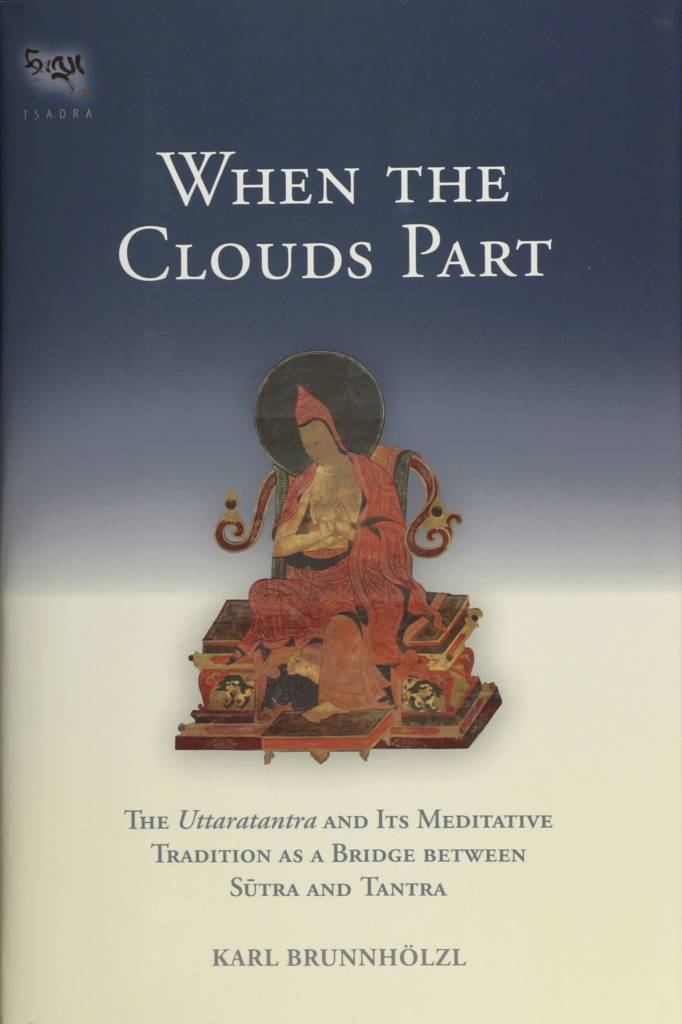
Shedding light on the meditative tradition of the five texts of Maitreya with meditation manuals and commentaries from the Kagyu and Kadampa traditions.
The Uttaratantra and Its Meditative Tradition as a Bridge between Sutra and Tantra

Learn More...
- Ratnagotravibhāga Mahāyānottaratantraśāstra - READ THE TEXT HERE
- The Gyü Lama (རྒྱུད་བླ་མ་), also called the Mahāyānottaratantra Śāstra (ཐེག་ཆེན་རྒྱུད་བླ་མའི་བསྟན་བཅོས་), the Ratnagotravibhāga (RGV), or simply the Uttaratantra, is one of the most important texts of the Yogācāra tradition that expounds the buddha nature theory (tathāgatagarbha), the idea that all sentient beings possess the nature of a buddha. The Tibetan Buddhist tradition holds the Ratnagotravibhāga to be one of the Five Treatises that Maitreya taught to Asaṅga in the 4th century. Read More...
An outline of Jamgon Kongtrul the Great's commentary on the Gyü Lama:
Further Study
- Duckworth, Douglas. Mipam on Buddha-Nature: The Ground of the Nyingma Tradition. New York: SUNY Press, 2008.
Dzongsar Jamyang Khyentse Rinpoche. Buddha-Nature, Mahayana Uttaratantra Shastra, by Arya Maitreya. Edited by Alex Trisoglio. Khyentse Foundation, 2007.
- Fuchs, Rosemarie. Buddha Nature: The Mahayana Uttaratantra Shastra. Commentary by Jamgön Kongtrül Lodrö Thayé "The Unassailable Lion's Roar." Ithaca, NY: Snow Lion Publications, 2000.
- Holmes, Ken and Katia Holmes. Maitreya on Buddha nature : A New Translation of Asaṅga's Mahāyāna Uttara Tantra Śāstra. Forres: Altea, 1999. (Translated from Tibetan)
- Holmes, Ken and Katia Holmes, trans. The Changeless Nature. Newcastle: Karma Kagyu Trust, 1985. (Translated from Tibetan)
- Kilty, Gavin. The Tathāgata Essence Commentary to the First Chapter of the Uttaratantra, by Rinchen, Gyaltsap Darma (1364-1432). Unpublished, FPMT.
- Kano, Kazuo. "rNgog Blo‐ldan‐shes‐rabʹs Summary of the Ratnagotravibhāga: The First Tibetan Commentary on a Crucial Source for the Buddha‐nature Doctrine." Ph.D. Dissertation, University of Hamburg, 2006. Contains a critical edition in Wylie transliteration.
- Kano, Kazuo. "Buddha-Nature and Emptiness: rNgog Blo-ldan-shes-rab and A Transmission of the Ratnagotravibhāga from India to Tibet." WSTB 91. Wiener Studien zur Tibetologie und Buddhismuskunde (Vienna Series for Tibetan and Buddhist Studies). Vienna: Arbeitskreis für Tibetische und Buddhistische Studien, 2016.
- Mathes, Klaus-Dieter. A Direct Path to the Buddha Within: Go Lotsāwa's Mahāmudrā Interpretation of the Ratnagotravibhāga. Boston: Wisdom Publications, 2008.
- Mathes, Klaus-Dieter. 'Gos Lo tsā ba gZhon nu dpal's Extensive Commentary on and Study of the Ratna-gotravibhāgavyākhyā. In Religion and Secular Culture in Tibet, 79-96. Proceedings of the Ninth Seminar of the International Association for Tibetan Studies (PIATS), Leiden, 2000. Brill's Tibetan Studies Library vol. 2, bk. 2 . Leiden : Brill, 2002.
- Mipham ('jam mgon 'ju mi pham rgya mtsho). A Commentary on the Uttaratantra Shastra (rgyud bla ma). Translated by Padmakara Translation Group, John Canti, forthcoming.
- Obermiller, E., tr., Uttaratantra or Ratnagotra-vibhāga: The Sublime Science of the Great Vehicle to Salvation, Being a Manual of Buddhist Monism: The Work of Ārya Maitreya with a Commentary by Āryāsaṅga, Acta Orientalia 9 (1931): 81-306. Re-printed in Prasad, H. S., ed. The Uttaratantra of Maitreya, 1991. (Translated from Tibetan)
- Prasad, H. S., ed. The Uttaratantra of Maitreya. Containing E.H. Johnston's Sanskrit text and E. Obermiller's English translation. Bibliotheca Indo-Buddhica, 79. Delhi: Sri Satguru Publications, 1991. (Translated from Tibetan)
- Stearns, Cyrus. The Buddha From Dolpo: A Study of the Life and Thought of the Tibetan Master Dolpopa Sherab Gyaltsen. Tsadra Foundation Series. Ithaca, NY: Snow Lion Publications, 2010.
- Takasaki, Jikido. A study on the Ratnagotravibhāga (Uttaratantra), being a treatise on the Tathāgatagarbha theory of Mahayana Buddhism. Serie Orientale Roma 33. Roma: Istituto Italiano per il Medio ed Estremo Oriente (ISMEO), 1966. (Translated from Sanskrit)
- Thrangu Rinpoche. The Uttara Tantra: A Treatise on Buddha Nature, translated by Ken Holmes and Katia Holmes, edited by Clark Johnson, Delhi: Sri Satguru Publications, 2001.
Watch More...