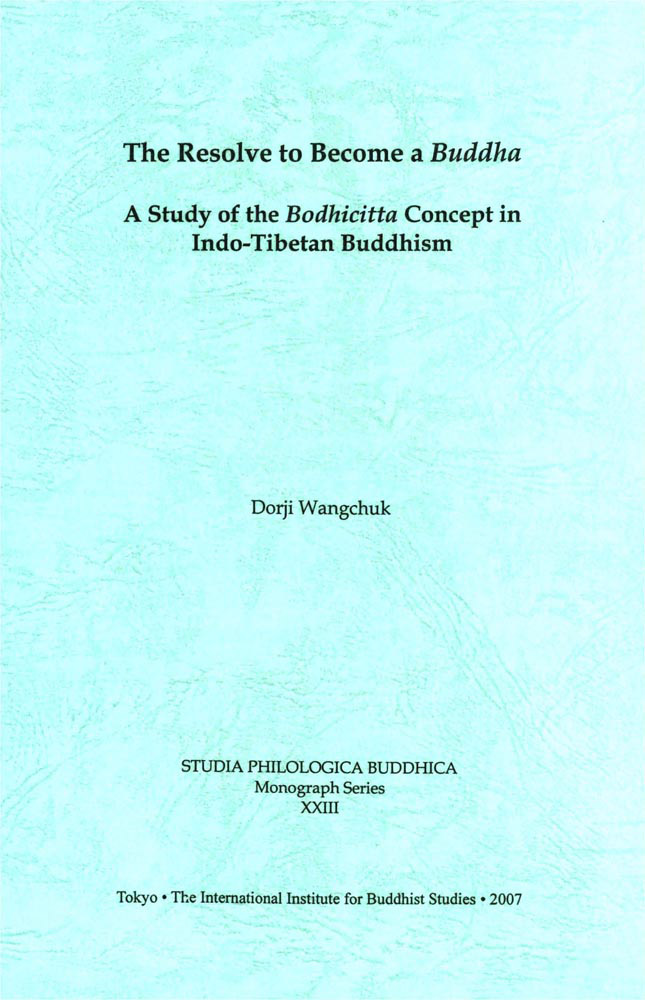
- Preface13
- Technical Note19
- Chapter One: A General Introduction: On Becoming a Buddha
- 1. Introductory Remarks21
- 2. Buddhology22
- 3. Buddhist Soteriology30
- 4. Ontology41
- 5. Buddhist Epistemology and Gnoseology43
- 6. Buddhist Axiology45
- (a) The Three-Vow Scheme45
- (b) Comparing and Contrasting the Three Vows47
- 7. Concluding Remarks56
- Chapter Two: Previous Studies on Bodhicitta
- 1. Introductory Remarks57
- 2. The Early Western Knowledge of Bodhicitta58
- 3. Monographs on the Study of Bodhicitta59
- (a) Taishū Tagami (1990)59
- (b) Francis Brassard (2000)60
- 4. Articles on Bodhicitta61
- (a) Kumataro Kawada (1965)61
- (b) Lal Mani Joshi (1971)62
- (c) S. K. Nanayakkara (1971)62
- (d) Lobsang Dargay (1981)63
- (e) Gareth Sparham (1987)63
- (f) Gareth Sparham (1992)64
- 5. Studies on Bodhicitta in Specific Canonical Works65
- 6. On Translating the Term Bodhicitta69
- 7. A Study of Bodhicitta: Still a Desideratum70
- 8. Concluding Remarks71
- Chapter Three: The Historical and Doctrinal Background of the Bodhicitta Concept
- 1. Introductory Remarks73
- 2. Bodhicitta as a Means of Compensating for the Loss of the Historical Buddha74
- 3. The Doctrinal Foundations of Bodhicitta in Early Buddhism77
- (a) A Buddha as a Discoverer and Proclaimer of the True Reality77
- (b) The Plurality of Buddhas and Bodhisattvas in Early Buddhism79
- (c) The Concept of the Resolve Made by Previous Buddhas80
- (d) The Altruism of the Historical Buddha82
- (e) Altruism in Early Buddhism84
- (f) Prerequisites for Becoming a Buddha in Early Buddhism86
- (g) The 'Golden Rule' in Early Buddhism87
- 4. Concluding Remarks89
- Chapter Four: The Buddha's First Resolve to Become a Buddha
- 1. Introductory Remarks91
- 2. The Historical Buddha as One of Many and Yet One of a Kind92
- 3. Three Events Marking the Career of the Buddha92
- (a) The First Event: The Initial Resolve to Become a Buddha94
- (i) Attempts to Resolve the Illogicality of Several 'First Times'98
- (ii) Was the Historical Bodhisattva 'King-Like' or 'Herdsman-Like'?99
- (b) The Second Event: Striving to Become a Buddha100
- (c) The Third Event: The Time and Place of the Buddha's Awakening102
- (a) The First Event: The Initial Resolve to Become a Buddha94
- 4. A Historical Sketch of the Buddha's Initial Resolve to Become a Buddha104
- 5. Concluding Remarks105
- Chapter Five: Mahāyāna, Bodhisattva, and Bodhicitta
- 1. Introductory Remarks107
- 2. The Concepts of Yāna in Buddhism109
- (a) The Various Models of Yāna110
- (i) The One-Vehicle Model111
- (ii) The Two-Vehicle Model112
- (iii) The Three-Vehicle Model113
- (iv) The Four-Vehicle Model115
- (v) The Five-Vehicle Model116
- (vi) The Nine-Vehicle Model117
- (vii) The n-Vehicle Model118
- (viii) The No-Vehicle Model119
- (b) Which Vehicles Are Buddhist?120
- (c) Mahāyāna121
- (a) The Various Models of Yāna110
- (3. The Concepts of Sattva and Bodhisattva126
- (a) No Bodhisattvas without Sattvas127
- (b) Faith-oriented and Reason-oriented Sentient Beings128
- (c) The Term Bodhisattva129
- (d) Synonyms of Bodhisattva133
- (e) Types of Bodhisattvas134
- (i) Historical, Celestial, and Earthly Bodhisattvas135
- (ii) Human and Non-human Bodhisattvas136
- (iii) Male and Female Bodhisattvas137
- (iv) Ordained and Lay Bodhisattvas139
- (v) Bodhisattvas with Different Backgrounds139
- (f) The Śrāvaka-Bodhisattva Distinction140
- (g) The Concept of Vajrasattva142
- 4. The Term Bodhicitta and Its Definition144
- (a) The Term Bodhicitta in the Aṣṭasāhasrikā144
- (b) The Term Bodhicitta in the Drumakinnararājaparipṛcchāsūtra145
- (c) The Term Bodhicitta in the Bodhisattvabhūmi148
- (d) The Relative Chronology of the Aṣṭasāhasrikā and the Bodhisattvabhūmi148
- (e) The Terms Cittotpāda, Bodhicitta, and Bodhicittotpāda149
- (f) Some Definitions of Bodhicitta or Cittotpāda151
- (g) How Indispensable Is Bodhicitta for a Bodhisattva?154
- (h) Benefits and Functions of Bodhicitta160
- 5. Concluding Remarks166
- Chapter Six: The Two Bodhicittotpāda Traditions
- I. Introductory Remarks169
- 2. The Two Bodhicittotpāda Traditions170
- 3. Tibetan Assessments of the Two Bodhicittotpāda Traditions172
- 4. The Names of the Two Bodhicittotpāda Traditions173
- 5. The Two Bodhicittotpāda Traditions: The Basis of the Distinctions175
- 6. The Two Bodhicittotpāda Traditions: Personal Authorities175
- 7. The Two Bodhicittotpāda Traditions: Scriptural Authorities176
- 8. The Historical Background of the Bodhicittotpāda Ritual177
- 9. What Is Actually Generated by the Ritual?180
- 10. The Optionality of an Officiant in the Two Traditions181
- 11. Qualifications for Officiants in the Two Traditions182
- 12. The Eligibility of Candidates in the Two Traditions183
- 13. The Preparatory Procedures of the Bodhicittotpāda Ritual186
- 14. The Main Procedures of the Bodhicittotpāda Ritual187
- 15. The Concluding Procedures of the Bodhicittotpāda Ritual188
- 16. Observances and Offences in the Two Traditions188
- (a) The Cardinal Transgressions in the Mañjuśrī-Nāgārjuna Tradition189
- (b) The Cardinal Transgressions in the Maitreya-Asaṅga Tradition191
- (c) The Minor Offences in the Two Traditions192
- 17. Reestablishing a Broken Vow in the Two Traditions193
- 18. Concluding Remarks194
- Chapter Seven: A Typology of Bodhicitta
- 1. Introductory Remarks195
- 2. An Overview of the Five Types of Bodhicitta196
- 3. Ethico-Spiritual Bodhicitta197
- 4. Gnoseological Bodhicitta198
- (a) What Gnoseologicai Bodhicitta Is198
- (b) Some Synonyms of Gnoseological Bodhicitta198
- (c) Some Salient Features of Gnoseological Bodhicitta199
- (d) Who Possesses Gnoseological Bodhicitta?201
- (e) Gnosis as Abiding in the Body202
- (f) The Three Modes of Emergence Open to Gnosis204
- 5. Ontological Bodhicitta205
- (a) The Conception of Ontological Bodhicitta206
- (b) An Outcome of a Philosophical Quest?211
- (c) Synonyms and Near Synonyms of Ontological Bodhicitta214
- (d) Two Distinct Perceptions of Ontological Bodhicitta216
- (e) Some Salient Features of Ontological Bodhicitta217
- 6. Psycho-Physiological Bodhicitta217
- (a) What is Psycho-Physiological Bodhicitta?218
- (b) Some Salient Features of Psycho-Physiological Bodhicitta220
- (c) Probable Motives for the Conception of Psycho-Physiological Bodhicitta220
- (d) The Problems of Physicality and Sexuality in Buddhism221
- (e) Psycho-Physiological Bodhicitta in Yogic Practices223
- 7. Semeiological Bodhicitta225
- (a) General Features of Bodhicitta Symbolism225
- (b) Putting Symbolism in a Buddhist Philosophical Context226
- (c) Three Kinds of Semeiological Bodhicitta: Visual, Verbal, and Visional227
- (d) Vajrayāna Symbolism and Literalism231
- 8. A Concluding Assessment of the Five Types of Bodhicitta232
- Chapter Eight: Traditional Classifications of Bodhicitta
- 1. Introductory Remarks235
- 2. Bodhicitta as a Fusion of Śūnyatā/Prajñā and Karūṇā/ Upāya235
- (a) The Term Śūnyatākarūṇāgarbha236
- (b) The Term Śūnyatākarūṇābhinna238
- (c) The Importance of Upāya and Prajñā239
- (d) Tension between the Two Poles of Emptiness and Compassion243
- (e) Union of Emptiness and Compassion: A Tibetan Controversy245
- (f) Three Positions on the Fusion of Śūnyatā/Prajñā and Karūṇā/ Upāya245
- 3. Subclassifying Bodhicitta into Praṇidhicitta and Prasthānacitta246
- (a) The Locus Classicus of the Classification246
- (b) The Possible Historical Development of the Subclassification248
- (c) The Pervasiveness of the Classification248
- (d) Distinctions, Interpretations, and Controversies249
- 4. Subclassifying Bodhicitta into Conventional and Absolute251
- (a) Two Strands of the Conventional-Absolute Classification252
- (b) Textual Sources of the Conventional-Absolute Classification253
- (c) The Relative Chronology of the Conventional-Absolute Classification255
- (d) Two Different Perceptions of Conventional and Absolute Bodhicitta256
- (e) Can Absolute Bodhicitta be Generated Ritually? A Tibetan Controversy258
- 5. Leading to the Goal and Not Leading to the Goal261
- 6. A Stable One and an Unstable One262
- 7. Twofold Classifications of Cittotpāda in the Viniścayasaṃgrahaṇī263
- (a) Samādānasāṃketika and Dharmatāpratilambhika263
- (b) The One That Is Uncertain and the One That Is Certain264
- (c) The One That Is Impure and the One That Is Pure264
- (d) The One That Is Weak and the One That Is Strong265
- (e) The One That Has Yielded the Ultimate Result and the One That Has
Not yet265
- 8. Undistinguished and Distinguished Cittotpāda266
- 9. The One Characterised by Karuṇā and the One Characterised by Prajñā266
- 10. Ongoing and Non-Ongoing Cittotpāda267
- 11. A Threefold Classification: King-like, Boatman-like, and Herdsman-like267
- (a) Some Indian Precursors of the Classification268
- (b) Assessments by Some Tibetan Scholars269
- 12. A Fourfold Classification271
- 13. Subclassifying Bodhicitta into Ten Types273
- 14. Twenty-Two Kinds of Cittotpāda273
- (a) Sources of the Twenty-Two Kinds of Cittotpāda273
- (b) A Historical Sketch274
- 15. Concluding Remarks275
- Chapter Nine: Causes and Conditions pertaining to Bodhicitta
- 1. Introductory Remarks277
- 2. Causes and Conditions pertaining to Bodhicitta in the Sūtra Sources277
- 3. Causes and Conditions pertaining to Bodhicitta in the Bodhisattvabhūmi279
- 4. Causes and Conditions pertaining to Bodhicitta in the Mahāyānasūtrālaṃkāra283
- 5. Causes and Conditions pertaining to Bodhicitta as Discussed Elsewhere284
- 6. Compassion as the Root Cause of Bodhicitta285
- 7. Concluding Remarks289
- Chapter Ten: The Mahāyāna Observances and the Maintenance of Bodhicitta
- 1. Introductory Remarks291
- 2. The Model of the Four Cardinal Transgressions (mūlāpatti)292
- 3. Pledges and the Maintenance of Bodhicitta in the Kriyātantras295
- (a) The Vairocanābhisaṃbodhitantra296
- (b) The Guhyatantra298
- (c) The Susiddhikaratantra300
- (d) The Subāhuparipṛcchātantra303
- 4. Pledges and Maintenance of Bodhicitta in the Yogatantras305
- (a) The Durgatipariśodhanatantra305
- (b) The Vajraśikharatantra307
- (c) The Śrīparamādyatantra310
- (d) The Tattvasaṃgrahasūtra312
- (5. Pledges and the Maintenance of Bodhicitta in the Mahāyoga System313
- (a) The Buddhasamāyogatantra319
- (b) The Kṛṣṇayamāritantra and Guhyasamājābhiṣekavidhi320
- (c) The Guhyendutilakatantra328
- (d) The *Guhyagarbhatantra329
- (e) Padmasambhava's Categories of Pledges329
- 6. All Mahāyāna Precepts Relating to the Maintenance of Bodhicitta330
- 7. Concluding Remarks331
- Chapter Eleven: The Relapse and Restoration of Bodhicitta
- 1. Introductory Remarks333
- 2. Impairment to or Loss of Bodhicitta334
- 3. Causes of the Partial or Total Breach of Vows337
- 4. Causes of Impairment to or Loss of Bodhicitta338
- 5. The Abandonment of Bodhicitta as the Severest Transgression346
- 6. The Types of Setbacks348
- 7. The Restorability of Bodhicitta351
- 8. Retaking and Restoring Bodhicitta352
- 9. The Four Strengths355
- 10. Concluding Remarks356
- Appendix A: A Critical Edition of the Sanskrit Text of Bodhisattvabhūmi 1.2
- 1. Introduction357
- (a) Extant Manuscripts, Critical Editions, and Other Related Studies on the Bodhisattvabhūmi357
- (b) A Brief Description of the Extant Manuscripts and Editions362
- (c) Some Observations as to the Stemmatic Relation of the MSS365
- (d) Method and Abbreviations Employed in the Critical Edition of the
Sanskrit Text366
- 2. The Text368
- Appendix B: A Critical Edition of the Tibetan Text of Bodhisattvabhūmi 1.2
- 1. Introduction379
- 2. The Text382
- Abbreviations and Bibliography
- 1. Journals, Collections, Reference Books, Series, and Other Abbreviations391
- 2. Indian Sources393
- 3. Tibetan Sources404
- 4. Secondary Sources411
- Index431
