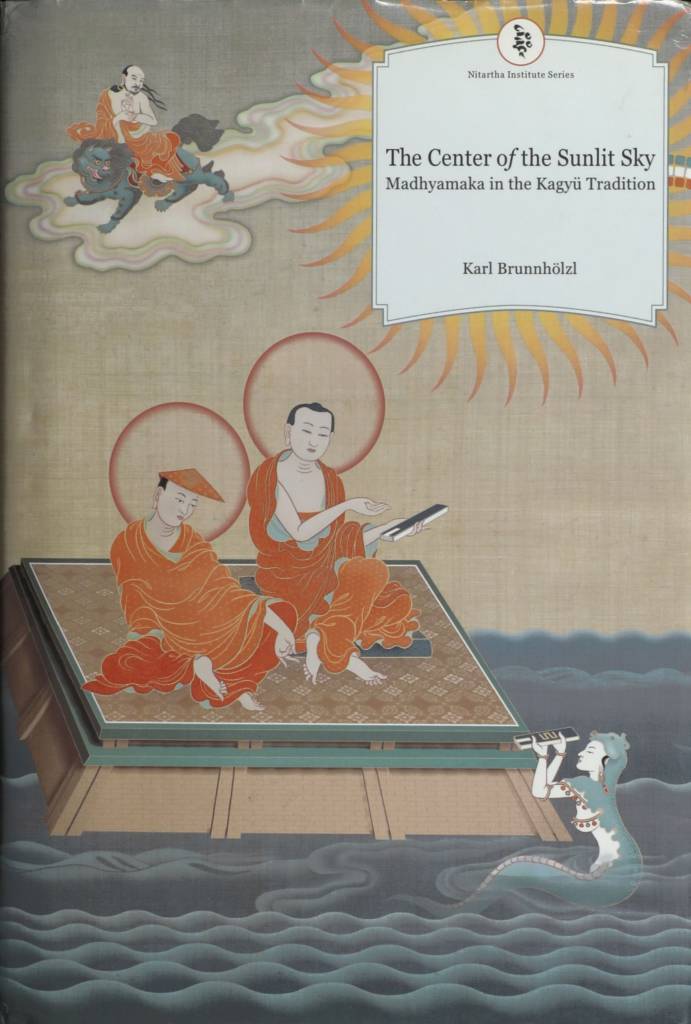
|
|
| Line 12: |
Line 12: |
| * {{i|Preface| 17}} | | * {{i|Preface| 17}} |
| * {{i|Introduction| 25}} | | * {{i|Introduction| 25}} |
| | |
| * {{i|'''PART ONE: The General Presentation of Madyamaka in the Kagyü Tradition'''| 45}} | | * {{i|'''PART ONE: The General Presentation of Madyamaka in the Kagyü Tradition'''| 45}} |
| | |
| * {{i|'''1. The Transmission of Madhyamaka from India to Tibet and Its Relation to<br>Vajrayāna and Mahāmudrā'''| 47}} | | * {{i|'''1. The Transmission of Madhyamaka from India to Tibet and Its Relation to<br>Vajrayāna and Mahāmudrā'''| 47}} |
| | |
| * {{i|'''2 The Middle from Beginning to End'''| 69}} | | * {{i|'''2 The Middle from Beginning to End'''| 69}} |
| ** {{i|Madyamaka Ground| 72}} | | ** {{i|Madyamaka Ground| 72}} |
| Line 64: |
Line 67: |
| *** {{i|Madhyamaka Conduct| 321}} | | *** {{i|Madhyamaka Conduct| 321}} |
| ** {{i|Madhyamaka Fruition| 323}} | | ** {{i|Madhyamaka Fruition| 323}} |
| | |
| * {{i|'''3 The Distinction between Autonomists and Consequentialists'''| 333}} | | * {{i|'''3 The Distinction between Autonomists and Consequentialists'''| 333}} |
| ** {{i|Classifications of Centrism in India and Tibet| 333}} | | ** {{i|Classifications of Centrism in India and Tibet| 333}} |
| Line 72: |
Line 76: |
| ** {{i|Do Hearers and Solitary Realizers Realize Emptiness?| 421}} | | ** {{i|Do Hearers and Solitary Realizers Realize Emptiness?| 421}} |
| ** {{i|Conclusion |438}} | | ** {{i|Conclusion |438}} |
| | |
| * {{i|'''4 Is There Such a Thing as Shentong-Madhyamaka?'''| 445}} | | * {{i|'''4 Is There Such a Thing as Shentong-Madhyamaka?'''| 445}} |
| ** {{i|The Yogācāra System in General|457}} | | ** {{i|The Yogācāra System in General|457}} |
| Line 77: |
Line 82: |
| ** {{i|The Treatment of Yogācāra and the Rangtong-Shentong Controversy in<br>Tibet |500}} | | ** {{i|The Treatment of Yogācāra and the Rangtong-Shentong Controversy in<br>Tibet |500}} |
| ** {{i|The Single Final Intention of the Two Philosophical Systems of the Great<br>Vehicle |515}} | | ** {{i|The Single Final Intention of the Two Philosophical Systems of the Great<br>Vehicle |515}} |
| | |
| * {{i|'''5 The Distinction between Expedient and Definitive Meaning'''| 527}} | | * {{i|'''5 The Distinction between Expedient and Definitive Meaning'''| 527}} |
| | |
| * {{i|'''6 An Outline of Some Major Differences between Mikyö Dorje's and<br>Tsongkhapa's Interpretations of Centrism'''| 553}} | | * {{i|'''6 An Outline of Some Major Differences between Mikyö Dorje's and<br>Tsongkhapa's Interpretations of Centrism'''| 553}} |
| | |
| * {{i|'''PART TWO: The Bodhicaryāvatāra and Pawo Tsugla Trengwa'''| 599}} | | * {{i|'''PART TWO: The Bodhicaryāvatāra and Pawo Tsugla Trengwa'''| 599}} |
| | |
| * {{i|'''7 Some Remarks on the Bodhicaryāvatāra and Pawo Rinpoche's Commentary'''|601}} | | * {{i|'''7 Some Remarks on the Bodhicaryāvatāra and Pawo Rinpoche's Commentary'''|601}} |
| | |
| * {{i|'''8 The Ninth Chapter of Pawo Rinpoche's Commentary on The Entrance to the Bodhisattva's Way of Life'''| 617}} | | * {{i|'''8 The Ninth Chapter of Pawo Rinpoche's Commentary on The Entrance to the Bodhisattva's Way of Life'''| 617}} |
| | |
| * {{i|Appendix I: ''A Short Biography of the Second Pawo Rinpoche Tsugla Trengwa'' |791}} | | * {{i|Appendix I: ''A Short Biography of the Second Pawo Rinpoche Tsugla Trengwa'' |791}} |
| * {{i|Appendix II: ''Non-Buddhist Indian Schools'' |794}} | | * {{i|Appendix II: ''Non-Buddhist Indian Schools'' |794}} |