|
|
| (39 intermediate revisions by 4 users not shown) |
| Line 1: |
Line 1: |
| {{Book | | {{Book |
| |BookParentPage=Secondary Sources
| |
| |BookPerson={{Book-person | | |BookPerson={{Book-person |
| |PersonPage=Maitreya | | |PersonPage=Maitreya |
| Line 11: |
Line 10: |
| |FullTextLink=/Contents | | |FullTextLink=/Contents |
| |FullTextLinkLabel=Read it now | | |FullTextLinkLabel=Read it now |
| | |TextTranslated=Texts/Ratnagotravibhāga Mahāyānottaratantraśāstra |
| |VideoService=vimeo | | |VideoService=vimeo |
| |VideoId=225908764 | | |VideoId=225908764 |
| Line 17: |
Line 17: |
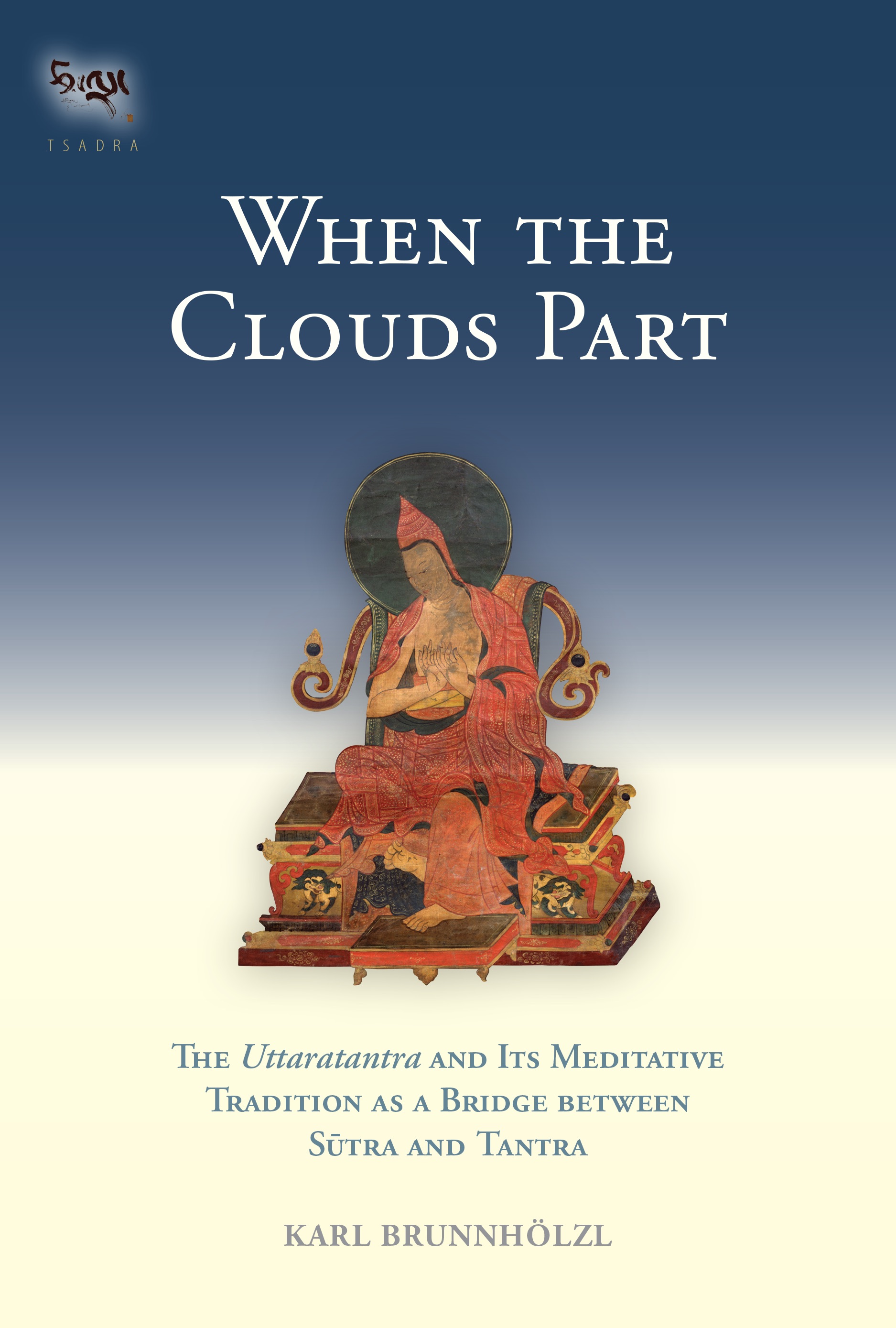
| The book begins with a 325-page "Translator's Introduction," a study of the sutra's sources and exegetical traditions, which is a tour de force and a major reference for buddha-nature studies. It is for highly educated readers, assuming an extensive familiarity with the issues and terms of the discussion, such as the Madhyamaka/Yogācāra divide and the doctrine of tathāgatagarbha. | | The book begins with a 325-page "Translator's Introduction," a study of the sutra's sources and exegetical traditions, which is a tour de force and a major reference for buddha-nature studies. It is for highly educated readers, assuming an extensive familiarity with the issues and terms of the discussion, such as the Madhyamaka/Yogācāra divide and the doctrine of tathāgatagarbha. |
|
| |
|
| The Translator's Introduction is divided into eight sections: 1) the sūtra sources for tathāgatagarbha teachings; 2) historical survey of Indian and Tibetan definitions of tathāgatagarbha; 3) the history of the transmission of the "Five Books of Maitreya" to Tibet; 4) a survey of explanations of the meaning of the title of the ''Uttaratantra''; 5) the relationship between the ''Uttaratantra'' and Yogācāra; 6) the ''Uttaratantra'' and ''zhentong''; 7) the ''Uttaratantra'' and Mahāmudrā; 8) and an outline and summary of the ten works translated. | | The Translator's Introduction is divided into eight sections: (1) the sūtra sources for tathāgatagarbha teachings; (2) historical survey of Indian and Tibetan definitions of tathāgatagarbha; (3) the history of the transmission of the "Five Books of Maitreya" to Tibet; (4) a survey of explanations of the meaning of the title of the ''Uttaratantra''; (5) the relationship between the ''Uttaratantra'' and Yogācāra; (6) the ''Uttaratantra'' and ''zhentong''; (7) the ''Uttaratantra'' and Mahāmudrā; (8) and an outline and summary of the ten works translated. |
| |BookToc=* {{i|[[/Abbreviations/]]|ix}} | | |BookToc=*{{i|Abbreviations|ix}} |
| * {{i|[[/Preface/]]|xi}} | | *{{i|Preface|xi}} |
| * {{i|[[/Acknowledgments/]]|xiii}} | | *{{i|Acknowledgments|xiii}} |
| * {{i|[[/Translator's Introduction/]]|1}}
| | <center>Translator's Introduction 1</center> |
| ** {{i|[[/The Sūtra Sources of the ''Tathāgatagarbha'' Teachings/]]|3}}
| | *{{i|The Sūtra Sources of the ''Tathāgatagarbha'' Teachings|3}} |
| ** {{i|[[/Different Ways of Explaining the Meaning of ''Tathāgatagarbha''/]]|53}}
| | *{{i|[[Books/When_the_Clouds_Part/Different_Ways_of_Explaining_the_Meaning_of_Tathāgatagarbha|Different Ways of Explaining the Meaning of ''Tathāgatagarbha'']]|53}} |
| *** {{i|Explanations of ''Tathāgatagarbha'' in Indian Texts|54}}
| | **{{i|Explanations of ''Tathāgatagarbha'' in Indian Texts|54}} |
| *** {{i|''Tathāgatagarbha'' as the Emptiness That Is a Nonimplicative Negation|55}} | | ***{{i|''Tathāgatagarbha'' as the Emptiness That Is a Nonimplicative Negation|55}} |
| *** {{i|''Tathāgatagarbha'' as Mind’s Luminous Nature|57}} | | ***{{i|''Tathāgatagarbha'' as Mind’s Luminous Nature|57}} |
| *** {{i|''Tathāgatagarbha'' as the Ālaya-Consciousness|63}} | | ***{{i|''Tathāgatagarbha'' as the Ālaya-Consciousness|63}} |
| *** {{i|''Tathāgatagarbha'' as a Sentient Being|63}} | | ***{{i|''Tathāgatagarbha'' as a Sentient Being|63}} |
| *** {{i|''Tathāgatagarbha'' as the Dharmakāya, Suchness, the Disposition, and Nonconceptuality|64}} | | ***{{i|''Tathāgatagarbha'' as the Dharmakāya, Suchness, the Disposition, and<br>{{6nbsp}}Nonconceptuality|64}} |
| *** {{i|Tibetan Assertions on ''Tathāgatagarbha''|65}}
| | **{{i|Tibetan Assertions on ''Tathāgatagarbha''|65}} |
| ** {{i|[[/The History and Transmission of "The Five Dharmas of Maitreya" from India to Tibet/]]|81}}
| | *{{i|The History and Transmission of "The Five Dharmas of Maitreya" from<br>{{6nbsp}}India to Tibet|81}} |
| ** {{i|[[/The ''Mahāyānottaratantra'' (''Ratnagotravibhāga'') and the ''Ratnagotravibhāgavyākhyā''/]]|93}}
| | *{{i|The ''Mahāyānottaratantra'' (''Ratnagotravibhāga'') and the<br>{{6nbsp}}''Ratnagotravibhāgavyākhyā''|93}} |
| *** {{i|Texts and Authorships|93}}
| | **{{i|Texts and Authorships|93}} |
| *** {{i|The Meanings of the Titles ''Ratnagotravibhāga'' and ''Mahāyānottaratantraśāstra''|95}}
| | **{{i|The Meanings of the Titles ''Ratnagotravibhāga'' and<br>{{6nbsp}}''Mahāyānottaratantraśāstra''|95}} |
| ** {{i|[[/The ''Uttaratantra'' and Its Relationship with Yogācāra/]]|105}}
| | *{{i|The ''Uttaratantra'' and Its Relationship with Yogācāra|105}} |
| ** {{i|[[/The Meditative Tradition of the ''Uttaratantra'' and Shentong/]]|123}}
| | *{{i|The Meditative Tradition of the ''Uttaratantra'' and Shentong|123}} |
| *** {{i|The Two Approaches of Explaining the ''Uttaratantra''|123}}
| | **{{i|The Two Approaches of Explaining the ''Uttaratantra''|123}} |
| *** {{i|The Shentong Lineages and the Meditative Tradition of the ''Uttaratantra'' in the Jonang, Kagyü, and Nyingma Schools|131}}
| | **{{i|The Shentong Lineages and the Meditative Tradition of the<br>{{6nbsp}}''Uttaratantra'' in the Jonang, Kagyü, and Nyingma Schools|131}} |
| *** {{i|Indian Forerunners of Shentong, Early Tibetan Shentongpas, and Their Connection to the ''Uttaratantra''|140}}
| | **{{i|Indian Forerunners of Shentong, Early Tibetan Shentongpas, and Their<br>{{6nbsp}}Connection to the ''Uttaratantra''|140}} |
| ** {{i|[[/The ''Uttaratantra'' and Mahāmudrā/]]|151}}
| | *{{i|The ''Uttaratantra'' and Mahāmudrā|151}} |
| *** {{i|Sūtra Mahāmudrā, Tantra Mahāmudrā, and Essence Mahāmudrā|151}}
| | **{{i|Sūtra Mahāmudrā, Tantra Mahāmudrā, and Essence Mahāmudrā|151}} |
| *** {{i|The Sūtra Sources of Mahāmudrā|165}}
| | **{{i|The Sūtra Sources of Mahāmudrā|165}} |
| *** {{i|Maitrīpa’s Mahāmudrā of "Mental Nonengagement"|167}}
| | **{{i|Maitrīpa’s Mahāmudrā of "Mental Nonengagement"|167}} |
| *** {{i|Connections between Maitrīpa’s Mahāmudrā and the ''Uttaratantra''|177}}
| | **{{i|Connections between Maitrīpa’s Mahāmudrā and the ''Uttaratantra''|177}} |
| *** {{i|Other Indian Nontantric Treatises on Mahāmudrā|184}}
| | **{{i|Other Indian Nontantric Treatises on Mahāmudrā|184}} |
| *** {{i|Gampopa’s Mahāmudrā and the ''Uttaratantra''|190}}
| | **{{i|Gampopa’s Mahāmudrā and the ''Uttaratantra''|190}} |
| *** {{i|The Third Karmapa, Rangjung Dorje|202}}
| | **{{i|The Third Karmapa, Rangjung Dorje|202}} |
| *** {{i|The Eighth Karmapa, Mikyö Dorje|206}}
| | **{{i|The Eighth Karmapa, Mikyö Dorje|206}} |
| *** {{i|Tagpo Dashi Namgyal 212 Padma Karpo|214}}
| | **{{i|Tagpo Dashi Namgyal|212}} |
| *** {{i|The Eighth Situpa, Chökyi Jungné|216}}
| | **{{i|Padma Karpo|214}} |
| *** {{i|Other Kagyü Masters on Mahāmudrā and the ''Uttaratantra''|227}}
| | **{{i|The Eighth Situpa, Chökyi Jungné|216}} |
| *** {{i|Gö Lotsāwa’s Unique Mahāmudrā Interpretation of the ''Uttaratantra''|243}}
| | **{{i|Other Kagyü Masters on Mahāmudrā and the ''Uttaratantra''|227}} |
| *** {{i|The Geden Kagyü Tradition of Mahāmudrā|278}}
| | **{{i|Gö Lotsāwa’s Unique Mahāmudrā Interpretation of the ''Uttaratantra''|243}} |
| ** {{i|[[/Overview of the Indian and Tibetan Texts Presented in This Book/]]|283}}
| | **{{i|The Geden Kagyü Tradition of Mahāmudrā|278}} |
| *** {{i|The ''Uttaratantra'' and Ratnagotravibhāgavyākhyā|283}}
| | *{{i|Overview of the Indian and Tibetan Texts Presented in This Book|283}} |
| *** {{i|The Indian Texts on the ''Uttaratantra''|288}}
| | **{{i|The ''Uttaratantra'' and Ratnagotravibhāgavyākhyā|283}} |
| *** {{i|The Tibetan Commentaries|301}}
| | **{{i|The Indian Texts on the ''Uttaratantra''|288}} |
| *** {{i|Instruction Manuals|314}}
| | **{{i|The Tibetan Commentaries|301}} |
| * {{i|[[/Translations/]]|329}}
| | **{{i|Instruction Manuals|314}} |
| ** {{i|[[/Ratnagotravibhāga Mahāyānottaratantraśāstra/]]|331}}
| | <center>Translations 329</center> |
| *** {{i|Chapter 1: The Three Jewels and the Tathāgata Heart|337}}
| | *{{i|''Ratnagotravibhāga Mahāyānottaratantraśāstra—An Analysis of the Jewel Disposition, A<br>{{6nbsp}}Treatise on the Ultimate Continuum of the Mahāyāna''|331}} |
| *** {{i|Chapter 2: Awakening|415}}
| | **{{i|Chapter 1: The Three Jewels and the Tathāgata Heart|337}} |
| *** {{i|Chapter 3: The Buddha Qualities|429}}
| | **{{i|Chapter 2: Awakening|415}} |
| *** {{i|Chapter 4: Buddha Activity|437}}
| | **{{i|Chapter 3: The Buddha Qualities|429}} |
| *** {{i|Chapter 5: The Benefit|455}}
| | **{{i|Chapter 4: Buddha Activity|437}} |
| ** {{i|[[/Pith Instructions on "The Treatise on the Ultimate Continuum of the Mahāyāna" by Sajjana/]]|461}}
| | **{{i|Chapter 5: The Benefit|455}} |
| ** {{i|[[/A Commentary on the Meaning of the Words of the "''Uttaratantra''"/]]|473}}
| | |
| ** {{i|[[/A Commentary on "The Treatise on the Ultimate Continuum of the Mahāyāna," The Heart of the Luminous Sun by Dashi Öser/]]|695}}
| | *{{i|''Pith Instructions on "The Treatise on the Ultimate Continuum of the<br>Mahāyāna"'' by Sajjana|461}} |
| ** {{i|[[/Instructions on "The Ultimate Continuum of the Mahāyāna" by Mönlam Tsültrim/]]|777}}
| | |
| ** {{i|[[/The Repository of Wisdom by Mönlam Tsültrim/]]|789}}
| | *{{i|''A Commentary on the Meaning of the Words of the "Uttaratantra"''|473}} |
| ** {{i|[[/The Heart of the Matter of Luminosity by Mönlam Tsültrim/]]|797}}
| | |
| ** {{i|[[/Pith Instructions on the Wisdom at the Point of Passing when about to Die by Mönlam Tsültrim/]]|801}}
| | *{{i|''A Commentary on "The Treatise on the Ultimate Continuum of the<br>Mahāyāna," The Heart of the Luminous Sun'' by Dashi Öser|695}} |
| ** {{i|[[/The Lamp That Excellently Elucidates the System of the Proponents of Shentong Madhyamaka by the Eighth Karmapa/]]|803}}
| | |
| ** {{i|[[/Guiding Instructions on the View of Great Shentong Madhyamaka— Light Rays of the Stainless Vajra Moon by Jamgön Kongtrul/]]|831}}
| | *{{i|''Instructions on "The Ultimate Continuum of the Mahāyāna"'' by Mönlam<br>Tsültrim|777}} |
| * {{i|[[/Appendix 1|Appendix 1: Selected Indian and Tibetan Comments on ''Uttaratantra'' I.27–28]]|855}} | | |
| * {{i|[[/Appendix 2|Appendix 2: Selected Indian and Tibetan Comments on ''Uttaratantra'' I.154–55]]|901}} | | *{{i|''The Repository of Wisdom'' by Mönlam Tsültrim|789}} |
| * {{i|[[/Appendix 3|Appendix 3: Indian and Tibetan Comments on Abhisamayālaṃkāra V.21]]|943}} | | |
| * {{i|[[/Appendix 4|Appendix 4: The Emptiness Endowed with All Supreme Aspects]]|953}} | | *{{i|''The Heart of the Matter of Luminosity'' by Mönlam Tsültrim|797}} |
| * {{i|[[/Appendix 5|Appendix 5: The General Explanation of ''Tathāgatagarbha'' in Yeshé Dorje’s Commentary on the ''Uttaratantra'']]|963}} | | |
| * {{i|[[/Appendix 6|Appendix 6: The Presentation of the Purpose of Teaching ''Tathāgatagarbha'' in Yeshé Dorje’s Commentary on the ''Uttaratantra'']]|969}} | | *{{i|''Pith Instructions on the Wisdom at the Point of Passing when about to<br>Die'' by Mönlam Tsültrim|801}} |
| * {{i|[[/Appendix 7|Appendix 7:Comparison of the First Six Topics of the Fourth and Fifth Vajra Points in the ''Uttaratantra'' with the Same Six Topics in the Mahāyānasūtrālaṃkāra and the Mahāyānasaṃgraha]]|979}} | | |
| * {{i|[[/Appendix 8|Appendix 8: A Letter from Stainless Expanse and Awareness— a Casual Summary of the "''Uttaratantra''"]]|983}} | | *{{i|''The Lamp That Excellently Elucidates the System of the Proponents of<br>Shentong Madhyamaka'' by the Eighth Karmapa|803}} |
| * {{i|[[/Notes/]]|985}} | | |
| * {{i|[[/English–Sanskrit–Tibetan Glossary/]]|1227}} | | *{{i|''Guiding Instructions on the View of Great Shentong Madhyamaka— Light<br>Rays of the Stainless Vajra Moon'' by Jamgön Kongtrul|831}} |
| * {{i|[[/Tibetan–Sanskrit–English Glossary/]]|1231}} | | |
| * {{i|[[/Bibliography/]]|1235}}
| | *{{i|Appendix 1: Selected Indian and Tibetan Comments on ''Uttaratantra'' I.27–2|855}} |
| * {{i|[[/Index/]]|1259}} | | |
| | *{{i|Appendix 2: Selected Indian and Tibetan Comments on ''Uttaratantra'' I.154–5|901}} |
| | |
| | *{{i|Appendix 3: Indian and Tibetan Comments on ''Abhisamayālaṃkāra'' V.2|943}} |
| | |
| | *{{i|Appendix 4: The Emptiness Endowed with All Supreme Aspect|953}} |
| | |
| | *{{i|Appendix 5: The General Explanation of ''Tathāgatagarbha'' in Yeshé Dorje's<br>Commentary on the ''Uttaratantra''|963}} |
| | |
| | *{{i|Appendix 6: The Presentation of the Purpose of Teaching ''Tathāgatagarbha'' in<br>Yeshé Dorje's Commentary on the ''Uttaratantra''|969}} |
| | |
| | *{{i|Appendix 7: Comparison of the First Six Topics of the Fourth and Fifth Vajra<br>Points in the ''Uttaratantra'' with the Same Six Topics in the ''Mahāyānasūtrā-<br>laṃkāra'' and the ''Mahāyānasaṃgraha''|979}} |
| | |
| | *{{i|Appendix 8: ''A Letter from Stainless Expanse and Awareness— a Casual<br>Summary of the "Uttaratantra"''|983}} |
| | |
| | *{{i|Notes|985}} |
| | *{{i|English–Sanskrit–Tibetan Glossary|1227}} |
| | *{{i|Tibetan–Sanskrit–English Glossary|1231}} |
| | *{{i|Selected Bibliography|1235}} |
| | *{{i|Index|1259}} |
| |AddRelatedTab=Yes | | |AddRelatedTab=Yes |
| |QuotesTabContent={{GetBookQuotes}} | | |QuotesTabContent={{GetBookQuotes}} |
| |PublisherLogo=File:Shambhala Logo-Color flame with name.png | | |PublisherLogo=File:Snow Lion logo.png |
| |PostStatus=Needs Copy Editing | | |ExtraCategories=Tsadra Foundation Series |
| | |StopPersonRedirects=No |
| | |BookParentPage=Secondary Sources |
| |AddQuotesTab=Yes | | |AddQuotesTab=Yes |
| }} | | }} |