Explore: Difference between revisions
((by SublimeText.Mediawiker)) |
((by SublimeText.Mediawiker)) |
||
| Line 15: | Line 15: | ||
<h4 class="position-relative pt-5 mb-4 pl-4 pb-2">Explore the subjects | <h4 class="position-relative pt-5 mb-4 pl-4 pb-2">Explore the subjects | ||
<div class="text-80 text-muted position-absolute" style="bottom: 7px; right: 10px;">[[Site Guide|Complete Site Guide]]</div> | <div class="text-80 text-muted position-absolute" style="bottom: 7px; right: 10px;">[[Site Guide|Complete Site Guide]]</div> | ||
</h4> | </h4> | ||
<div class="row m-0 px-lg-5 pt-4 pb-5"> | |||
{{LocalTile | |||
|classes=col-sm-6 col-lg-4 | |||
|link=Questions | |||
|header=The Questions | |||
|image=https://commons.tsadra.org/images/thumb/c/c0/Buddha_disciples_gold.jpg/800px-Buddha_disciples_gold.jpg | |||
|content=Why is buddha-nature important? What would it mean to not have buddha-nature? Is buddha-nature the soul? These and other common questions about buddha-nature are outlined below, with links to readings, videos, and other material to help you explore further. New to Buddhist ideas? Click on Discover below. | |||
|watermark=Subject | |||
}} | |||
{{LocalTile | |||
|classes=col-sm-6 col-lg-4 | |||
|link=Ideas | |||
|header=The Ideas | |||
|image=https://commons.tsadra.org/images/thumb/6/67/Sthiramati.jpg/648px-Sthiramati.jpg | |||
|content=Is buddha-nature already perfected and simply obscured by delusion, or is it a seed or potential that must be cultivated and perfected? Is buddha-nature a definitive or provisional teaching? Is it the mind's natural luminosity, or is it the same as emptiness? These are questions that cut to the heart of Mahāyāna Buddhist doctrine regarding the nature of enlightenment, reality, and the Path. This page introduces some of the key questions in buddha-nature theory, framed in terms of binaries. | |||
|watermark=Subject | |||
}} | |||
{{LocalTile | |||
|classes=col-sm-6 col-lg-4 | |||
|link=Topics | |||
|header=The Topics | |||
|image=https://commons.tsadra.org/images/thumb/c/c1/Christine-wehrmeier-DnVNH2_GY5g-unsplash.jpg/400px-Christine-wehrmeier-DnVNH2_GY5g-unsplash.jpg | |||
|content=In the latter stages of its historical development in India, the idea of buddha-nature emerged as one of the most salient features of the Mahāyāna Buddhist tradition. As this form of Buddhism spread beyond the cultural milieu of ancient India, the importance of buddha-nature became evermore pronounced. In East Asian and Tibetan Buddhism, buddha-nature came to be a major keystone in the assimilation and adaptation of the Indian scriptural tradition. And, as these forms of Buddhism expanded upon that Indian heritage and developed their own literary expression of the Buddhist teachings, buddha-nature continued to be a major theme that was revisited again and again. Thus buddha-nature was weaved into the very fabric of these Buddhist traditions. Below you will find a list of pertinent topics related to buddha-nature, along with some of the major themes in which it played a crucial role. | |||
|watermark=Subject | |||
}} | |||
{{LocalTile | |||
|classes=col-sm-6 col-lg-4 | |||
|link=People | |||
|header=The People | |||
|image=https://commons.tsadra.org/images/thumb/a/a3/Asanga_and_Maitreya.jpg/419px-Asanga_and_Maitreya.jpg | |||
|content=As one of the key doctrines of Mahāyāna Buddhism, buddha-nature has been taught by many of the greatest masters of India, China, Tibet, Japan, Mongolia, and Korea for well over a thousand years. Here you will find introductions to the many authors who have written on the topic, from the luminaries of Indian Madhyamaka to the great saints of Japan and Tibet. Also in this section, you will find pages for the many contemporary scholars and teachers who have written and spoken on buddha-nature. Simply filter the entire list using the search/filter bar below. | |||
|watermark=Subject | |||
}} | |||
{{LocalTile | |||
|classes=col-sm-6 col-lg-4 | |||
|link=History | |||
|header=The History | |||
|image=https://commons.tsadra.org/images/thumb/a/a3/Ascetic_Sumedha_and_Dipankara_Buddha.jpg/320px-Ascetic_Sumedha_and_Dipankara_Buddha.jpg | |||
|content=The doctrine of buddha-nature became widespread in India in the first centuries of the Common Era. Although the ideas have roots that stretch back to the earliest teachings of the Buddha, the concept of tathāgatagarbha—"womb or seed of buddhahood"—was first taught in Mahāyāna communities. It was related to, but most likely distinct from both Madhyamaka and Yogācāra, the dominant schools of the Mahāyāna, emerging primarily from a corpus of scripture collectively known as Tathāgatagarbha sūtras and a commentary on them known as the Ratnagotravibhāga. As these scriptures circulated in India and were translated into Chinese and Tibetan, buddha-nature theory spread and was ultimately integrated—albeit with significant differences—into all philosophical schools and traditions of Mahāyāna Buddhism, from Japanese Zen to Tibetan Mahāmudrā. | |||
|watermark=Subject | |||
}} | |||
{{LocalTile | |||
|classes=col-sm-6 col-lg-4 | |||
|link=Themes | |||
|header=The Themes | |||
|image=https://commons.tsadra.org/thumb.php?f=Jason-leung-D4YrzSwyIEc-unsplash.jpg&width=400 | |||
|content=Here you will find some examples of major themes in which the influence of buddha-nature is readily apparent. | |||
|watermark=Subject | |||
}} | |||
</div> | |||
</div> | |||
<div class="vienna-gradient pt-5 pb-4"> | |||
<h4 class="position-relative pt-5 mb-4 pl-4 pb-2">Featured Content</h4> | |||
<div class="row m-0 px-lg-5 pt-4"> | |||
{{LocalTile | |||
|classes=col-sm-6 col-lg-4 | |||
|link=Events | |||
|header=Events | |||
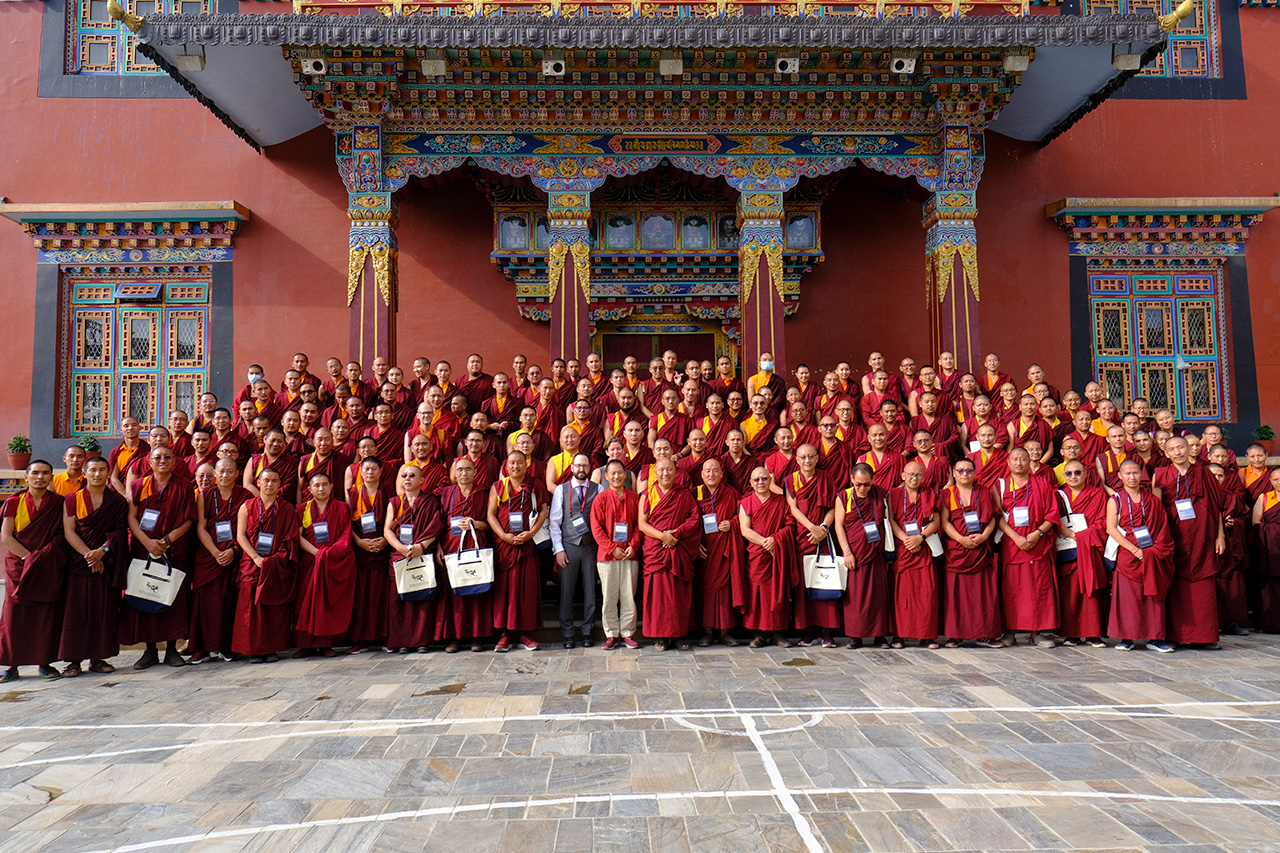
|image=https://commons.tsadra.org/images/thumb/9/97/Vienna_2019_-_Day_2_-_July_17th_-_01.jpg/800px-Vienna_2019_-_Day_2_-_July_17th_-_01.jpg | |||
|content=This page of events related to the Buddha-Nature project includes recordings from scholarly meetings, special interviews and speeches, as well as online events hosted by Tsadra Foundation. | |||
}} | |||
{{LocalTile | |||
|classes=col-sm-6 col-lg-4 | |||
|link=Topic_of_the_week | |||
|header=Topic of the week | |||
|image=https://commons.tsadra.org/images/thumb/a/a2/Pecha-pixabay.jpg/800px-Pecha-pixabay.jpg | |||
|content=Read regular posts from the writer-in-digital-residence, Lopen Dr. Karma Phuntsho. | |||
}} | |||
{{LocalTile | |||
|classes=col-sm-6 col-lg-4 | |||
|link=Buddha-Nature_Event-19_September_2020 | |||
|header=Celebrating Buddha-Nature | |||
|image=https://commons.tsadra.org/images/thumb/5/57/Buddha_Life_Deeds_-_Activity_-_Cropped.jpg/800px-Buddha_Life_Deeds_-_Activity_-_Cropped.jpg | |||
|content=Live Event: Celebrating Buddha-Nature · Join us on Zoom or Facebook live as we celebrate Buddha-Nature teachings. | |||
|watermark=Event | |||
}} | |||
</div> | </div> | ||
</div> | </div> | ||
<div> | <div> | ||
Revision as of 22:12, 7 January 2025
Explore
Explore the subjects
Featured Content

See all presentations
Karma Phuntsho
Khenpo Tenpa Tshering
Geshe Lobsang Gyatso

See all presentations
Klaus-Dieter Mathes
Ngawang Jorden
Jacqueline Stone

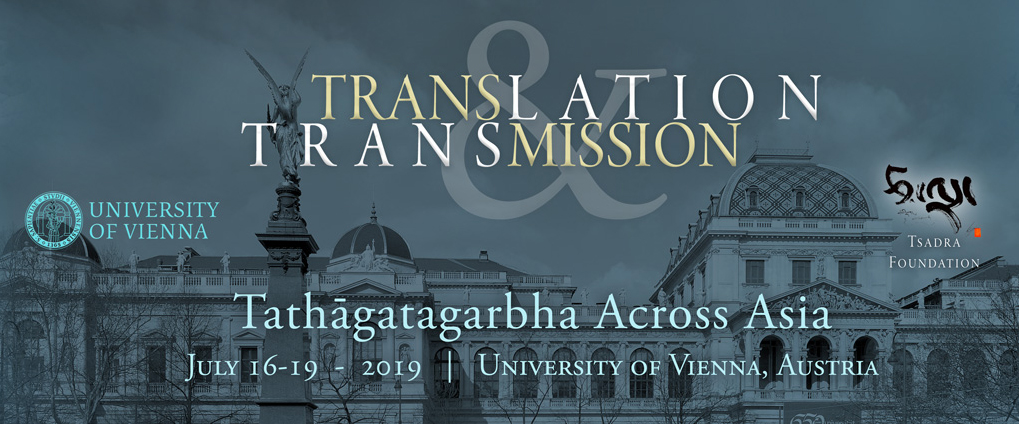
Panel Description: Continued scholarly publications, Buddhist teaching events, the recent development of online buddha-nature resources, and the associated Tathāgatagarbha symposium in Vienna in 2019 have spurred greater interest in the topic both within Tibetan Buddhist traditions and among other spiritual traditions. This panel brings together experts in an attempt to refine and deepen our understanding of buddha-nature both in terms of theoretical interpretations and practical applications in Tibetan Buddhist communities, past or present.
The main objective of the panel focuses on the interplay between points of doctrine and the practice of the path from the perspective of various Tibetan traditions and scholars. Contributions examine the interpretations of doctrines of tathāgatagarbha originally found in Indian scriptural sources. The methodological approach of these contributions range from historical-philological investigations to ethnographic research and comparative analysis.
See all presentations
Christopher Jones
Casey Forgues
Yaroslav Komarovski

The writer-in-digital-residence is the recipient of a grant designed to support Tsadra Foundation’s Buddhist literacy projects that connect the larger public with academic research and advance understanding of specific aspects of Tibetan Buddhist traditions. Writers help to curate this online resource and write essays on the history, philosophy, and practices associated with buddha-nature teachings and tathāgatagarbha theory in Tibet. These essays are addressed to an audience of educated readers of Buddhist materials and Buddhist practitioners.
Lopen (Dr) Karma Phuntsho is one of Bhutan’s leading intellectuals. He has finished monastic training in Bhutan and India before he pursued a M.St in Classical Indian Religions, and D.Phil in Oriental Studies at Balliol College, Oxford. He was a researcher at CNRS, Paris, a Research Associate at Department of Social Anthropology and the Spalding Fellow for Comparative Religion at Clare Hall, Cambridge University, and Research Consultant at University of Virginia. An author of over hundred books and articles including the authoritative History of Bhutan and Mipham’s Dialectics and the Debates on Emptiness, he speaks and writes extensively on Bhutan and Buddhism. Read a complete bio.
Tsadra Foundation is excited to support Karma Phuntsho in developing a series of online events called "Conversations on Buddha-Nature". This podcast-like project will be space for stimulating and inspiring conversations on Buddha-Nature and related subjects. As a part of the Buddha-Nature Project of the Tsadra Foundation, Karma Phuntsho will host conversations with a Buddhist leader, influencer or expert each month on the theories and practices of Buddha-Nature, which will be live on Facebook. An exercise of mindful listening, right speech, and wholesome exploration of meaning and nature of life, these conversations aim to enhance the understanding and awareness of Buddha-Nature and promote the ethos of innate goodness and positive perception.