Explore: Difference between revisions
((by SublimeText.Mediawiker)) |
No edit summary |
||
| (30 intermediate revisions by 2 users not shown) | |||
| Line 93: | Line 93: | ||
|header=Celebrating Buddha-Nature | |header=Celebrating Buddha-Nature | ||
|image=https://commons.tsadra.org/images/thumb/5/57/Buddha_Life_Deeds_-_Activity_-_Cropped.jpg/800px-Buddha_Life_Deeds_-_Activity_-_Cropped.jpg | |image=https://commons.tsadra.org/images/thumb/5/57/Buddha_Life_Deeds_-_Activity_-_Cropped.jpg/800px-Buddha_Life_Deeds_-_Activity_-_Cropped.jpg | ||
|content=Live Event: Celebrating Buddha-Nature | |content=Live Event: Celebrating Buddha-Nature · Join us on Zoom or Facebook live as we celebrate Buddha-Nature teachings. | ||
|watermark=Event | |watermark=Event | ||
}} | }} | ||
</div> | </div> | ||
{{FeaturedItem | |||
|page=2023_Buddha-Nature_Conference_Kathmandu | |||
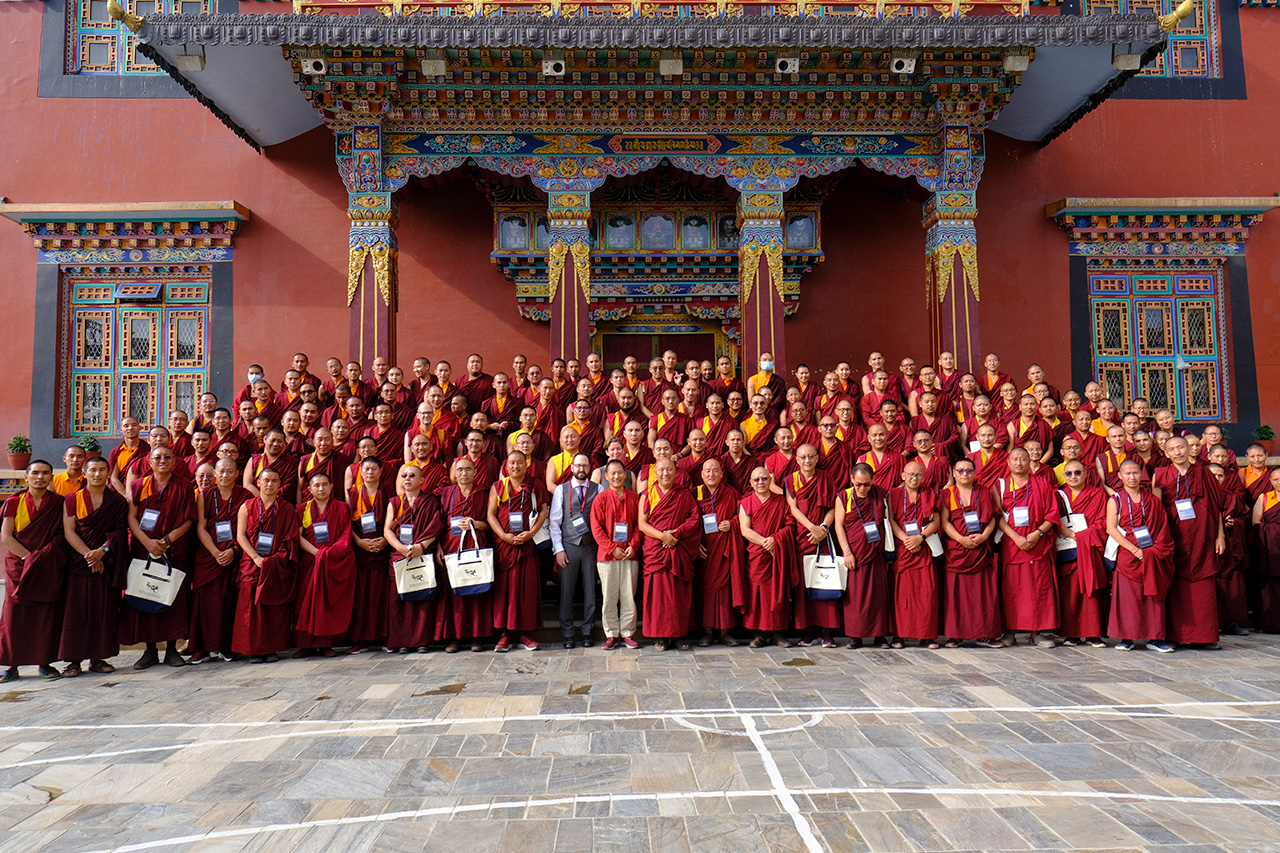
|title=Buddha-Nature Conference, Shechen Monastery, Kathmandu, June 1–3, 2023 | |||
|description=[[Image:Kathmandu-2023-June3-22.jpg|450px|class=h-auto p-0 col col-sm-6 col-lg-4 float-sm-right mt-2 mb-2 mb-sm-0 ml-sm-3 rounded|link=2023_Buddha-Nature_Conference_Kathmandu|]]In connection with the Buddha-Nature resource project, Tsadra Foundation hosted a three-day conference from June 1–3, 2023 by inviting some 20 speakers of outstanding erudition representing the different Tibetan Buddhist traditions to discuss buddha-nature, related texts, theories, and practices. The conference was attended by over two hundred scholars from 32 monastic learning centers in and around Kathmandu, broadcast live and the proceedings were recorded. The conference proved to be a lively and stimulating debate from the very first presentation! Great minds lectured and debated on our true nature of compassion and wisdom, using airplanes, pet bottles, and bouquets as examples to argue or counterargue that all beings or all things have the luminous buddha-nature. The conversations were marked by penetrating intellectual acuity, a robust sense of humor sending forth frequent bursts of laughter, and a deep sense of mutual respect and humility, thus making a significant contribution to the understanding of buddha-nature. <br> <span class="float-right">[[2023_Buddha-Nature_Conference_Kathmandu|See all presentations <i class="fad fa-long-arrow-right rotate-45 fa-xs"></i>]]</span> | |||
|textclasses=vienna-gradient px-2 px-lg-5 py-3 py-lg-4 | |||
|additionalcontent=<div class="tsdwiki-border-t-redfade py-4 d-flex justify-content-center flex-wrap row"> | |||
{{#ask: [[Media/Lopon_Karma_Phuntso's_Introduction_of_Kyoton's_Life_and_Works]]OR[[Media/Khenpo_Tenpa_Tshering_at_the_2023_Buddha-Nature_Conference]]OR[[Media/Geshe_Lobsang_Gyatso_at_the_2023_Buddha-Nature_Conference]] | |||
|?Fulltitle | |||
|?Performer | |||
|?VideoNumberInEvent | |||
|?TileDescription | |||
|?TilePhoto | |||
|?MediaContentType | |||
|?citation | |||
|?BuNayTopicTags | |||
|?PerformerRaw | |||
|sort=VideoNumberInEvent | |||
|order=asc | |||
|format=template | |||
|template=SessionTile | |||
|userparam=col-md-6 col-lg-4 text-75 | |||
|link=none | |||
}} | |||
</div> | |||
}} | |||
{{FeaturedItem | |||
|page=Tathāgatagarbha_Across_Asia | |||
|title=Tathāgatagarbha Across Asia: The 2019 Vienna Symposium | |||
|description=[[Image:Vienna-Symposium-Banner-for-Workshops-Meetings-Tsadra-website.jpg|450px|class=h-auto p-0 col col-sm-6 col-lg-4 float-sm-right mt-2 mb-2 mb-sm-0 ml-sm-3 rounded|link=Tathāgatagarbha_Across_Asia|]]Increased attention to the tathāgatagarbha doctrine in the last decade has lead to significant publications and meetings on the topic of buddha-nature and related themes. Scholars in Asia, Europe, and the Americas have published new translations and studies of the foundational scriptures and commentaries, and are examining the history and literature of the doctrine. In July 2019 Tsadra Foundation partnered with the University of Vienna to bring many of these scholars together for an international symposium titled Tathāgatagarbha Across Asia. The presentations are available here and the edited papers will be published in a collection of essays from Wisdom Publications. <br> <span class="float-right">[[Tathāgatagarbha_Across_Asia|See all presentations <i class="fad fa-long-arrow-right rotate-45 fa-xs"></i>]]</span> | |||
|textclasses=vienna-gradient px-2 px-lg-5 py-3 py-lg-4 | |||
|additionalcontent=<div class="tsdwiki-border-t-redfade py-4 d-flex justify-content-center flex-wrap row"> | |||
{{#ask: [[Media/Klaus-Dieter_Mathes_at_the_2019_Tathagatagarbha_Symposium]]OR[[Media/Khenpo_Ngawang_Jorden_at_the_2019_Tathāgatagarbha_Symposium]]OR[[Media/Jacqueline_Stone_at_the_2019_Tathāgatagarbha_Symposium]] | |||
|?Fulltitle | |||
|?Performer | |||
|?VideoNumberInEvent | |||
|?TileDescription | |||
|?TilePhoto | |||
|?MediaContentType | |||
|?citation | |||
|?BuNayTopicTags | |||
|?PerformerRaw | |||
|sort=VideoNumberInEvent | |||
|order=asc | |||
|format=template | |||
|template=SessionTile | |||
|userparam=col-md-6 col-lg-4 text-75 | |||
|link=none | |||
|limit=150 | |||
}} | |||
</div> | |||
}} | |||
{{FeaturedItem | |||
|page=Old Topic, New Insights: Buddha-Nature at the Crossroads between Doctrine and Practice | |||
|title=Old Topic, New Insights: Buddha-Nature at the Crossroads between Doctrine and Practice | |||
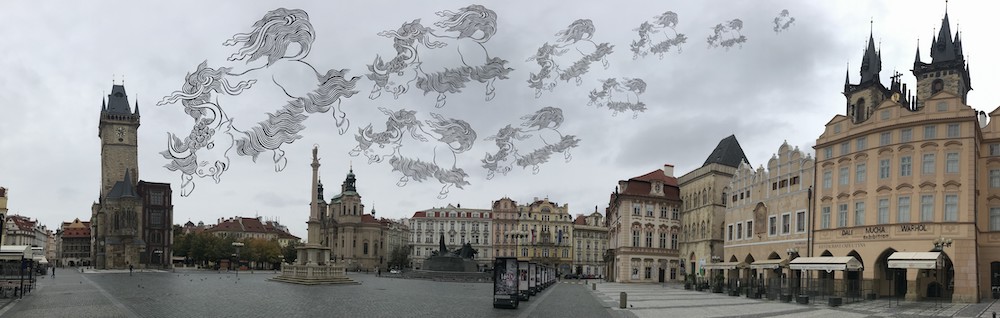
|description=[[Image:Prague IATS1-1.jpg|450px|class=h-auto p-0 col col-sm-6 col-lg-4 float-sm-right mt-2 mb-2 mb-sm-0 ml-sm-3 rounded|link=Old_Topic,_New_Insights:_Buddha-Nature_at_the_Crossroads_between_Doctrine_and_Practice|]]Tsadra Foundation supported a panel at the 2022 IATS Conference in Prague. [[Old_Topic,_New_Insights:_Buddha-Nature_at_the_Crossroads_between_Doctrine_and_Practice|Watch the presentations here]].<br><br>''Panel Description:'' Continued scholarly publications, Buddhist teaching events, the recent development of online buddha-nature resources, and the associated Tathāgatagarbha symposium in Vienna in 2019 have spurred greater interest in the topic both within Tibetan Buddhist traditions and among other spiritual traditions. This panel brings together experts in an attempt to refine and deepen our understanding of buddha-nature both in terms of theoretical interpretations and practical applications in Tibetan Buddhist communities, past or present.<br><br>The main objective of the panel focuses on the interplay between points of doctrine and the practice of the path from the perspective of various Tibetan traditions and scholars. Contributions examine the interpretations of doctrines of tathāgatagarbha originally found in Indian scriptural sources. The methodological approach of these contributions range from historical-philological investigations to ethnographic research and comparative analysis. <br> <span class="float-right">[[Old_Topic,_New_Insights:_Buddha-Nature_at_the_Crossroads_between_Doctrine_and_Practice|See all presentations <i class="fad fa-long-arrow-right rotate-45 fa-xs"></i>]]</span> | |||
|textclasses=vienna-gradient px-2 px-lg-5 py-3 py-lg-4 | |||
|additionalcontent=<div class="tsdwiki-border-t-redfade py-4 d-flex justify-content-center flex-wrap row"> | |||
{{#ask: [[Media/Christopher_Jones:_Defining_a_"Buddha-Nature_Discourse":_The_Case_of_the_Mahāmeghasūtra_(Sprin_chen_po'i_mdo)]]OR[[Media/Yaroslav_Komarovski:_Shakya_Chokden_on_Tathāgatagarbha_in_the_Tantric_Practice_of_the_Two_Stages]]OR[[Casey_Kemp:_Buddha-Nature_as_a_Path_of_Means:_The_Influence_of_Buddha-Nature_Theory_on_Eleventh-Century_Tibetan_Tantric_Instructions]] | |||
|?Fulltitle | |||
|?Performer | |||
|?VideoNumberInEvent | |||
|?TileDescription | |||
|?TilePhoto | |||
|?MediaContentType | |||
|?citation | |||
|?BuNayTopicTags | |||
|?PerformerRaw | |||
|sort=VideoNumberInEvent | |||
|order=asc | |||
|format=template | |||
|template=SessionTile | |||
|userparam=col-md-6 col-lg-4 text-75 | |||
|link=none | |||
|limit=150 | |||
}} | |||
</div> | |||
}} | |||
<div> | <div> | ||
<div class="row"> | |||
<div class="col-lg-9 pr-lg-0"> | |||
{{FeaturedItem | {{FeaturedItem | ||
|page=Articles/Karl_Brunnhölzl_Interview_on_Buddha-Nature | |page=Articles/Karl_Brunnhölzl_Interview_on_Buddha-Nature | ||
| Line 219: | Line 211: | ||
|label-right=Book | |label-right=Book | ||
|target=_blank | |target=_blank | ||
|wrapperclasses=my-2 depth-0 | |wrapperclasses=my-2 tsdwiki-depth-0 | ||
}} | }} | ||
{{RelatedButton | {{RelatedButton | ||
| Line 227: | Line 219: | ||
|label-right=Book | |label-right=Book | ||
|target=_blank | |target=_blank | ||
|wrapperclasses=my-2 depth-0 | |wrapperclasses=my-2 tsdwiki-depth-0 | ||
}} | }} | ||
{{RelatedButton | {{RelatedButton | ||
| Line 235: | Line 227: | ||
|label-right=Book | |label-right=Book | ||
|target=_blank | |target=_blank | ||
|wrapperclasses=my-2 depth-0 | |wrapperclasses=my-2 tsdwiki-depth-0 | ||
}} | }} | ||
</div> | </div> | ||
| Line 251: | Line 243: | ||
|imagelink=https://tricycle.org/magazine/bhutan-on-the-brink/ | |imagelink=https://tricycle.org/magazine/bhutan-on-the-brink/ | ||
|imageposition=right | |imageposition=right | ||
|textclasses=pl-lg-5 | |textclasses=pl-lg-5 py-3 py-lg-4 | ||
|additionalcontent= | |additionalcontent= | ||
}} | }} | ||
| Line 257: | Line 249: | ||
</div> | </div> | ||
<div class="row maitreya-gradient m-0 py-4"> | <div class="row maitreya-gradient m-0 py-4"> | ||
< | <h4 class="col-12 mt-2 mb-4 py-2 pl-lg-4 tsdwiki-border-br-redfade">Conversations on Buddha-Nature</h4> | ||
<div class="col-lg-9 pl-lg-5 pr-lg-4"> | <div class="col-lg-9 pl-lg-5 pr-lg-4"> | ||
< | <h5 class="mt-4 mb-3 mb-lg-4 tsdwiki-border-br-redfade">Chatting with teachers, leaders, and influencers in the Dharma World</h5> | ||
<div> | <div>Tsadra Foundation is excited to support Karma Phuntsho in developing a series of online events called "[[Conversations on Buddha-Nature]]". This podcast-like project will be space for stimulating and inspiring conversations on Buddha-Nature and related subjects. As a part of the Buddha-Nature Project of the Tsadra Foundation, Karma Phuntsho will host conversations with a Buddhist leader, influencer or expert each month on the theories and practices of Buddha-Nature, which will be live on Facebook. An exercise of mindful listening, right speech, and wholesome exploration of meaning and nature of life, these conversations aim to enhance the understanding and awareness of Buddha-Nature and promote the ethos of innate goodness and positive perception.</div> | ||
</div> | </div> | ||
<div class="col-lg-3"> | <div class="col-lg-3"> | ||
< | <h5 class="mt-4 mb-3 mb-lg-4 tsdwiki-border-br-redfade">Speakers</h5> | ||
<div class="d-flex flex-wrap"> | <div class="d-flex flex-wrap"> | ||
{{PeopleMentionedMedia|People/Phuntsho, Karma|showdates=no|height=auto|margins=m-0}} | {{PeopleMentionedMedia|People/Phuntsho, Karma|showdates=no|height=auto|margins=m-0}} | ||
| Line 273: | Line 263: | ||
</div> | </div> | ||
</div> | </div> | ||
< | <h4 class="mt-4 mb-4 pl-4 pb-2 tsdwiki-border-br-redfade">From the experts</h4> | ||
<div class="row klaus-gradient m-0"> | <div class="row klaus-gradient m-0"> | ||
<div class="col-lg-3 pl-3 pb-4"> | <div class="col-lg-3 pl-3 pb-4"> | ||
| Line 284: | Line 274: | ||
|label-right=Book | |label-right=Book | ||
|target=_blank | |target=_blank | ||
|wrapperclasses=my-2 depth-0 | |wrapperclasses=my-2 tsdwiki-depth-0 | ||
}} | }} | ||
{{RelatedButton | {{RelatedButton | ||
| Line 292: | Line 282: | ||
|label-right=Article | |label-right=Article | ||
|target=_blank | |target=_blank | ||
|wrapperclasses=my-2 depth-0 | |wrapperclasses=my-2 tsdwiki-depth-0 | ||
}} | }} | ||
</div> | </div> | ||
| Line 304: | Line 294: | ||
|imageposition=right | |imageposition=right | ||
|textclasses=pl-4 pt-2 pb-3 | |textclasses=pl-4 pt-2 pb-3 | ||
|additionalcontent=<div class="border- | |additionalcontent=<div class="tsdwiki-border-t-redfade pt-3 text-center">{{InsertHtml5Audio|File:Mathes-Interview-Complete-53min-04sec.mp3}} | ||
</div> | </div> | ||
}} | }} | ||
| Line 337: | Line 327: | ||
</div> | </div> | ||
<div class="col-lg-3 p-lg-3 pb-3"> | <div class="col-lg-3 p-lg-3 pb-3"> | ||
< | <h5 class="mt-4 mt-lg-2 mb-2 text-center">[[Wulstan Fletcher]]</h5> | ||
<div class="d-flex justify-content-center flex-wrap"> | <div class="d-flex justify-content-center flex-wrap"> | ||
{{RelatedButton | {{RelatedButton | ||
| Line 345: | Line 335: | ||
|label-right=Book | |label-right=Book | ||
|target=_blank | |target=_blank | ||
|wrapperclasses=my-2 depth-0 | |wrapperclasses=my-2 tsdwiki-depth-0 | ||
}} | }} | ||
{{RelatedButton | {{RelatedButton | ||
| Line 353: | Line 343: | ||
|label-right=Book | |label-right=Book | ||
|target=_blank | |target=_blank | ||
|wrapperclasses=my-2 depth-0 | |wrapperclasses=my-2 tsdwiki-depth-0 | ||
}} | }} | ||
</div> | </div> | ||
| Line 360: | Line 350: | ||
<div class="row m-0 elizabeth-gradient"> | <div class="row m-0 elizabeth-gradient"> | ||
<div class="col-lg-3 pl-3 pb-4"> | <div class="col-lg-3 pl-3 pb-4"> | ||
< | <h5 class="mt-4 mb-2 text-center">[[Elizabeth Callahan]]</h5> | ||
<div class="d-flex justify-content-around flex-wrap"> | <div class="d-flex justify-content-around flex-wrap"> | ||
{{RelatedButton | {{RelatedButton | ||
| Line 368: | Line 358: | ||
|label-right=Book | |label-right=Book | ||
|target=_blank | |target=_blank | ||
|wrapperclasses=my-2 depth-0 | |wrapperclasses=my-2 tsdwiki-depth-0 | ||
}} | }} | ||
{{RelatedButton | {{RelatedButton | ||
| Line 376: | Line 366: | ||
|label-right=Book | |label-right=Book | ||
|target=_blank | |target=_blank | ||
|wrapperclasses=my-2 depth-0 | |wrapperclasses=my-2 tsdwiki-depth-0 | ||
}} | }} | ||
</div> | </div> | ||
| Line 384: | Line 374: | ||
|page=Articles/Elizabeth_Callahan_Interview_on_Buddha-Nature | |page=Articles/Elizabeth_Callahan_Interview_on_Buddha-Nature | ||
|title=Interview with Elizabeth Callahan on Buddha-Nature | |title=Interview with Elizabeth Callahan on Buddha-Nature | ||
|description=In this video interview Elizabeth Callahan discusses the key terminology that is used when speaking of buddha-nature. She explains the term ordinary mind and elaborates on the meaning of buddha-nature. | |description=In this video interview Elizabeth Callahan discusses the key terminology that is used when speaking of buddha-nature. She explains the term ''ordinary mind'' and elaborates on the meaning of buddha-nature. | ||
|image=https://commons.tsadra.org/images/0/0c/Callahan%2C_Elizabeth_Canyon_Cropped.jpg | |image=https://commons.tsadra.org/images/0/0c/Callahan%2C_Elizabeth_Canyon_Cropped.jpg | ||
|imageposition=right | |imageposition=right | ||
| Line 413: | Line 403: | ||
|page=Articles/On_the_Ratnagotravibhāga | |page=Articles/On_the_Ratnagotravibhāga | ||
|title=First Writer-In-Digital-Residence: Alex Gardner On the Ratnagotravibhāga | |title=First Writer-In-Digital-Residence: Alex Gardner On the Ratnagotravibhāga | ||
|description=Alexander Gardner is Director and Chief Editor of the Treasury of Lives, an open-access biographical encyclopedia of Tibet, Inner Asia, and the Himalayan region. He completed his PhD in Buddhist Studies at the University of Michigan in 2007 and is the author of ''The Life of Jamgon Kongtrul the Great'', published by Shambhala in 2019. Alex served as the Writer-in-Digital-Residence for Tsadra Foundation's Buddha-Nature Project from 2017-2019. Read his key contributions here! | |||
|image=https://commons.tsadra.org/images/5/50/Alexander_Gardner.jpg | |image=https://commons.tsadra.org/images/5/50/Alexander_Gardner.jpg | ||
|textclasses= pt-3 pb-2 | |textclasses= pt-3 pb-2 | ||
| Line 418: | Line 409: | ||
</div> | </div> | ||
<div class="col-lg-3 p-3"> | <div class="col-lg-3 p-3"> | ||
< | <h5 class="mt-4 mt-lg-2 mb-2 text-center">[[Alex Gardner]]</h5> | ||
<div class="d-flex justify-content-around flex-wrap"> | <div class="d-flex justify-content-around flex-wrap"> | ||
{{RelatedButton | {{RelatedButton | ||
| Line 426: | Line 417: | ||
|label-right=Article | |label-right=Article | ||
|target=_blank | |target=_blank | ||
|wrapperclasses=my-2 depth-0 | |wrapperclasses=my-2 tsdwiki-depth-0 | ||
|textclasses=text-90 | |textclasses=text-90 | ||
}} | }} | ||
| Line 435: | Line 426: | ||
|label-right=Article | |label-right=Article | ||
|target=_blank | |target=_blank | ||
|wrapperclasses=my-2 depth-0 | |wrapperclasses=my-2 tsdwiki-depth-0 | ||
}} | }} | ||
</div> | </div> | ||
</div> | </div> | ||
</div> | </div> | ||
< | <h4 class="mt-5 mb-4 pl-4 pb-2 tsdwiki-border-br-redfade">Other Interviews</h4> | ||
<div class="d-flex justify-content-center flex-wrap"> | <div class="d-flex justify-content-center flex-wrap"> | ||
{{#ask: [[Articles/Ringu_Tulku_Interview_on_Buddha-Nature]]OR[[Articles/Tokpa_Tulku_Interview_on_Buddha-Nature]] | {{#ask: [[Articles/Ringu_Tulku_Interview_on_Buddha-Nature]]OR[[Articles/Tokpa_Tulku_Interview_on_Buddha-Nature]] | ||
| Line 458: | Line 449: | ||
}} | }} | ||
</div> | </div> | ||
< | <h4 class="mt-5 mb-4 pl-4 pb-2 tsdwiki-border-br-redfade">Publications</h4> | ||
<div class="d-flex justify-content-around flex-wrap"> | <div class="d-flex justify-content-around flex-wrap"> | ||
{{ExploreBook | {{ExploreBook | ||
| Line 486: | Line 477: | ||
}} | }} | ||
</div> | </div> | ||
{{FeaturedItem | {{FeaturedItem | ||
|page=Primary_Sources | |page=Primary_Sources | ||
|description=< | |description=<h4 class="my-3 tsdwiki-border-br-redfade">Study the sources</h4> | ||
<div class="pl-lg-5 pr-lg-4">The seeds of buddha-nature teachings are sprinkled throughout the sutras and tantras of the Buddhist canon. A core group of scripture that initially taught buddha-nature known as the tathāgatagarbha sūtras date between the second and fourth centuries. These include the ''Tathāgatagarbhasūtra'', the ''Mahāparinirvāṇasūtra'', the ''Śrīmālādevīsūtra'' and several others. The famous ''Laṅkāvatārasūtra'' was also important for buddha-nature theory. In Tibetan Buddhism the late-Indian treatise ''Ratnagotravibhāga Mahāyānottaratantraśāstra'', or "Gyu Lama" as it is known in the Tibetan, serves as a major source for buddha-nature. In East Asia the ''Awakening of Faith in the Mahāyāna'' (大乗起信論) was the most influential treatise in spreading buddha-nature theory.<p class="featured-link">[[Primary Sources|Read more on the sources for buddha-nature teachings...]]</p></div> | <div class="pl-lg-5 pr-lg-4">The seeds of buddha-nature teachings are sprinkled throughout the sutras and tantras of the Buddhist canon. A core group of scripture that initially taught buddha-nature known as the tathāgatagarbha sūtras date between the second and fourth centuries. These include the ''Tathāgatagarbhasūtra'', the ''Mahāparinirvāṇasūtra'', the ''Śrīmālādevīsūtra'' and several others. The famous ''Laṅkāvatārasūtra'' was also important for buddha-nature theory. In Tibetan Buddhism the late-Indian treatise ''Ratnagotravibhāga Mahāyānottaratantraśāstra'', or "Gyu Lama" as it is known in the Tibetan, serves as a major source for buddha-nature. In East Asia the ''Awakening of Faith in the Mahāyāna'' (大乗起信論) was the most influential treatise in spreading buddha-nature theory.<p class="featured-link">[[Primary Sources|Read more on the sources for buddha-nature teachings...]]</p></div> | ||
|image=https://commons.tsadra.org/images/thumb/c/c7/Maitreya_statue.jpg/431px-Maitreya_statue.jpg | |image=https://commons.tsadra.org/images/thumb/c/c7/Maitreya_statue.jpg/431px-Maitreya_statue.jpg | ||
| Line 495: | Line 485: | ||
|imageposition=right | |imageposition=right | ||
|imageclasses=flip-h | |imageclasses=flip-h | ||
|additionalcontent=<div class="border- | |additionalcontent=<div class="tsdwiki-border-t-redfade py-3 d-flex justify-content-center flex-wrap"> | ||
{{RelatedButton | {{RelatedButton | ||
|link=/index.php/Texts/Ratnagotravibhāga_Mahāyānottaratantraśāstra | |link=/index.php/Texts/Ratnagotravibhāga_Mahāyānottaratantraśāstra | ||
| Line 514: | Line 504: | ||
</div> | </div> | ||
}} | }} | ||
< | <h4 class="mt-5 mb-4 pl-4 pb-2 tsdwiki-border-br-redfade">Explore the root verses</h4> | ||
<div class="row"> | <div class="row"> | ||
<div class="col-lg-8"> | <div class="col-lg-8"> | ||
| Line 542: | Line 532: | ||
</div> | </div> | ||
</div> | </div> | ||
< | <h4 class="mt-5 mb-4 pl-4 pb-2 tsdwiki-border-br-redfade">Traditional expositions</h4> | ||
<div class="row px-4"> | <div class="row px-4"> | ||
{{#ask: [[Media/Buddha_Nature_by_Ringu_Tulku_Rinpoche_(Part_1_of_3)]]OR[[Media/A_Discourse_on_the_Uttaratantra_by_14th_Dalai_Lama_in_Holland_(Part_1_of_4)]]OR[[Media/Buddha_Potential_1:_Uttaratantra_by_Kirti_Tsenshab_Rinpoche_at_Land_of_Medicine_Buddha_(Part_1_of_9)]]OR[[Media/Mahayana_Uttaratantra_Shastra:_Taught_by_Khenpo_Sodargye,_May_2019_(part_1)]]OR[[Media/Teachings_on_the_Uttaratantra_by_Gyumed_Khensur_Rinpoche_Lobsang_Jampa_by_Do_Ngak_Kunphen_Ling,_Redding,_CT_and_the_Mahayana_Sutra_and_Tantra_Center_of_NJ_(Part_1_of_16)]]OR[[Media/Tulku_Orgyen_Phuntsok_Buddha_Nature_Class:_Teachings_on_the_Uttaratantra_1of_6]] | {{#ask: [[Media/Buddha_Nature_by_Ringu_Tulku_Rinpoche_(Part_1_of_3)]]OR[[Media/A_Discourse_on_the_Uttaratantra_by_14th_Dalai_Lama_in_Holland_(Part_1_of_4)]]OR[[Media/Buddha_Potential_1:_Uttaratantra_by_Kirti_Tsenshab_Rinpoche_at_Land_of_Medicine_Buddha_(Part_1_of_9)]]OR[[Media/Mahayana_Uttaratantra_Shastra:_Taught_by_Khenpo_Sodargye,_May_2019_(part_1)]]OR[[Media/Teachings_on_the_Uttaratantra_by_Gyumed_Khensur_Rinpoche_Lobsang_Jampa_by_Do_Ngak_Kunphen_Ling,_Redding,_CT_and_the_Mahayana_Sutra_and_Tantra_Center_of_NJ_(Part_1_of_16)]]OR[[Media/Tulku_Orgyen_Phuntsok_Buddha_Nature_Class:_Teachings_on_the_Uttaratantra_1of_6]] | ||
| Line 555: | Line 545: | ||
|format=template | |format=template | ||
|template=SessionTile | |template=SessionTile | ||
|userparam=col-sm-6 col-lg-4 text- | |userparam=col-sm-6 col-lg-4 text-80 | ||
|link=none | |link=none | ||
|limit=150 | |limit=150 | ||
| Line 562: | Line 552: | ||
</div> | </div> | ||
</div> | </div> | ||
Latest revision as of 15:12, 8 October 2025
Explore
Explore the subjects
Featured Content

See all presentations
Karma Phuntsho
Khenpo Tenpa Tshering
Geshe Lobsang Gyatso

See all presentations
Klaus-Dieter Mathes
Ngawang Jorden
Jacqueline Stone

Panel Description: Continued scholarly publications, Buddhist teaching events, the recent development of online buddha-nature resources, and the associated Tathāgatagarbha symposium in Vienna in 2019 have spurred greater interest in the topic both within Tibetan Buddhist traditions and among other spiritual traditions. This panel brings together experts in an attempt to refine and deepen our understanding of buddha-nature both in terms of theoretical interpretations and practical applications in Tibetan Buddhist communities, past or present.
The main objective of the panel focuses on the interplay between points of doctrine and the practice of the path from the perspective of various Tibetan traditions and scholars. Contributions examine the interpretations of doctrines of tathāgatagarbha originally found in Indian scriptural sources. The methodological approach of these contributions range from historical-philological investigations to ethnographic research and comparative analysis.
See all presentations
Christopher Jones
Casey Forgues
Yaroslav Komarovski

The writer-in-digital-residence is the recipient of a grant designed to support Tsadra Foundation’s Buddhist literacy projects that connect the larger public with academic research and advance understanding of specific aspects of Tibetan Buddhist traditions. Writers help to curate this online resource and write essays on the history, philosophy, and practices associated with buddha-nature teachings and tathāgatagarbha theory in Tibet. These essays are addressed to an audience of educated readers of Buddhist materials and Buddhist practitioners.
Lopen (Dr) Karma Phuntsho is one of Bhutan’s leading intellectuals. He has finished monastic training in Bhutan and India before he pursued a M.St in Classical Indian Religions, and D.Phil in Oriental Studies at Balliol College, Oxford. He was a researcher at CNRS, Paris, a Research Associate at Department of Social Anthropology and the Spalding Fellow for Comparative Religion at Clare Hall, Cambridge University, and Research Consultant at University of Virginia. An author of over hundred books and articles including the authoritative History of Bhutan and Mipham’s Dialectics and the Debates on Emptiness, he speaks and writes extensively on Bhutan and Buddhism. Read a complete bio.