Tsadra Publications
From Buddha-Nature
Translations Published with Support from Tsadra Foundation
Note that most of these publications included funding for the entire project including translation and publication, but some only the publication (or printing) and some only the translation.

170 Publications supported by Tsadra Foundation since 2001[edit]
170
Publications
62
Translators supported
13
Publishers
26
Years of grants
Twenty-six years of translation
Since 2001 Tsadra Foundation has supported the translation and publication of the works listed here — among them complete English renderings of Jamgön Kongtrul's Treasury of Knowledge and Treasury of Precious Instructions, most of the Padmakara Translation Group's English and French corpus, and volumes in Wisdom Publications' Library of Tibetan Classics.Jump to: 2026 · 2025 · 2024 · 2023 · 2022 · 2021 · 2020 · 2019 · 2018 · 2017 · 2016 · 2015 · 2014 · 2013 · 2012 · 2011 · 2010 · 2009 · 2008 · 2007 · 2006 · 2005 · 2004 · 2003 · 2002 · 2001
2026[edit]

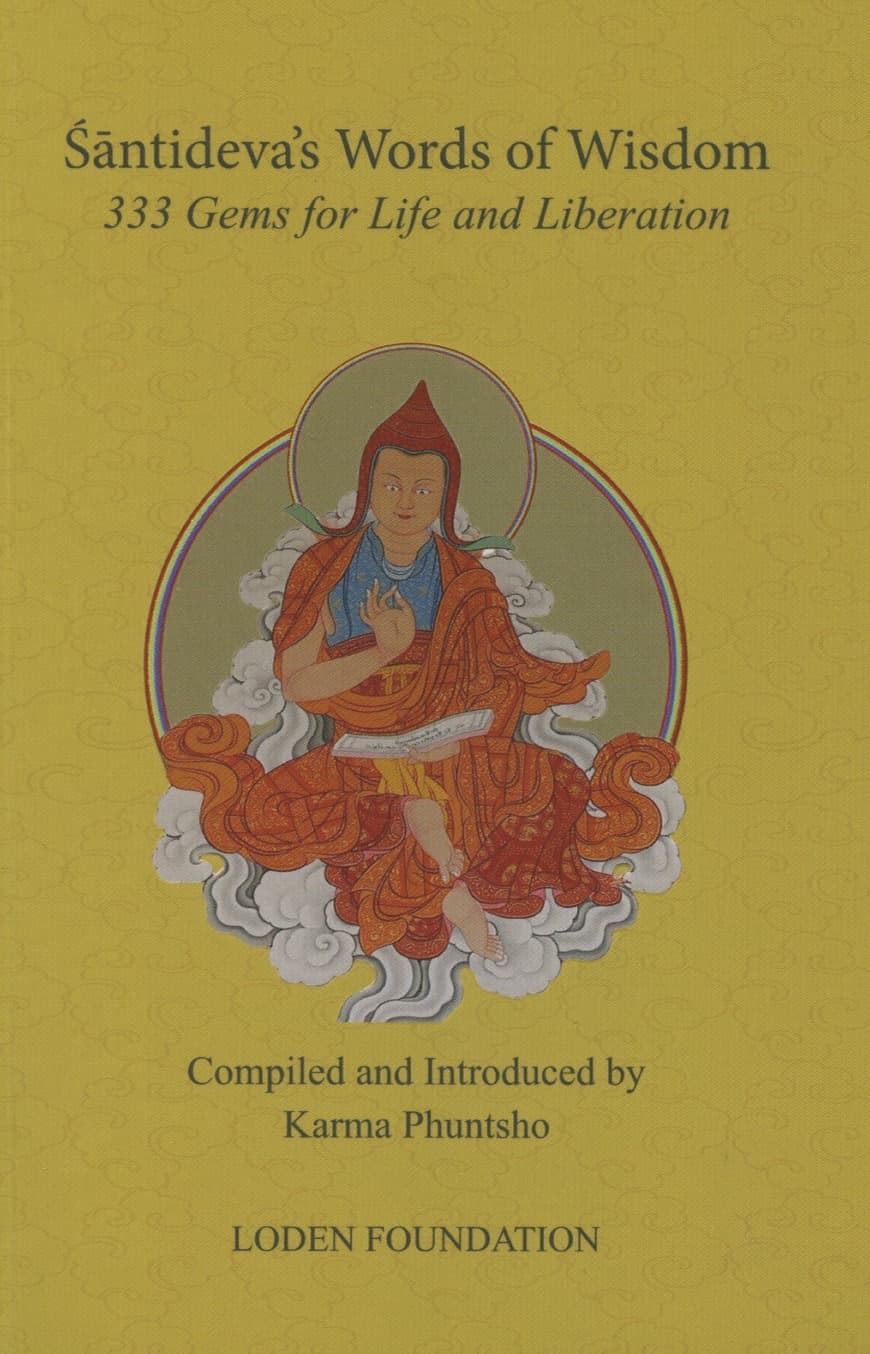
333 Gems for Life and Liberation
Loden Foundation · Bhutan · ISBN 9789998083165
A collection of inspirational quotations from Santideva's writings most of which are from The Way of the Bodhisattva. The quotations are arranged thematically in eleven categories symbolizing the eleven sublime levels of enlightenment in Mahāyāna Buddhism.
English DRL record

Selected Key Texts
Library of Tibetan Classics 11
Translated by Thupten Jinpa and Julia Stenzel
Wisdom · New York · ISBN 9780861714506
A selection of key texts on the "Bodhisattva Ideal", collected, edited, and arranged by Thupten Jinpa.
English DRL record

The Ground and View of Great Perfection Atiyoga.
Translated by Heidi Nevin
Snow Lion · Boulder · ISBN 9781645474432
Complete Nyingma Tradition from Sutra to Tantra, Books 19 and 20, is a comprehensive exploration of Atiyoga, the most advanced set of practices within the Nyingma tradition of Tibetan Buddhism.
English DRL record

Metaphysics, Argumentation, and Identity in Rongzom's Dzokchen
By Dominic Di Zinno Sur
University of Virginia Press · Charlottesville, VA · ISBN 9780813954318
A study of Rongzongpa's (Rong zom chos kyi bzang po, 1042-1136) Entering the Way of the Great Vehicle, introduced by Dominic Di Zinno Sur, Associate Professor of Religious Studies in the Department of History at Utah State University and the translator of Rongzom’s “Entering the Way of the Great Vehicle”: Dzogchen as the Culmination of the Mahāyāna (Shambhala/Snow Lion Publications, 2017).
English DRL record

Loden Foundation · Thimphu, Bhutan · ISBN 9789998083141
Collected in one book in Tibetan for the first time in the modern era: The Bodhisattvacaryāvatāra, or The Way of the Bodhisattva (BCA), and The Śikṣāsamuccaya, or The Compendium of Training.
English DRL record
2025[edit]

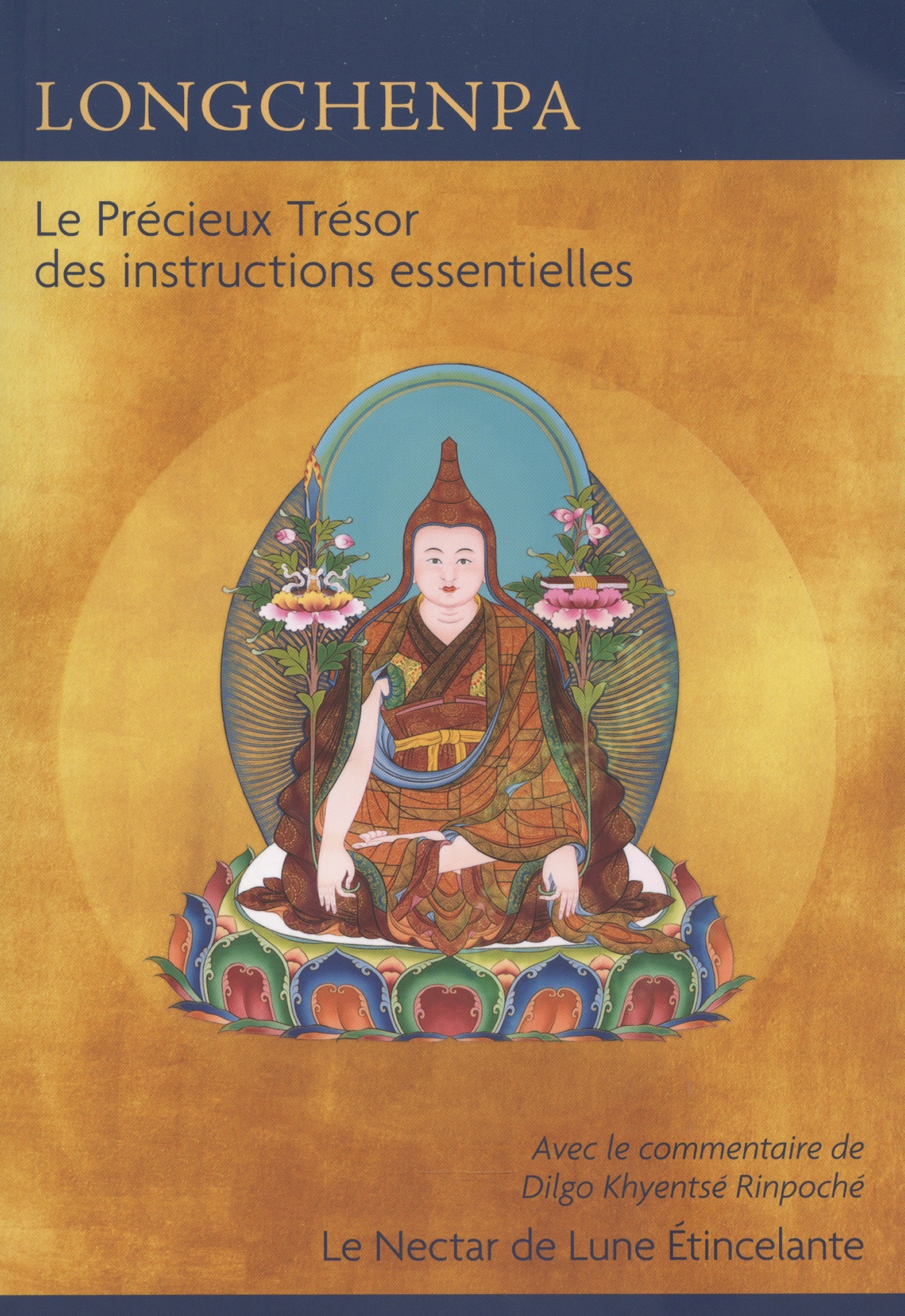
Avec le commentaire de Dilgo Khyentsé Rinpoché Le Nectar de Lune Étincelante
Translated by Matthieu Ricard
Padmakara · Plazac, France · ISBN 9782370411815
Composé par Longchen Rabjam Drimé Euzer (1308-1364), "Le Précieux Trésor des instructions essentielles" distille l'essence des enseignements des sūtras et des tantras en quatre cent treize séries de six points cruciaux.
Français DRL record

By Jeffrey Hopkins
Wisdom · New York · ISBN 9781614299134
In this updated edition of the book, several adjustments have been made, particularly regarding technical terms, which now align with the latest translations from the UMA Institute for Tibetan Studies.
English DRL record

An Ocean of Definitive Meaning
Library of Tibetan Classics 7
Translated by Cyrus Stearns
Wisdom · New York · ISBN 9780861714469
The controversial master Dölpopa Sherab Gyaltsen shook Buddhist Tibet when he taught that an eternal enlightened essence, or buddha nature, exists in full form in all living beings. The ideas discussed in Mountain Dharma are still as provocative as when Dölpopa first taught them, impacting Buddhism to this day.
English DRL record

The Early Practice of Chö
Translated by Sarah Harding
Wisdom · New York · ISBN 9798890700001
The single overall directive of the first two texts in this volume—the Heart Essence of Profound Meaning root verses and their commentary, The Big General Guide to Severance(ཟབ་དོན་གྱི་སྤྱི་ཁྲིད་ཆེན་མོ།)—is to seek out and directly confront difficult circumstances.
English DRL record

The All Illuminating Mirror
The Life Journey of Venerable Khetsun Sangpo Rinpoche in His Own Words
Nyingma Dojoling USA · Katy, TX · ISBN 9798998729102
The Life Journey of Venerable Khetsun Sangpo Rinpoche, in his own words, and including a postscript by his grandson, Jigme Norbu. Khetsun Sangpo is the famed creator of The Biographical Dictionary of Tibet and Tibetan Buddhism.
English DRL record

A Commentary on Śāntideva's Way of the Bodhisattva
Translated by Douglas Duckworth
Wisdom · New York · ISBN 9781614298731
This longest commentary on the first eight chapters of the Chonjuk or Way of the Bodhisattva (Bodhicaryāvatāra) was funded by Tsadra Foundation as part of an effort to support research and translation on Śāntideva and the concept of Bodhicitta.
English DRL record

Three Essential Works
Library of Tibetan Classics 16
Translated by Gareth Sparham
Wisdom · New York · ISBN 9780861714568
The perfection of wisdom (prajñāpāramitā) is a key element of the path in Mahāyāna Buddhism. Wisdom here is the transcendent wisdom of a bodhisattva who has penetrated the nature of reality, the emptiness (śūnyatā) of all things.
English DRL record

Translated by Matthieu Ricard — Padmakara Translation Group
Shambhala · Boulder · ISBN 9781645474791
The Nectar of the Brilliant Moon: Explanations on The Treasury of Essential Instructions of Gyalwa Longen Rabjam by Dilgo Khyentse Rinpoche.
English DRL record

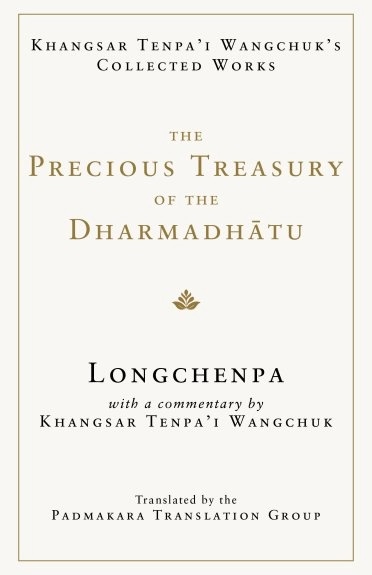
Translated by Helena Blankleder and Wulstan Fletcher — Padmakara Translation Group
Shambhala · Boulder · ISBN 9781645473718
The third volume of the Collected Works of the modern Tibetan master Khangsar Tenpa’i Wangchuk, this is the first published translation of a commentary on the 14th-century master Longchenpa’s Precious Treasury of the Dharmadhātu, a verse text on the direct practices to realize the nature of mind taught within the Nyingma school of Tibetan Buddhism.
English DRL record

La Trilogie du Repos -Volume 1
Translated by Helena Blankleder, Wulstan Fletcher, and Anne Benson
Padmakara · ISBN 9782370411785
Trouver le repos dans la nature de l’esprit, le premier volet de la Trilogie du Repos, se présente sous la forme d’un exposé progressif dela doctrine bouddhique orienté vers les enseignements de la Grande Perfection (Dzogchen), où l’accent est mis sur l’instruction en tant que fondement de la pratique.
Français DRL record

Histories of the Taklung Kagyu Tradition
Translated by Gyurme Dorje
Snow Lion · Boulder · ISBN 9781559395069
Wondrous Ocean of Eloquence is the first ever English translation of a comprehensive historiographical volume on the political, artistic, architectural, biographical, and spiritual dimensions of the Taklung, one of four primary subsects of the Kagyu lineage of Tibetan Buddhism.
English DRL record
2024[edit]

Stages of the Path, Mind Training and Esoteric Practice, Part 1
Damngak Dzö 3
Translated by Thupten Jinpa and Artemus Engle
Snow Lion · Boulder, CO · ISBN 9781559395052
Details of the 18 texts translated here can be seen on the Damngak Dzo website. The Treasury of Precious Instructions by Jamgön Kongtrul Lodrö Taye, one of Tibet’s greatest Buddhist masters, is a shining jewel of Tibetan literature, presenting essential teachings from the entire spectrum of practice lineages that existed in Tibet.
English DRL record

Damngak Dzö 2
Translated by Helena Blankleder and Wulstan Fletcher — Padmakara Translation Group
Snow Lion · Boulder · ISBN 9781645472926
A collection of texts and commentaries from the Nyingma tradition of Tibetan Buddhism on Dzogchen, or Great Perfection teachings, which introduce us to our most basic nature—the clear and pristine awareness that is the nature of the mind.
English DRL record

The Indian Texts of Mahāmudrā - Volume 2
Translated by Karl Brunnhölzl
Wisdom · New York · ISBN 9781614297093
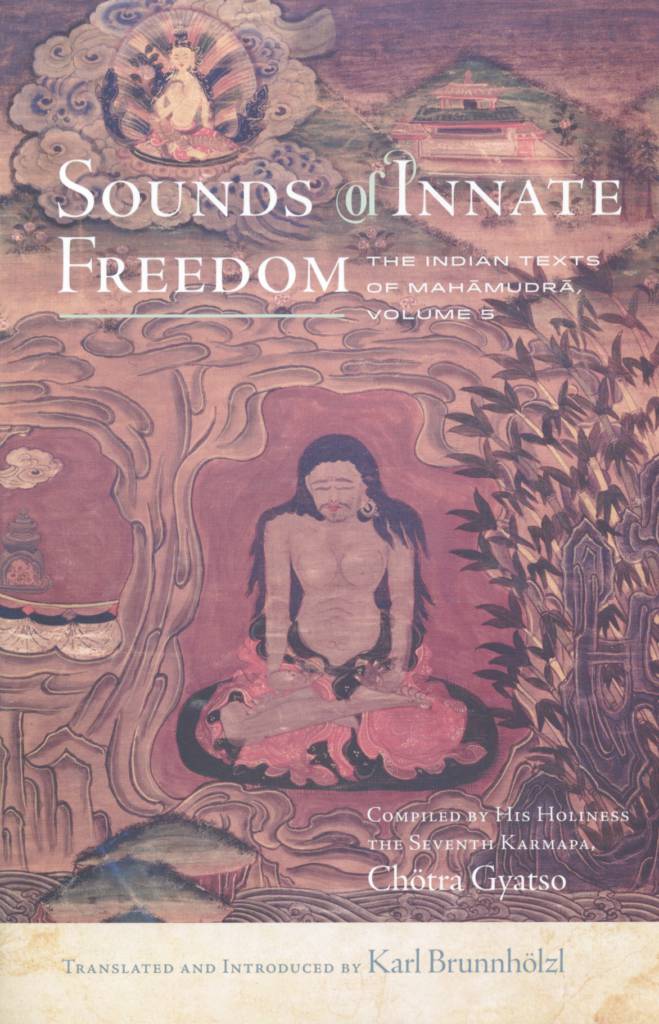
Sounds of Innate Freedom: The Indian Texts of Mahāmudrā are historic volumes containing many of the first English translations of classic mahāmudrā literature.
English DRL record

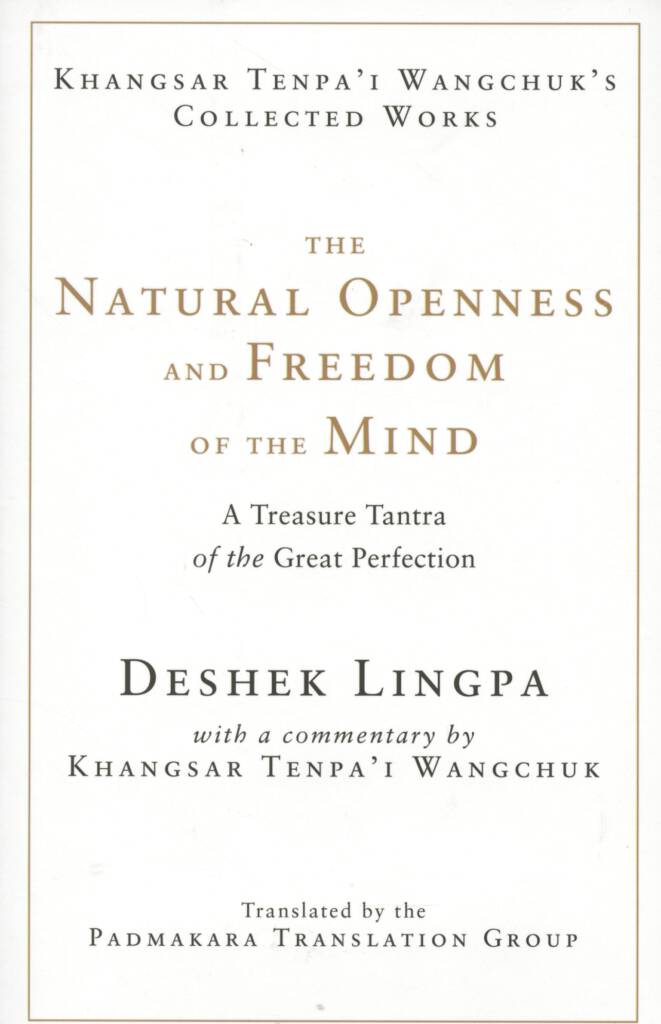
A Treasure Tantra of the Great Perfection
Translated by Stephen Gethin — Padmakara Translation Group
Shambhala · Boulder · ISBN 9781645473343
The Dzogchen tantra titled The Natural Openness and Freedom of the Mind teaches the advanced practices of trekchö, thögal, and bardo.
English DRL record

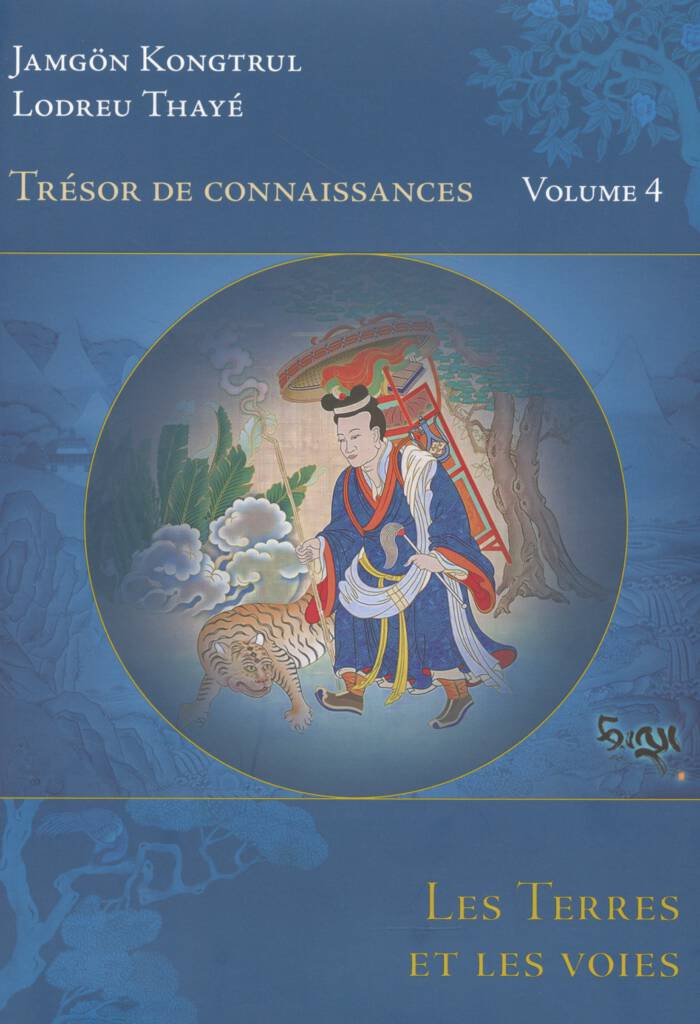
Les Terres et les voies- Volume 4
Translated by Christian Charrier
Padmakara · Le Plantou, France · ISBN 9782370411754
Dans son « Trésor de connaissances »,le premier de ses cinq grands traités,Jamgön Kongtrul explore une multitude de sujets organisés autour des trois entraînements supérieurs : la discipline, la concentration et la sagesse.
Français DRL record
2023[edit]

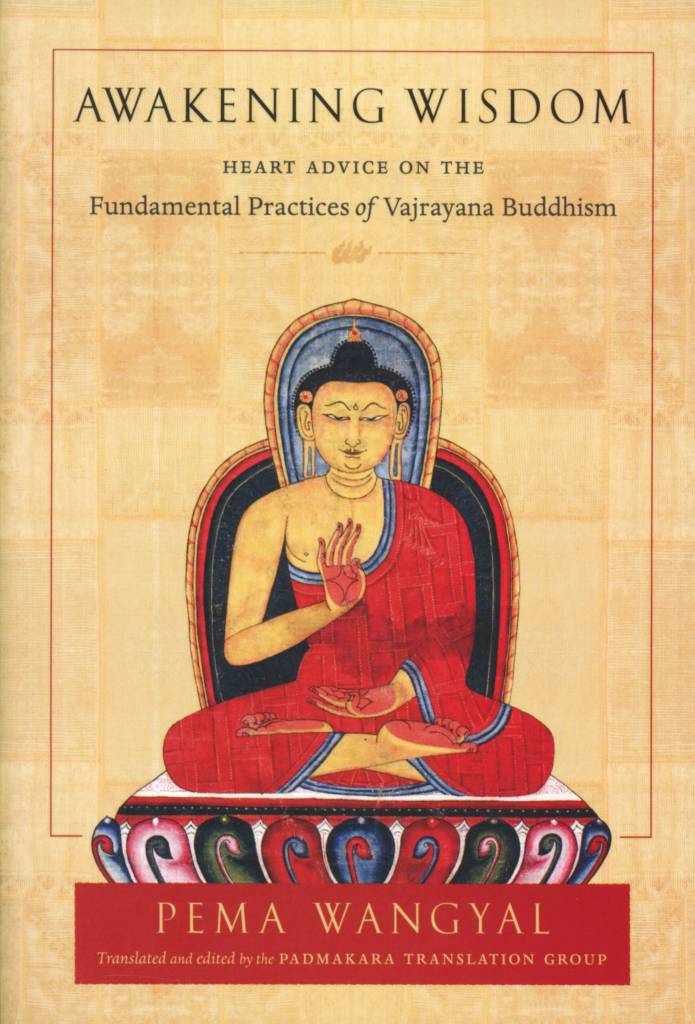
Heart Advice on the Fundamental Practices of Vajrayana Buddhism
By Stephen Gethin and Charles Hastings — Padmakara Translation Group
Shambhala · Boulder, CO · ISBN 9781645471639
If you are new to Tibetan Buddhism, this short work will help you get started with your practice; and if you are well steeped in these teachings, it will inspire and motivate you to practice them.
English DRL record

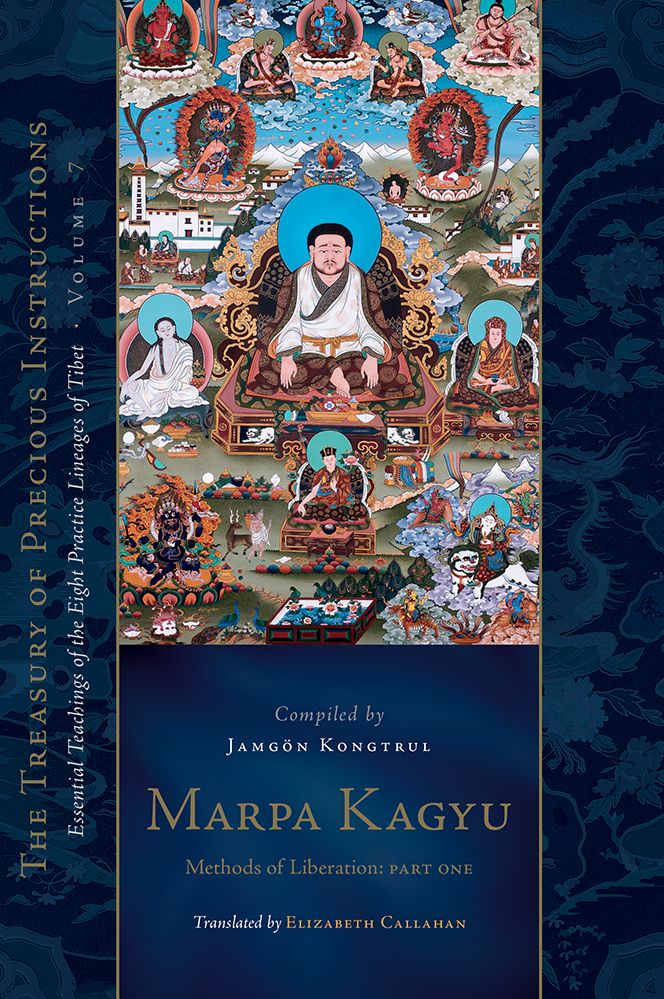
Methods of Liberation, Part 1. The Treasury of Precious Instructions: Essential Teachings of the Eight Practice Lineages of Tibet, Volume 7
Damngak Dzö 7
Translated by Elizabeth Callahan
Snow Lion · Boulder, CO · ISBN 9781611808889
The Treasury of Precious Instructions by Jamgön Kongtrul Lodrö Taye, one of Tibet’s greatest Buddhist masters, is a shining jewel of Tibetan literature, presenting essential teachings from the entire spectrum of practice lineages that existed in Tibet.
English DRL record

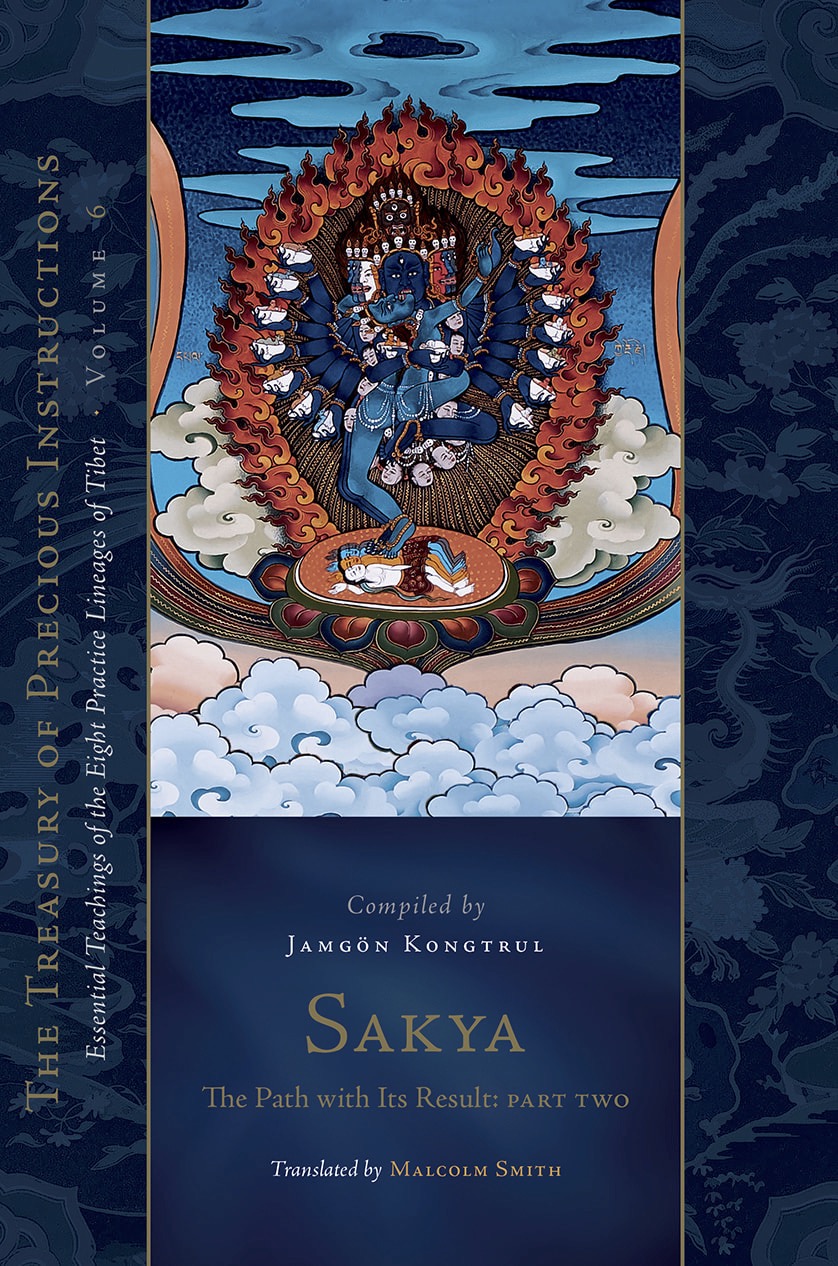
The Path with its Result, Part 2
Damngak Dzö 6
Translated by Malcolm Smith
Snow Lion · Boulder, CO · ISBN 9781611809671
The Treasury of Precious Instructions by Jamgön Kongtrul Lodrö Taye, one of Tibet’s greatest Buddhist masters, is a shining jewel of Tibetan literature, presenting essential teachings from the entire spectrum of practice lineages that existed in Tibet.
English DRL record

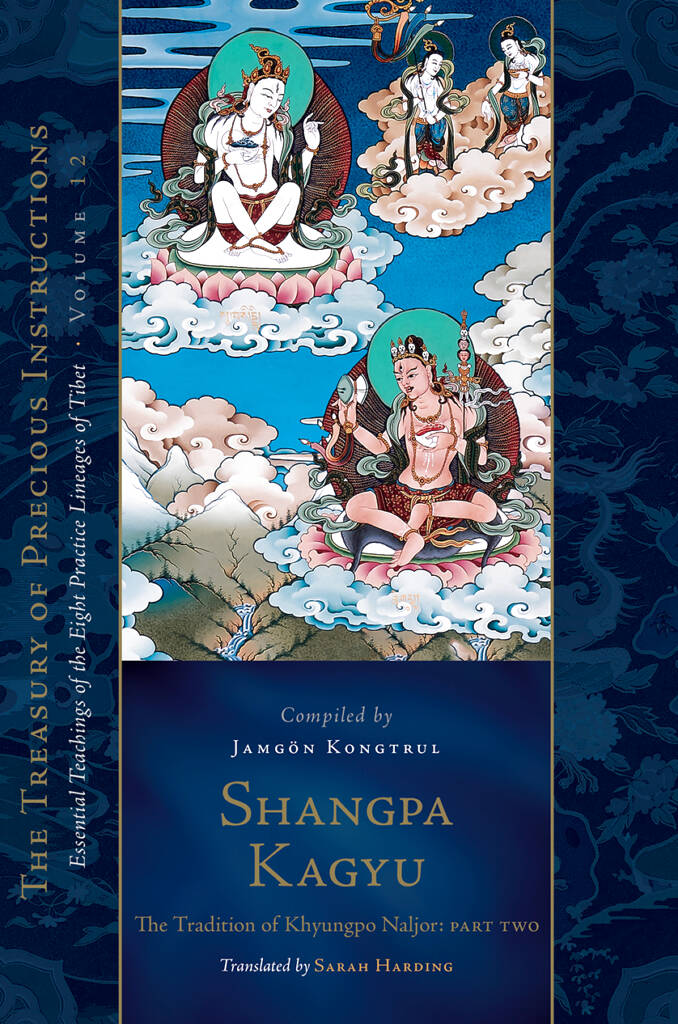
The Tradition of Khyungpo Naljor - Part 2
Damngak Dzö 12
Translated by Sarah Harding
Snow Lion · Boulder, CO · ISBN 9781645472117
This is the second of two volumes that present teachings and practices from the Shangpa Kagyu practice lineage of Tibetan Buddhism. This tradition derives from two Indian yoginīs, the dākinīs Niguma and Sukhasiddhi, and their disciple, the eleventh-century Tibetan yogi Khyungpo Naljor Tsultrim Gönpo of the Shang region of Tibet.
English DRL record

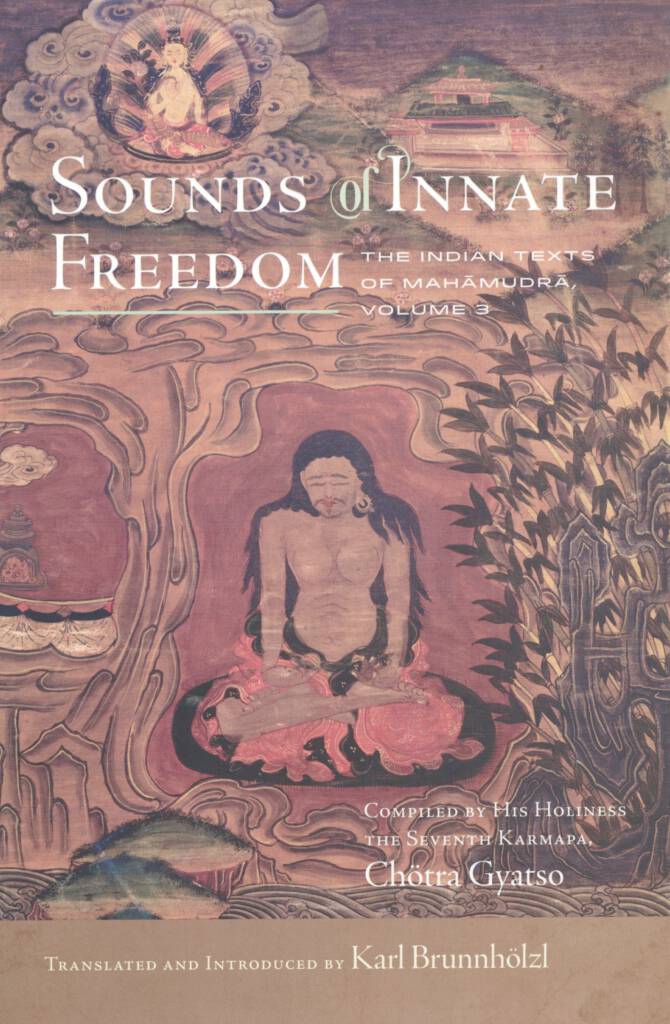
The Indian Texts of Mahāmudrā - Volume 3
Translated by Karl Brunnhölzl
Wisdom · Somerville, MA · ISBN 9781614297109
This is the third volume in an historic six-volume series containing many of the first English translations of the classic mahāmudrā literature compiled by the Seventh Karmapa. Sounds of Innate Freedom: The Indian Texts of Mahāmudrā are historic volumes containing many of the first English translations of classic mahamudra literature.
English DRL record

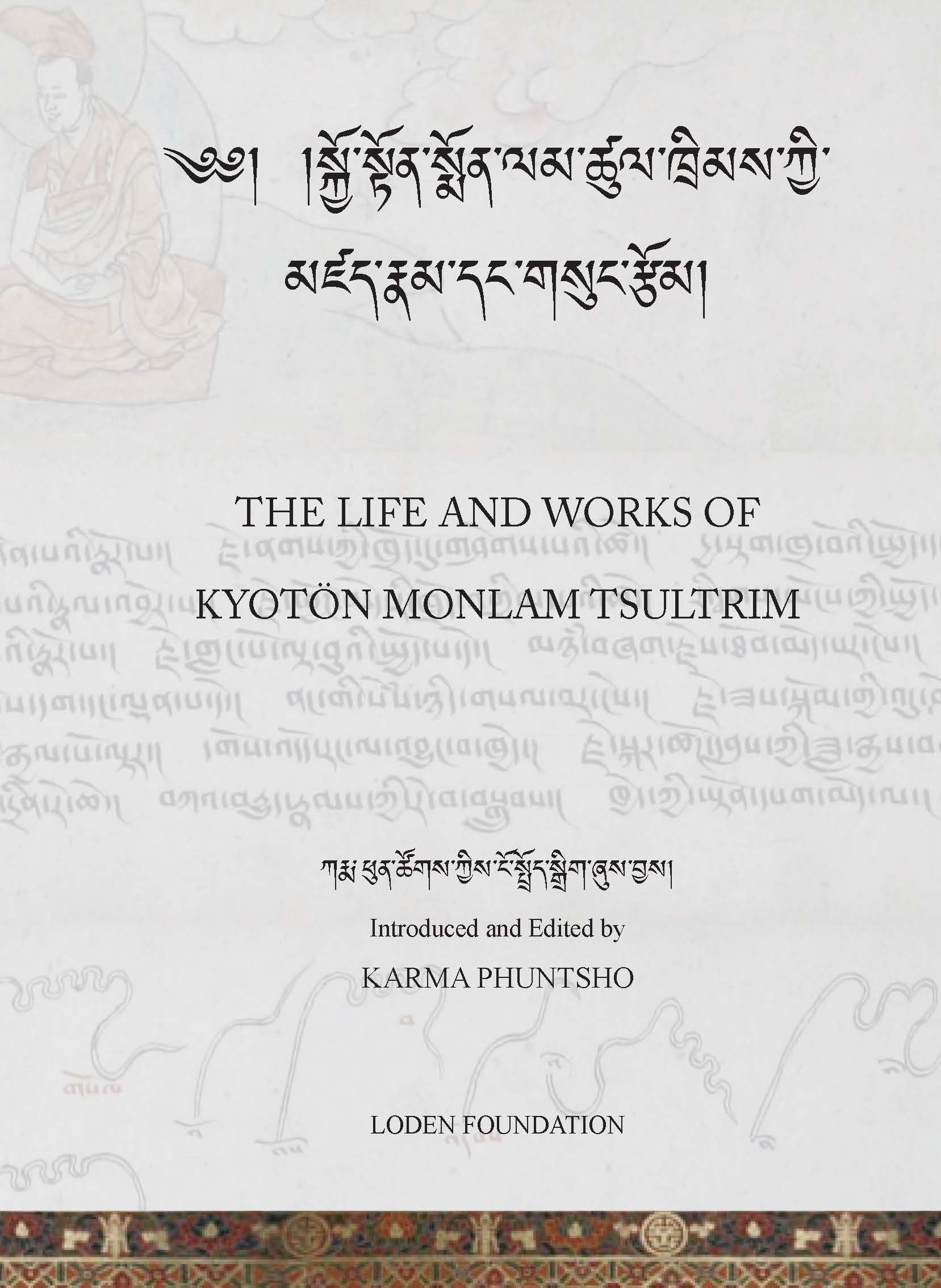
Loden Foundation · Thimphu, Bhutan · ISBN 9789998083110
The Life and Works of Kyotön Monlam Tsultrim publishes the collected works of the early Kadam master Kyoton in clear Uchen (dbu can) type based on the manuscripts in the Bka gdams gsung 'bum, which are very difficult to decipher in the old Ume (dbu med) scripts.
English DRL record

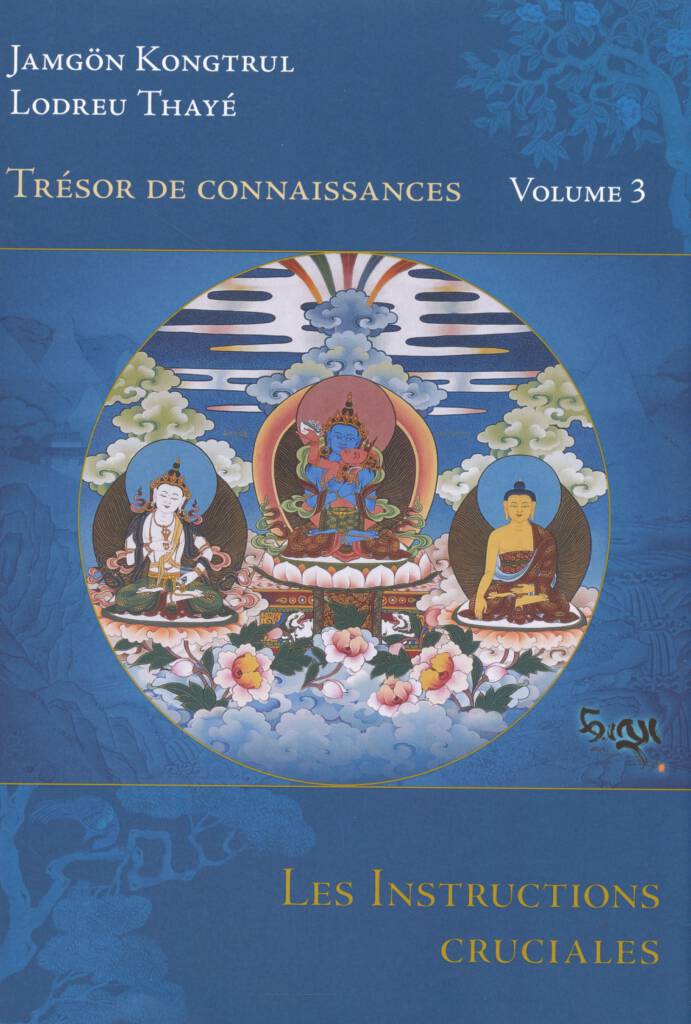
Les Instructions cruciales - Volume 3
Translated by Patrick Carré
Padmakara · Le Plantou, France · ISBN 9782370411648
Le présent ouvrage est trois fois remarquable, d’abord parce qu’il émane du grand maître Jamgön Kongtrul Lodreu Thayé, ensuite parce qu’il forme un des chapitres de son premier « Trésor » et, enfin, parce qu’il donne à voir les plus hautes cimes des tantras bouddhistes, les pratiques couramment dites « des canaux et des souffles » (tsaloung), qui débouchent sur la grande félicité immuable.
Français DRL record
2022[edit]

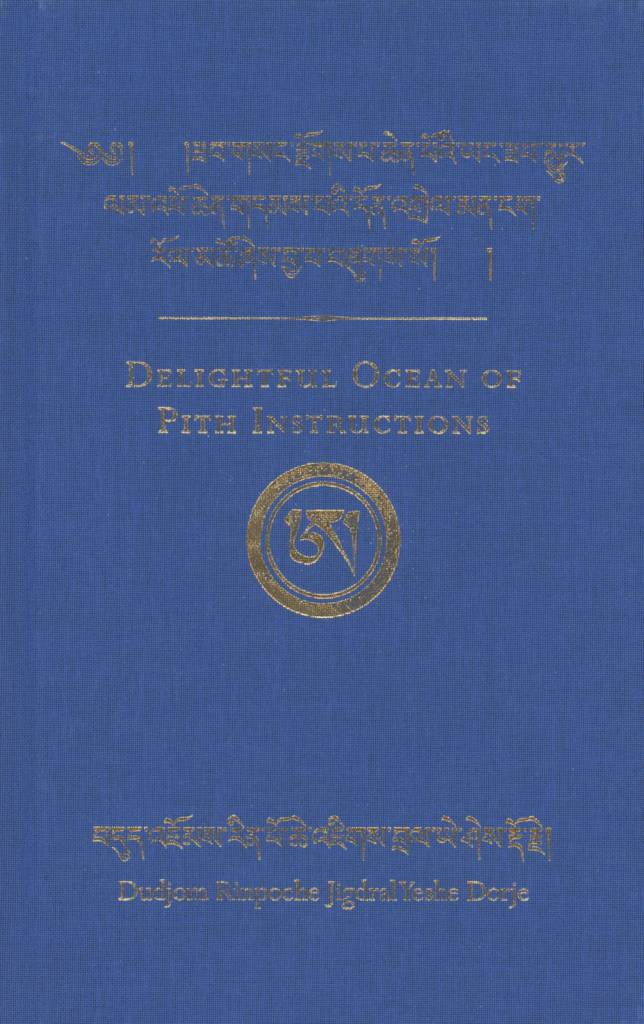
Delightful Ocean of Pith Instructions
An Essential Meaning Commentary on the Instruction for the Supremely Profound Swift Path of the Great Transfer, Belonging to the Profound Secret Great Perfection
Translated by Heidi Nevin and Dechen Wangmo
Lama Tharchin Rinpoche Heritage Foundation · Rhinebeck, NY · ISBN 9780975861813
Restricted book. Translations of Buddhahood Without Meditation, Delightful Ocean of Pith Instructions, and Showering a Rain of Blessings: Essence Guru Yoga of the Swift Path of Luminosity.
English DRL record

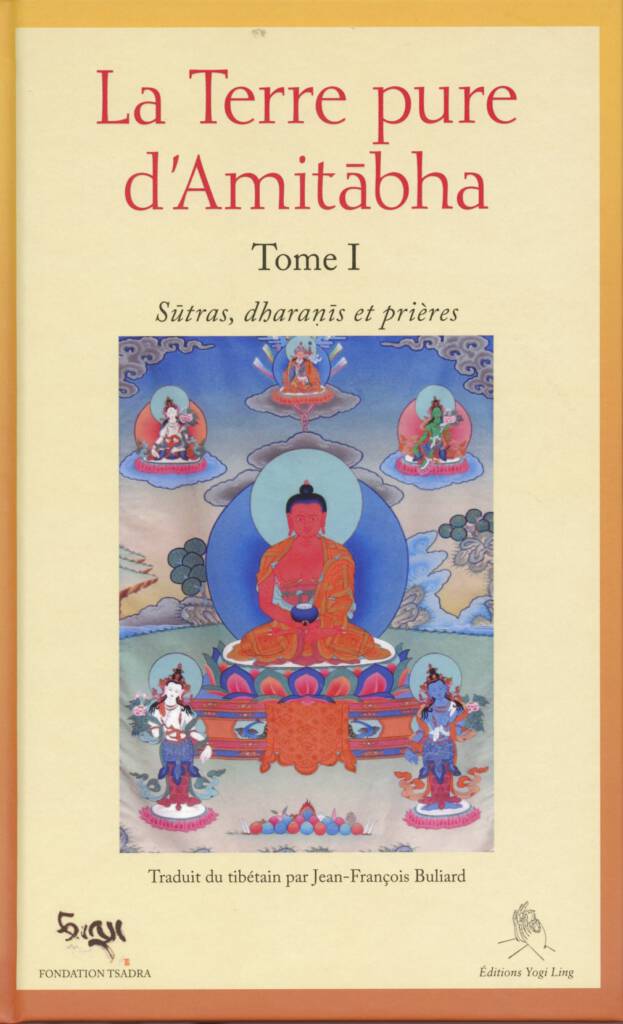
Sūtras, dharanīs et prières.
Translated by Jean-François Buliard
Yogi Ling · France · ISBN 9782911417504
The Pure Land of Amitabha Volume 1. Sutras, Dharania and Prayers of the Buddhist Canon.
Français DRL record

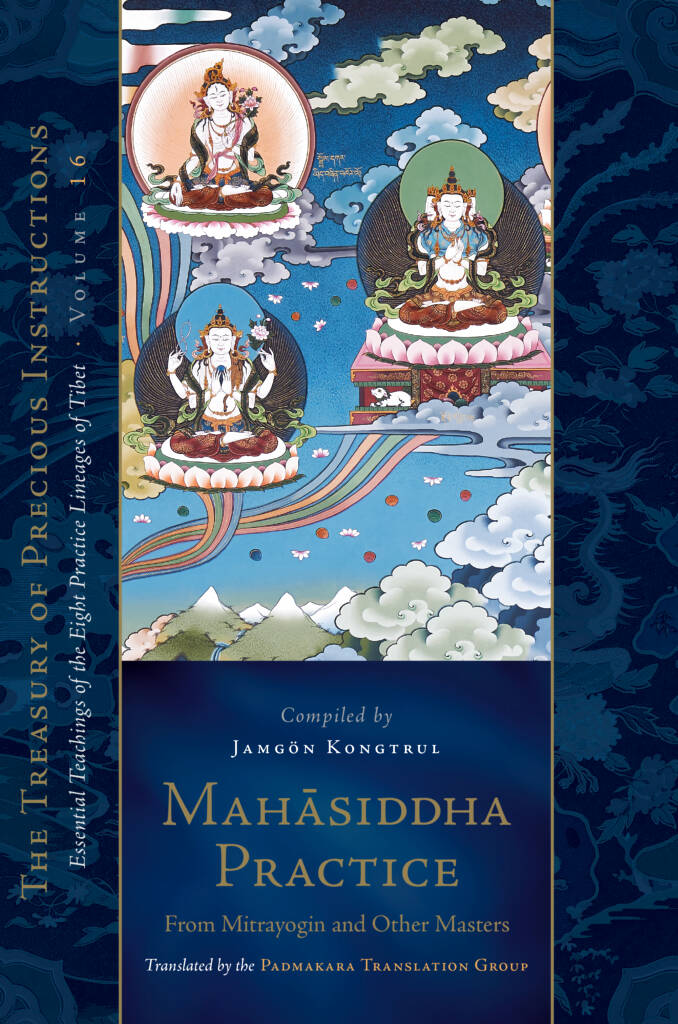
From Mitrayogin and Other Masters
Damngak Dzö 16
Translated by Stephen Gethin
Snow Lion · Boulder, CO · ISBN 9781611808933
Mahāsiddha Practice, the sixteenth volume of Jamgön Kongtrul Lodrö Taye's The Treasury of Precious Instructions (gdams ngag rin po che'i mdzod), presents a selection of teachings and practices (40 texts) centered on the mahāsiddhas, Indian tantric masters.
English DRL record

Short Commentary on the Mahāmudrā Aspiration Prayer
Translated by Sarah Harding
Wisdom · Somerville, MA · ISBN 9781614297185
English DRL record

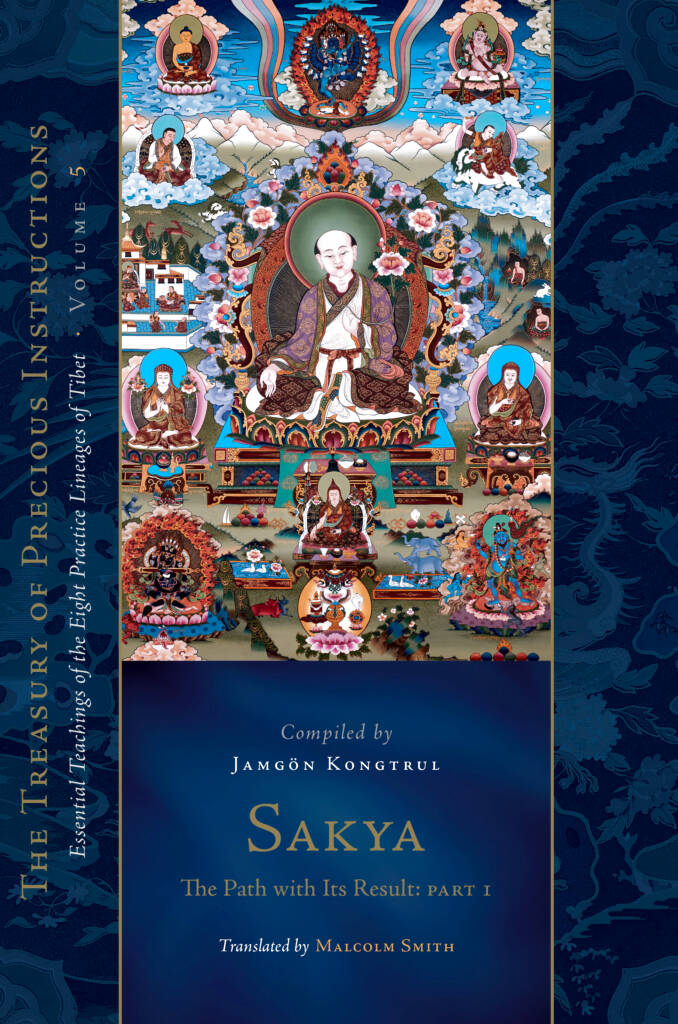
The Path with its Result, Part 1
Damngak Dzö 5
Translated by Malcolm Smith
Snow Lion · Boulder, CO · ISBN 9781611809664
The Treasury of Precious Instructions by Jamgön Kongtrul Lodrö Taye, one of Tibet’s greatest Buddhist masters, is a shining jewel of Tibetan literature, presenting essential teachings from the entire spectrum of practice lineages that existed in Tibet.
English DRL record

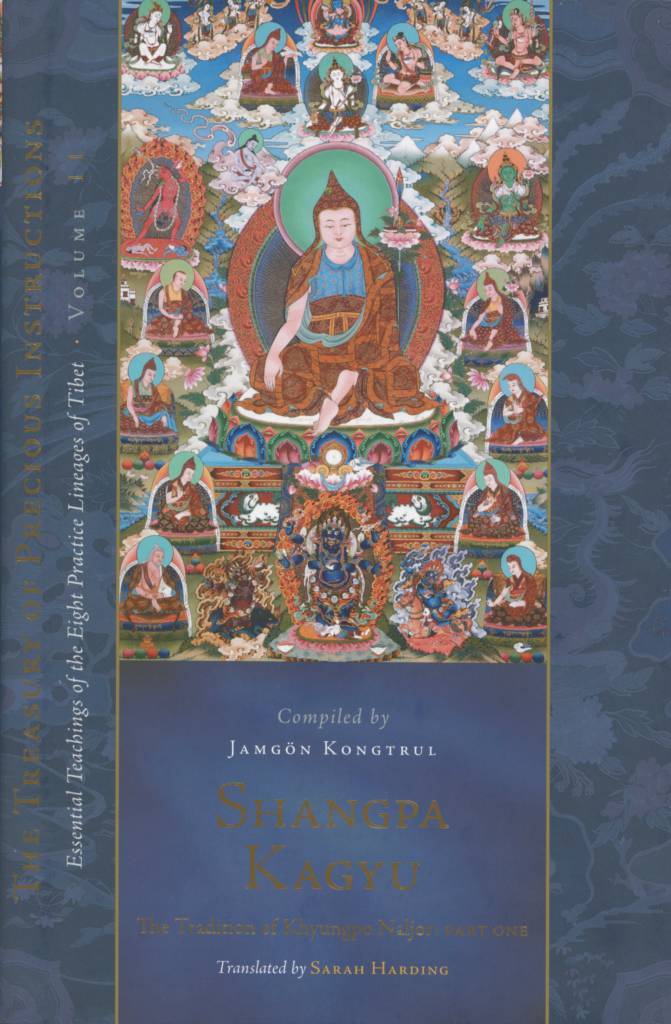
The Tradition of Khyungpo Naljor, Part 1
Damngak Dzö 11
Translated by Sarah Harding
Snow Lion · Boulder, CO · ISBN 9781611809640
The Treasury of Precious Instructions by Jamgön Kongtrul Lodrö Taye, one of Tibet’s greatest Buddhist masters, is a shining jewel of Tibetan literature, presenting essential teachings from the entire spectrum of practice lineages that existed in Tibet.
English DRL record

Translated by Helena Blankleder and Wulstan Fletcher — Padmakara Translation Group
Shambhala · Boulder · ISBN 9781611809336
Modern scholar and Nyingma master Khangsar Tenpa'i Wangchuk composed this first and only commentary on the fourteenth-century Buddhist master Longchenpa's essential text, The Precious Treasury of the Fundamental Nature.
English DRL record

Translated by Heidi Nevin
Shambhala · Boulder · ISBN 9781559394574
An in-depth presentation of one of the most profound traditions of Tibetan Buddhism—the Dudjom lineage—beginning with the Buddha and tracing the origins and development of the lineage through its Indian and Tibetan masters.
English DRL record

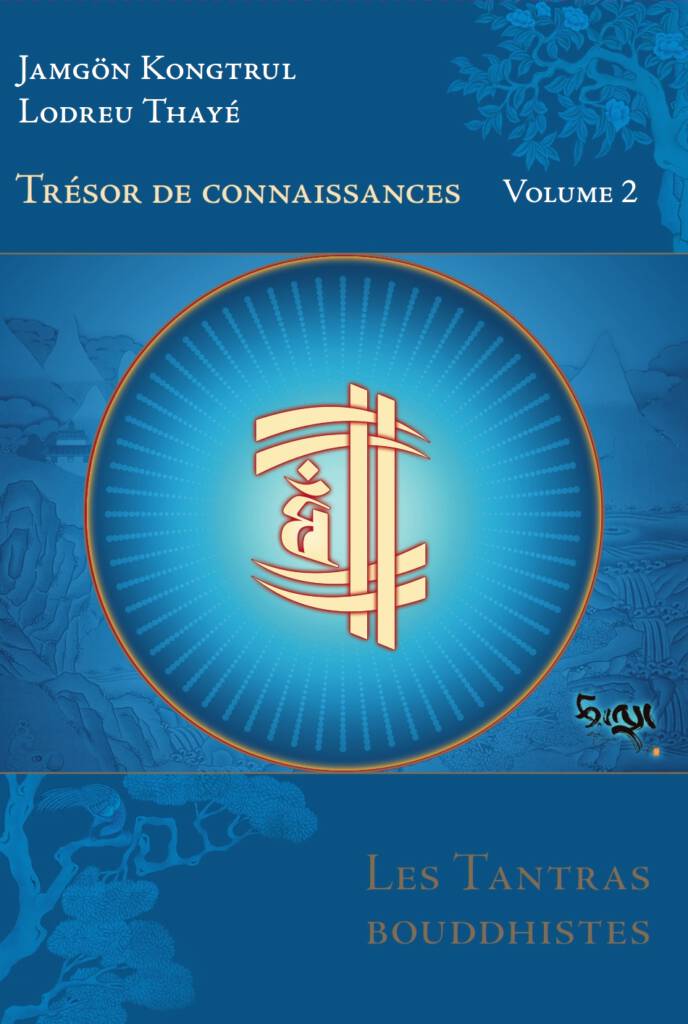
Les tantras bouddhistes - Volume 2
Translated by Christian Charrier and Patrick Carré
Padmakara · Le Plantou, France · ISBN 9782370411525
Le présent volume du « Trésor de connaissances », consacré aux tantras bouddhistes tels que les écoles de Traduction Nouvelle et Ancienne les ont classés et en distillent les enseignements, décrit exhaustivement les thèmes majeurs et les principes qui sous-tendent les différents systèmes tantriques.
Français DRL record
2021[edit]

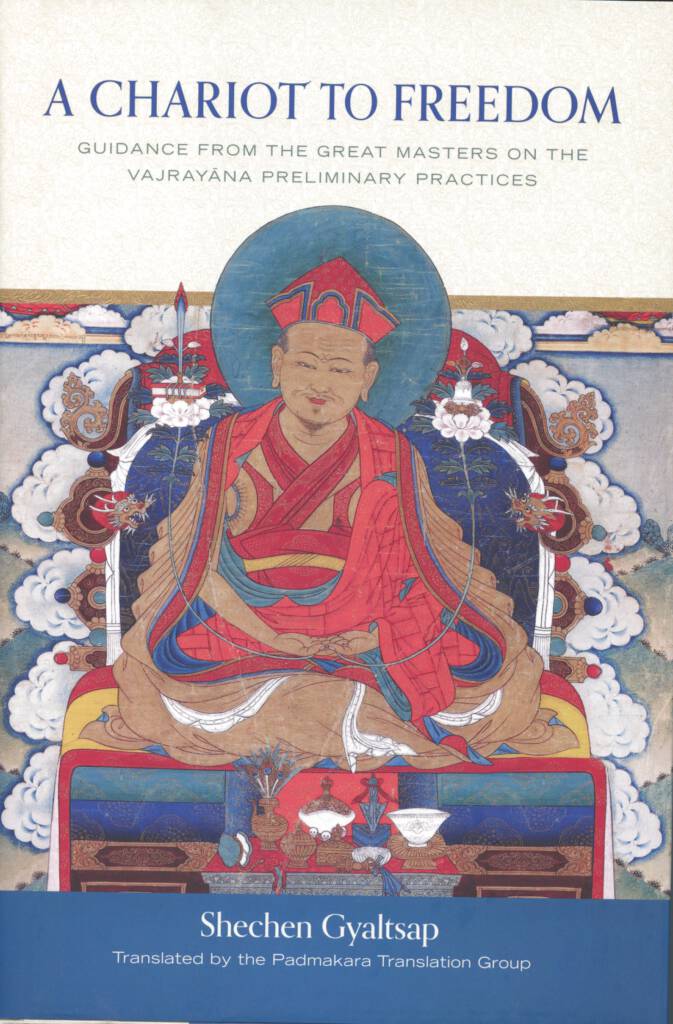
Guidance From the Great Masters on the Vajrayāna Preliminary Practices
Translated by Helena Blankleder and Wulstan Fletcher — Padmakara Translation Group
Shambhala · Boulder, CO · ISBN 9781611804584
A Chariot to Freedom is one of the most beloved presentations of the preliminary practices, or ngöndro, that form the foundation of the Vajrayana Buddhist path. This set of practices, common to all schools of Himalayan Buddhism, is what nearly every practitioner begins with, yet it also constitutes a complete method in and of itself.
English DRL record

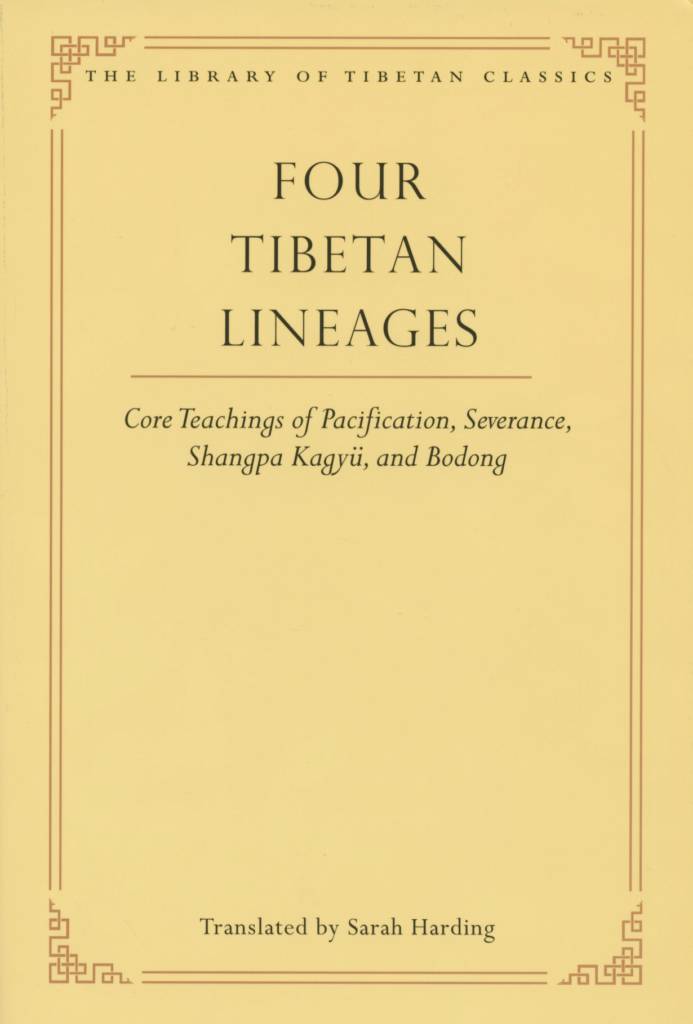
Library of Tibetan Classics 8
Translated by Sarah Harding
Wisdom · Somerville, MA · ISBN 9780861714476
Drawing primarily from the Pacification, Severance, Shangpa Kagyü, and Bodongpa traditions, Four Tibetan Lineages presents some of Tibet's most transformative yet lesser-known teachings on meditative practice.
English DRL record

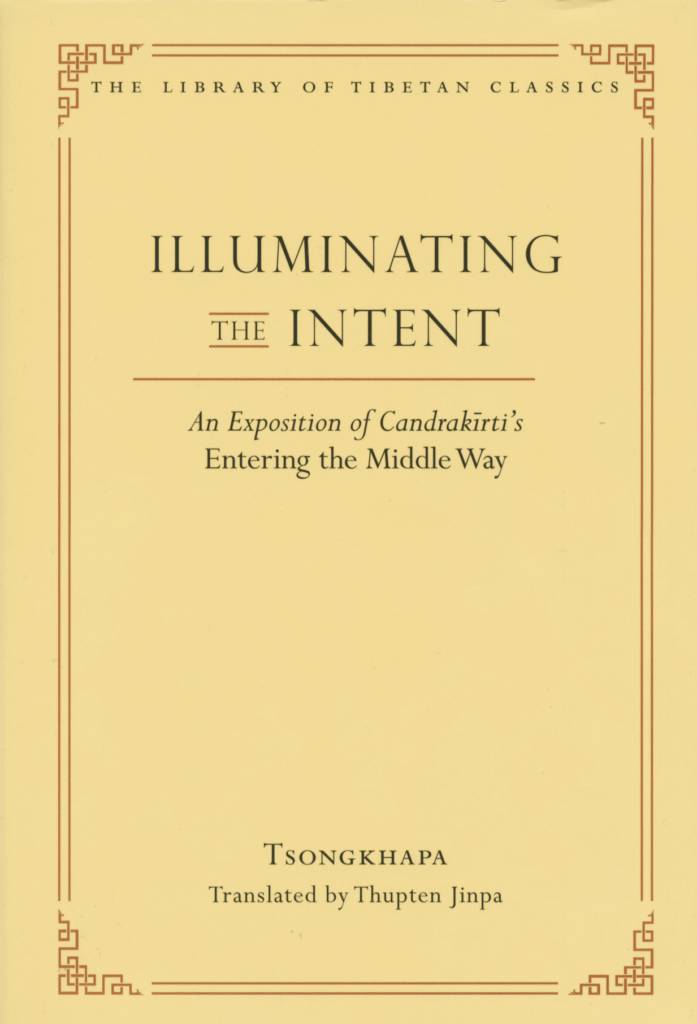
An Exposition of Candrakīrti's Entering the Middle Way
Library of Tibetan Classics 19
Translated by Thupten Jinpa
Wisdom · Somerville, MA · ISBN 9780861714582
This work is perhaps the most influential explanation of Candrakirti's seventh-century classic Entering the Middle Way (Madhyamakavatara).
English DRL record

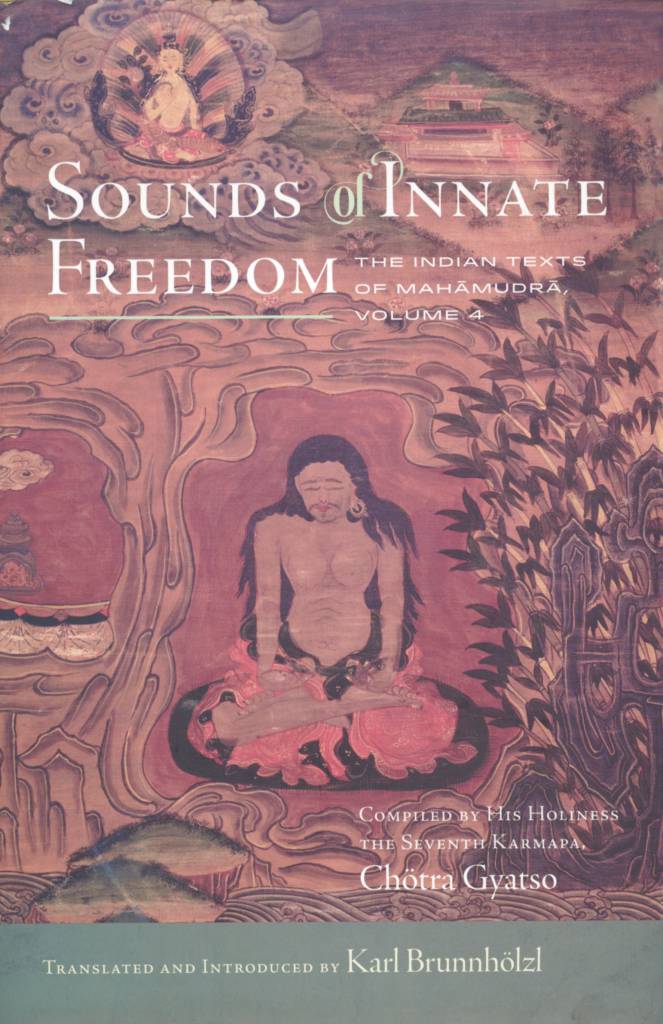
The Indian Texts of Mahāmudrā - Volume 4
Translated by Karl Brunnhölzl
Wisdom · Somerville, MA · ISBN 9781614297116
Sounds of Innate Freedom: The Indian Texts of Mahāmudrā are historic volumes containing many of the first English translations of classic mahamudra literature.
English DRL record
2020[edit]

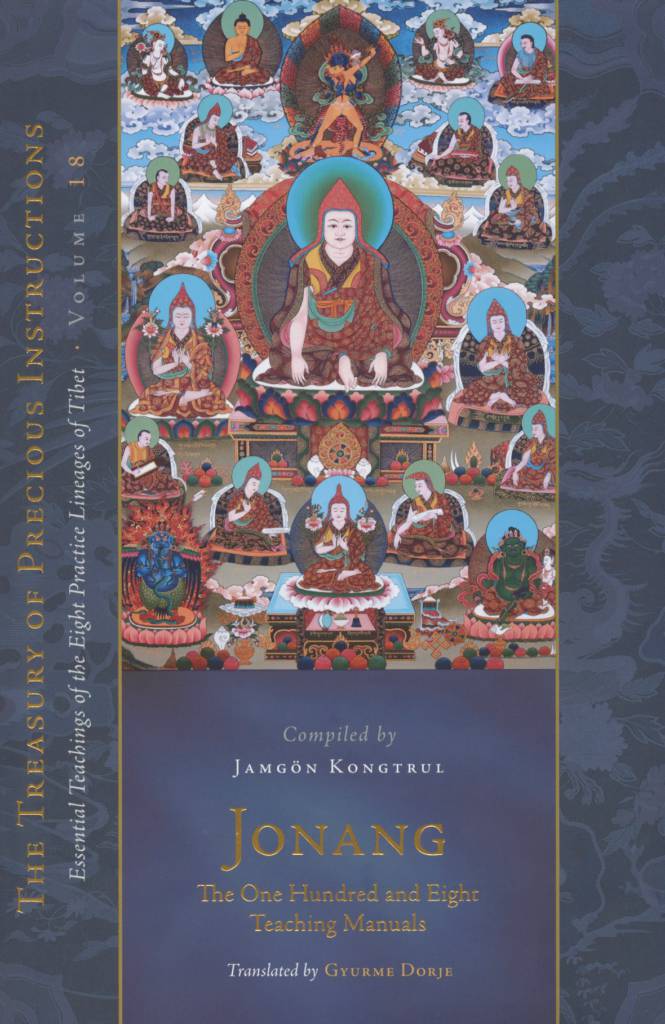
The One Hundred and Eight Teaching Manuals
Damngak Dzö 18
Translated by Sarah Harding and Gyurme Dorje
Snow Lion · Boulder, CO · ISBN 9781559394956
The Treasury of Precious Instructions by Jamgön Kongtrul Lodrö Taye, one of Tibet’s greatest Buddhist masters, is a shining jewel of Tibetan literature, presenting essential teachings from the entire spectrum of practice lineages that existed in Tibet.
English DRL record

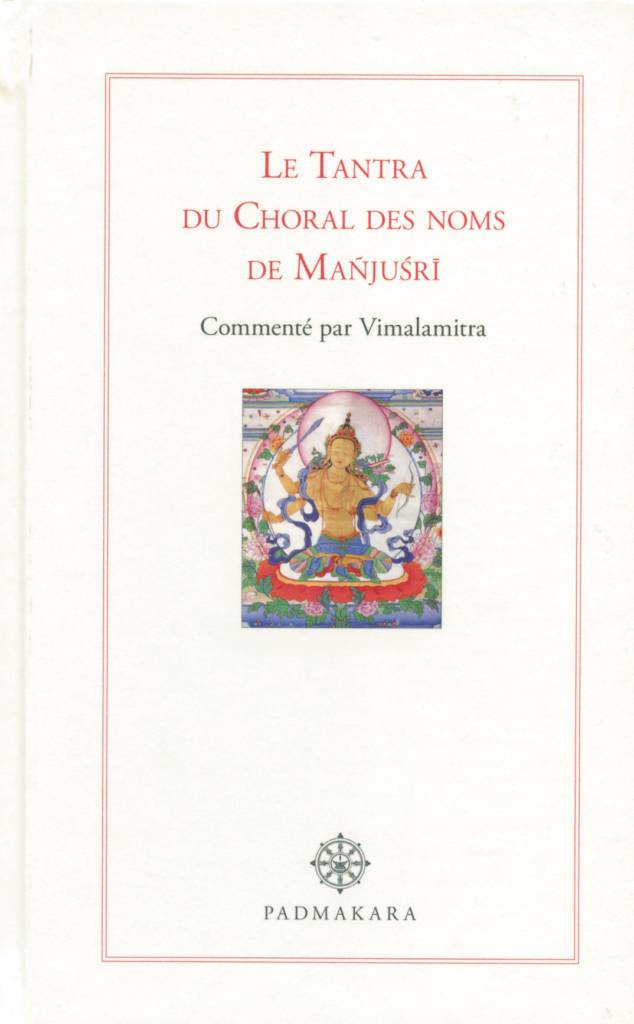
Translated by Patrick Carré
Padmakara · Le Plantou, France · ISBN 9782370411310
Aussi vénérable que vénéré, le Choral des noms de Manjuśrī est l’un des tantras bouddhistes les plus anciens et les plus commentés. La réalisation de la vacuité et de la non-dualité prend ici l’aspect d’un poème en forme de liste foisonnante et chamarrée de postulats, de vérites et de pratiques.
Français DRL record

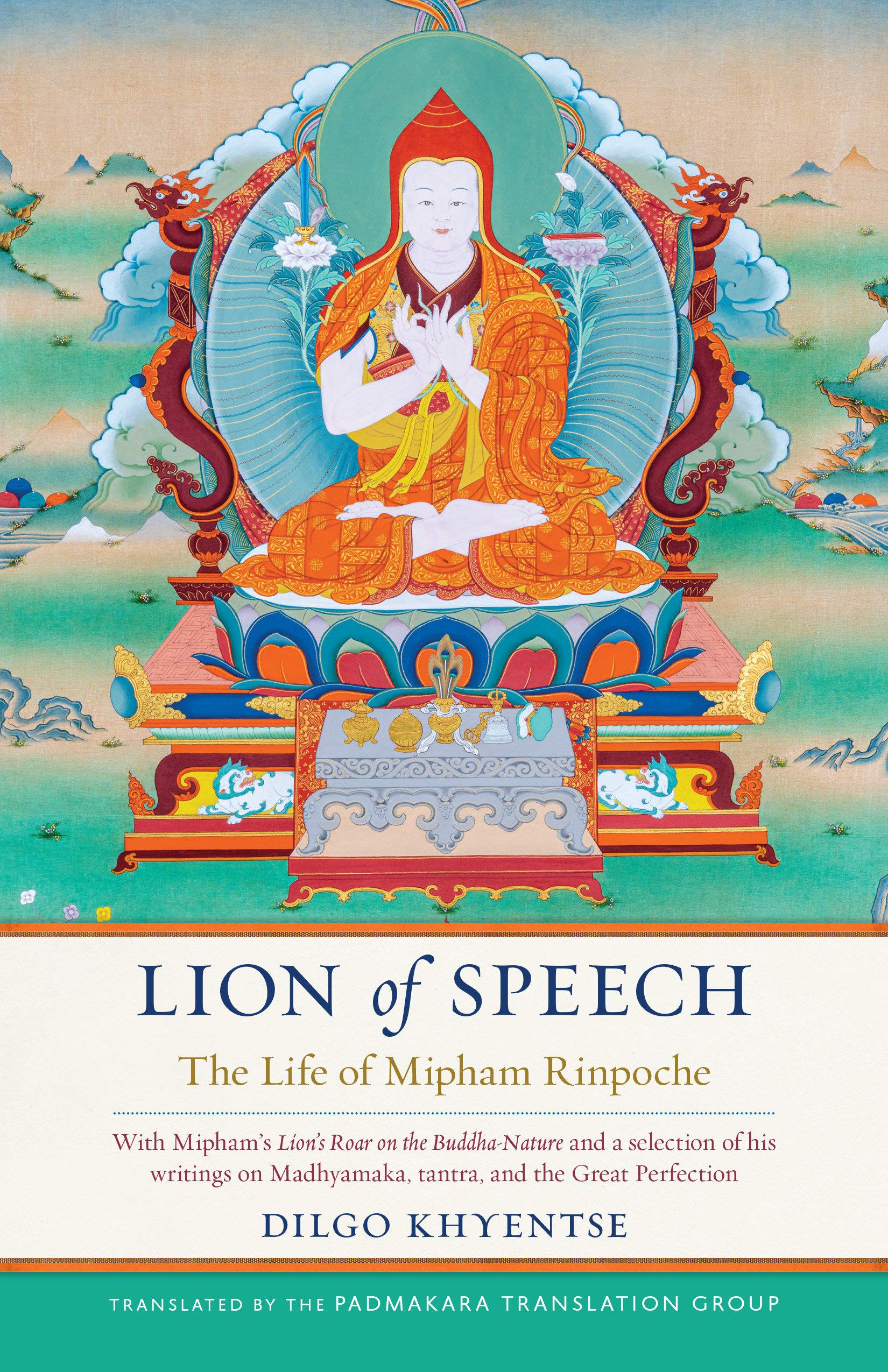
The Life of Mipham Rinpoche
Translated by Helena Blankleder and Wulstan Fletcher — Padmakara Translation Group
Shambhala · Boulder, CO · ISBN 9781559394949
A traditional biography on the life of Mipham Rinpoche—one of the greatest 19th-century masters—from Dilgo Khyentse Rinpoche—one of the greatest 20th–century masters.
English DRL record

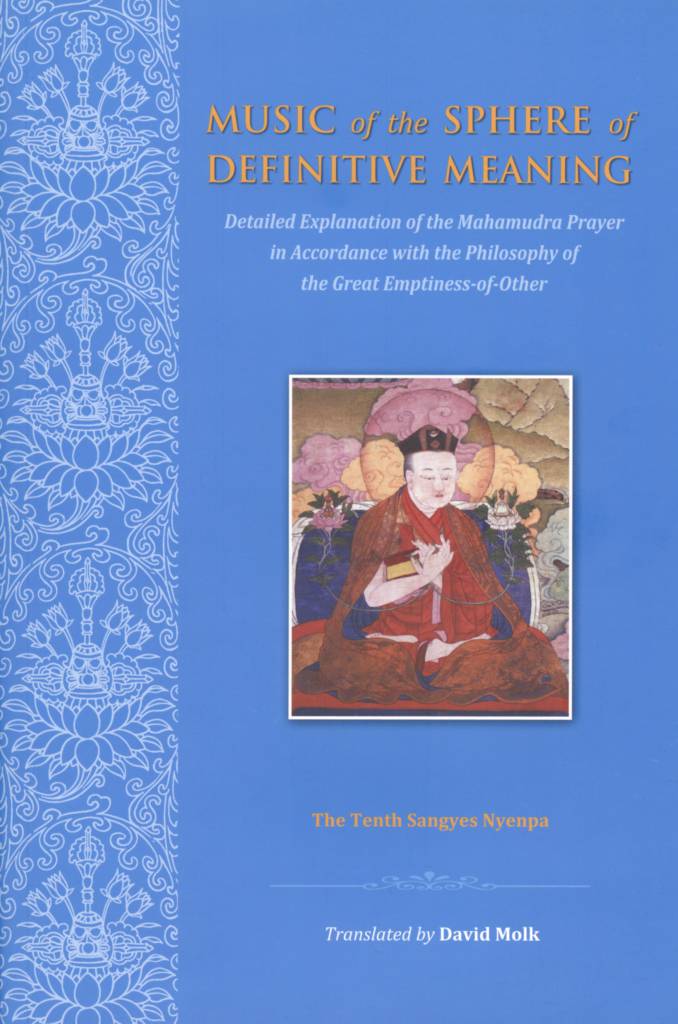
Music of the Sphere of Definitive Meaning
Detailed Explanation of the Mahamudra Prayer in Accordance with the Philosophy of the Great Emptiness-of-Other
Translated by David Molk
Benchen · Kathmandu · ISBN 9789937843034
A translation of Sangye Nyenpa Rinpoche's detailed explanation of the Third Karmapa Rangjung Dorje's famous Mahāmudrā Aspiration Prayer.
English DRL record

Instructions on the Crucial Points
Translated by Helena Blankleder and Wulstan Fletcher — Padmakara Translation Group
Shambhala · Boulder, CO · ISBN 9781559394932
Shechen Gyaltsap is a renowned master of the Great Perfection, or Dzogchen, the pinnacle of the Nyingma tradition of Tibetan Buddhism. He was the teacher of Dilgo Khyentse Rinpoche and is therefore a wellspring of the wisdom and accomplishments of the present generation of teachers.
English DRL record

The Indian Texts of Mahāmudrā - Volume 5
Translated by Karl Brunnhölzl
Wisdom · Somerville, MA · ISBN 9781614296355
Sounds of Innate Freedom: The Indian Texts of Mahāmudrā are historic volumes containing many of the first English translations of classic mahāmudrā literature.
English DRL record

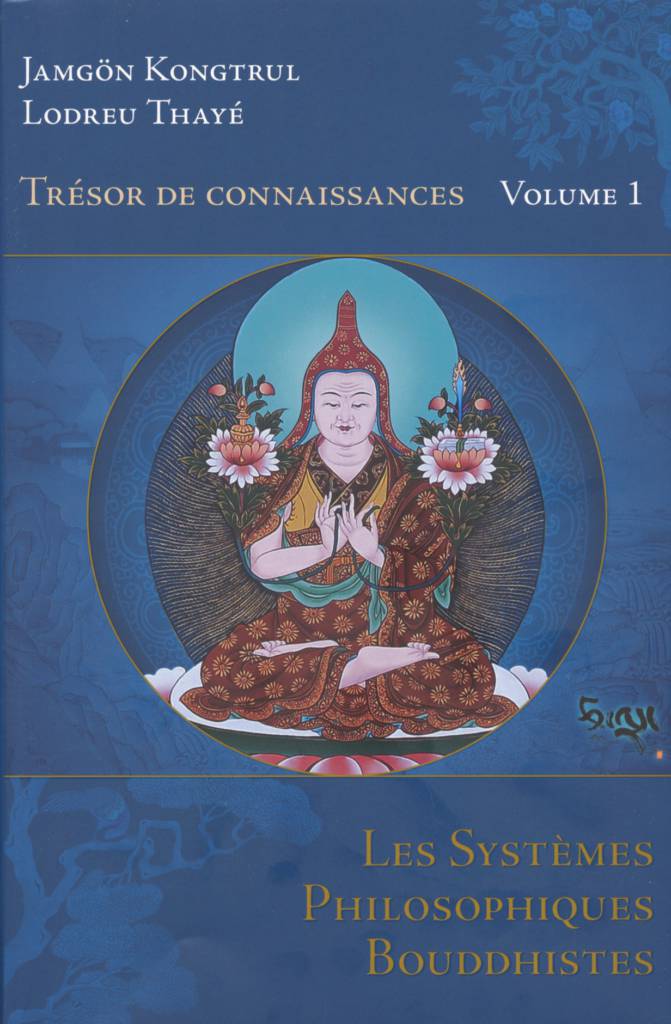
Les systèmes philosophiques bouddhistes - Volume 1
Translated by Christian Charrier
Padmakara · Le Plantou, France · ISBN 9782370411181
Dans son Trésor de connaissances, le premier de ses cinq grands traités, Jamgön Kongtrul pose les fondements du mouvement œcuménique appelé Rimé qui s’est fixé pour mission de préserver et promouvoir les différentes traditions tibétaines, dans leur intégrité, pour qu’elles puissent profiter aux futures générations de pratiquants et de chercheurs.
Français DRL record
2019[edit]

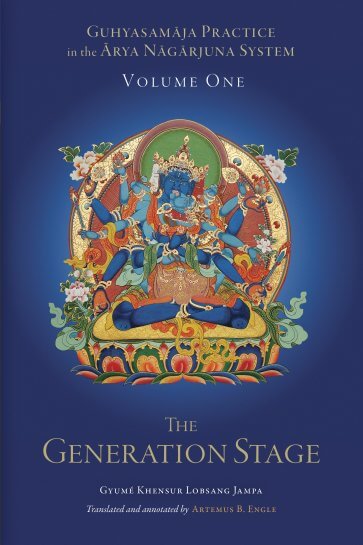
Translated by Artemus Engle
Snow Lion · Boulder · ISBN 9781559394857
The Guhyasamāja Tantra is one of the Unexcelled Yoga Tantras of Vajrayana Buddhism. In the initial, generation-stage practice, one engages in a prescribed sequence of visualizations of oneself as an enlightened being in a purified environment in order to prepare one’s mind and body to engage in the second stage: the completion stage.
English DRL record

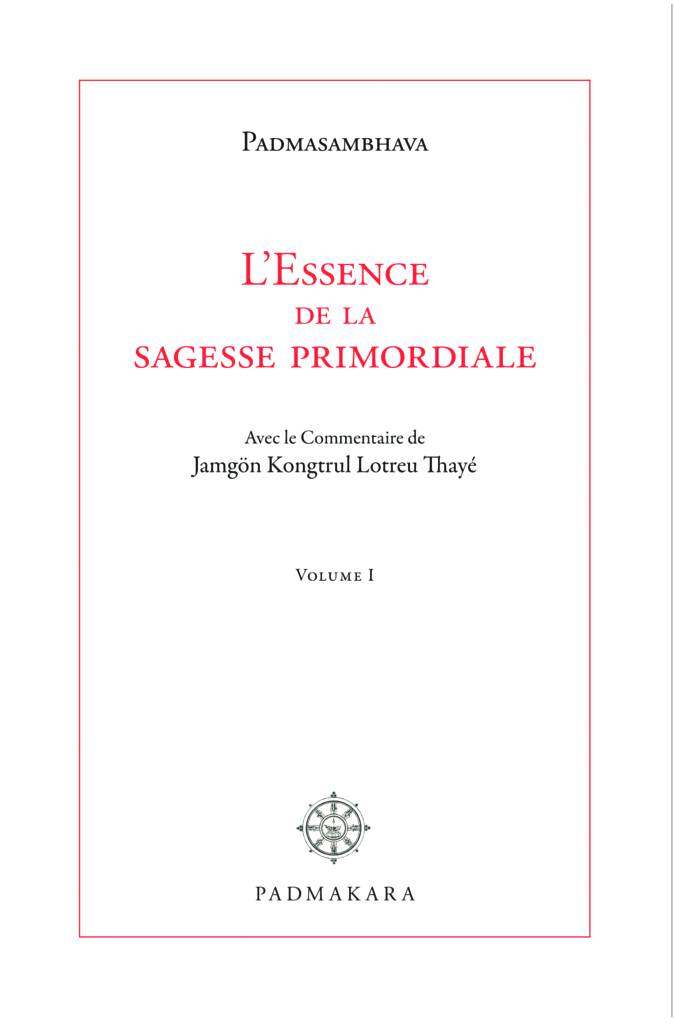
Quintessence de l'ambroisie des Trois Véhicules, Véhicule de Vajra et Grande Perfection
Padmakara Translation Group
Padmakara · Le Plantou · ISBN 9782370411266
Français DRL record

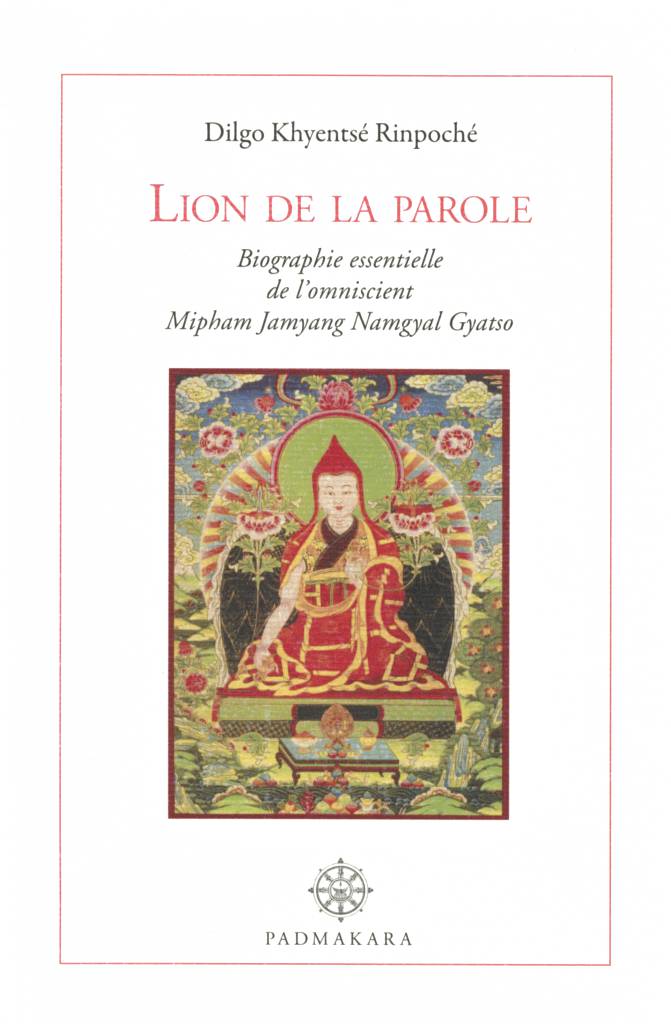
Lampe de merveilleuse ambroisie - Biographie essentielle de l'omniscient Mipham Jamyang Namgyal Gyatso, l'impavide Lion de l'Éloquence, Phare de l'enseignement du Grand Secret
Padmakara Translation Group
Padmakara · Le Plantou · ISBN 9782370411211
Français DRL record

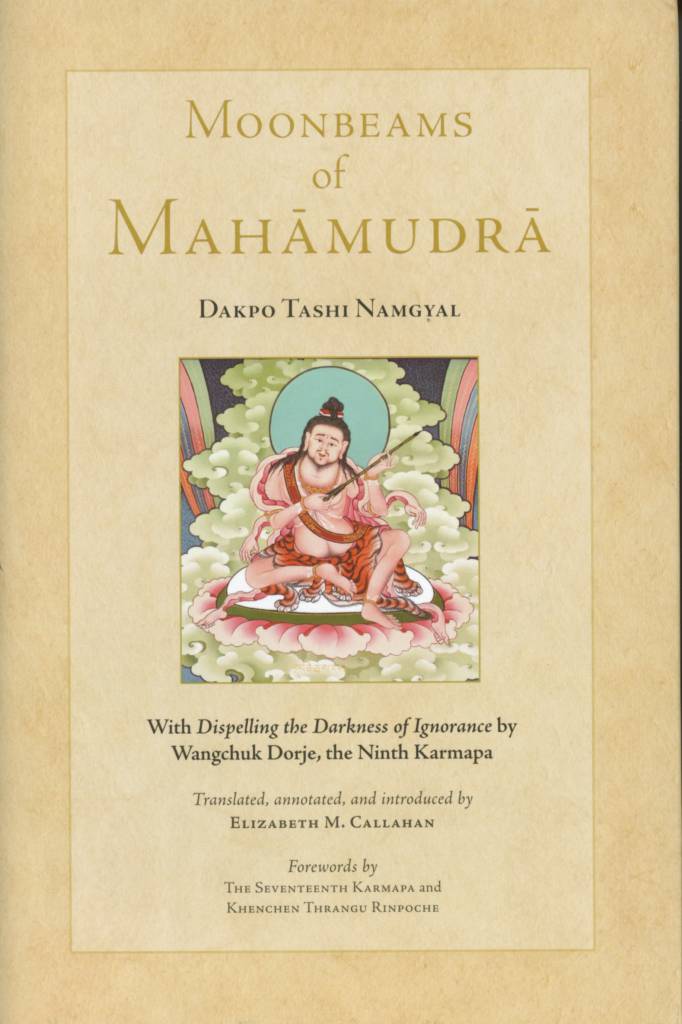
With Dispelling the Darkness of Ignorance by Wangchuk Dorje, the Ninth Karmapa
Translated by Elizabeth Callahan
Snow Lion · Boulder · ISBN 9781559394802
This classic Buddhist work, written in the sixteenth century, comprehensively presents the entire scope of the Tibetan Kagyu Mahāmudrā tradition. These profound yet accessible instructions focus on becoming familiar with the nature of one’s mind as the primary means to realize ultimate reality and thus attain buddhahood.
English DRL record

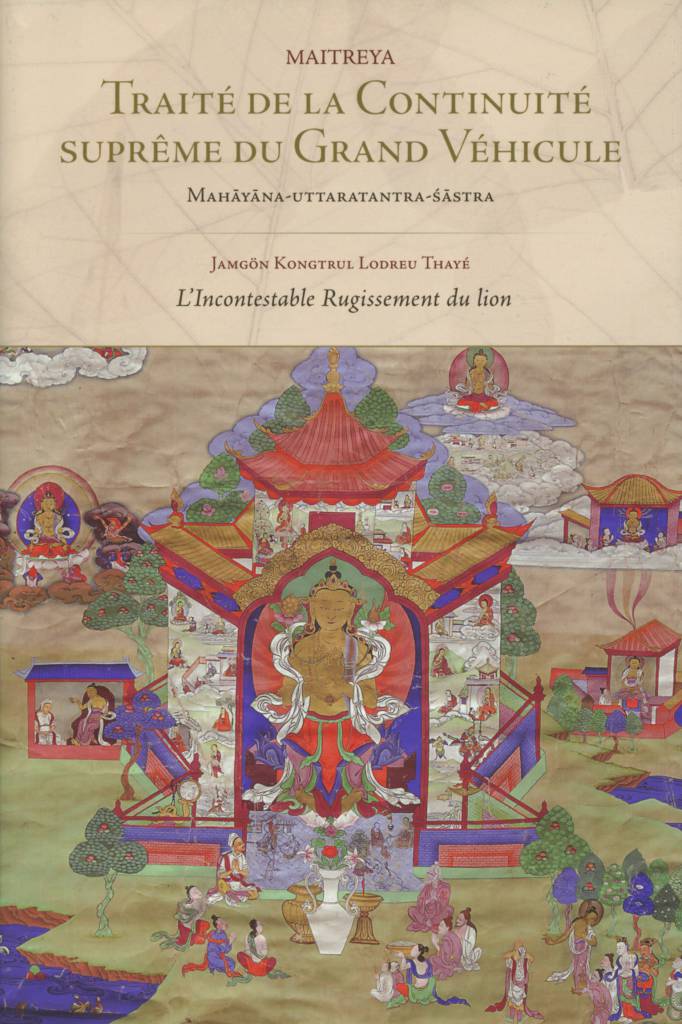
Translated by Christian Charrier and Patrick Carré
Padmakara · Plazac, France · ISBN 9782370411181
This new translation of the famed Gyü Lama, or Ratnagotravibhāga Mahāyānottaratantraśāstra, represents a major step forward in providing access to key Buddhist literature for Francophones.
Français DRL record

Teachings on the Path of Trekchö
By Erik Pema Kunsang
Rangjung Yeshe · San Rafael, CA · ISBN 9781732871762
These pith instructions in Vajra Heart Revisited are concise, brilliant expositions on the path of Trekcho, starting with the ground, the preliminaries, shamatha, and viphashyana, Three Vital Words, up to and including teachings on guru yoga, and bardo.
English DRL record

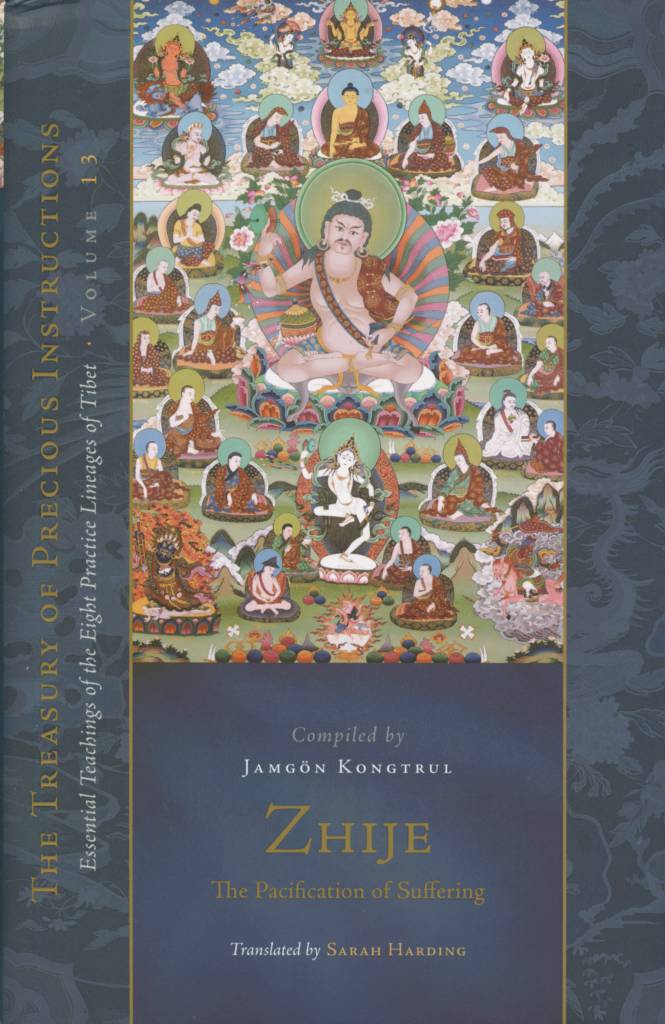
The Pacification of Suffering
Damngak Dzö 13
Translated by Sarah Harding
Snow Lion · Boulder, CO · ISBN 9781559394840
The Treasury of Precious Instructions by Jamgön Kongtrul Lodrö Taye, one of Tibet's greatest Buddhist masters, is a shining jewel of Tibetan literature, presenting essential teachings from the entire spectrum of practice lineages that existed in Tibet.
English DRL record
2018[edit]

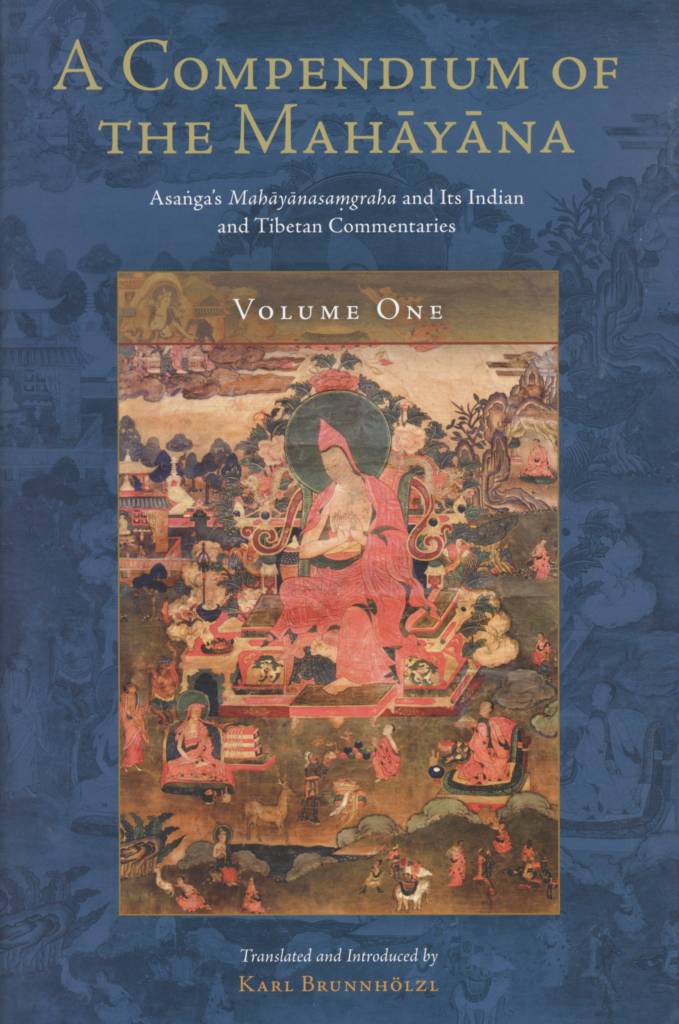
Asaṅga's Mahāyānasaṃgraha and Its Indian and Tibetan Commentaries, Volume One
By Karl Brunnhölzl
Snow Lion · Boulder · ISBN 9781559394659
The Mahāyānasaṃgraha, published here with its Indian and Tibetan commentaries in three volumes, presents virtually everything anybody might want to know about the Yogācāra School of Mahāyāna Buddhism.
English DRL record

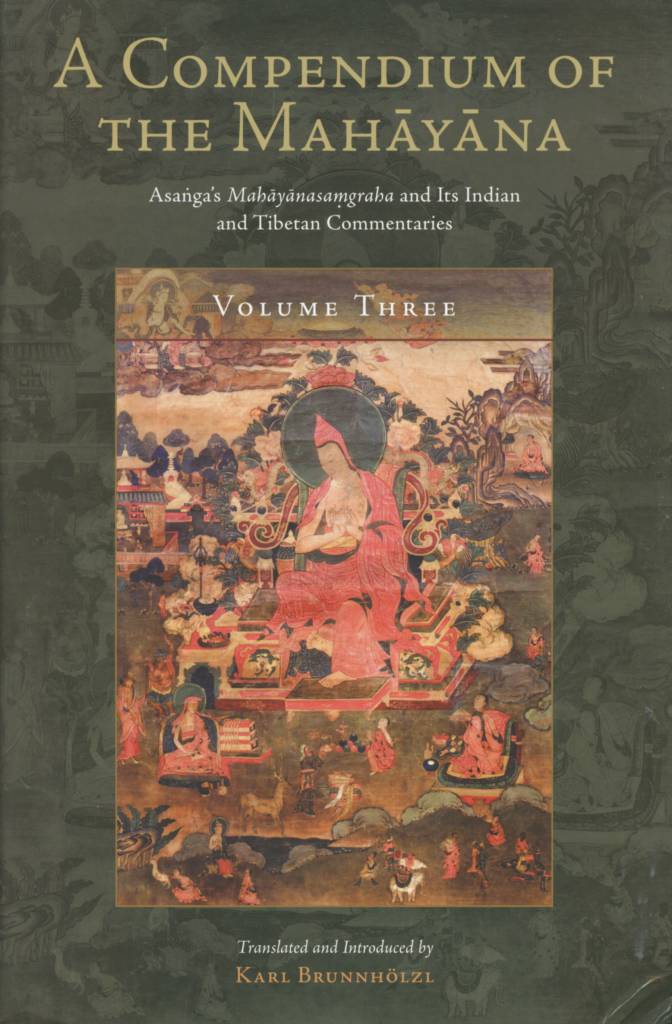
Asaṅga's Mahāyānasaṃgraha and Its Indian and Tibetan Commentaries, Volume Three
By Karl Brunnhölzl
Snow Lion · Boulder · ISBN 9781559394659
VOLUME THREE of The Mahāyānasaṃgraha, published with its Indian and Tibetan commentaries in three volumes, presents virtually everything anybody might want to know about the Yogācāra School of Mahāyāna Buddhism.
English DRL record

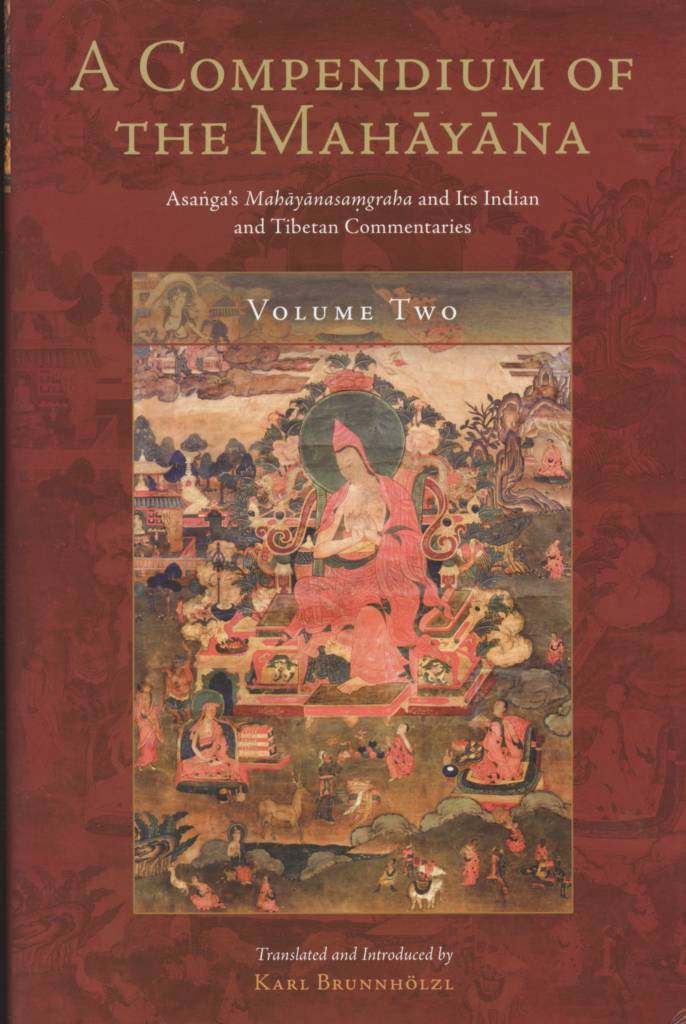
Asaṅga's Mahāyānasaṃgraha and Its Indian and Tibetan Commentaries, Volume Two
By Karl Brunnhölzl
Snow Lion · Boulder · ISBN 978-1-55939-465-9
VOLUME TWO of The Mahāyānasaṃgraha, published with its Indian and Tibetan commentaries in three volumes, presents virtually everything anybody might want to know about the Yogācāra School of Mahāyāna Buddhism.
English DRL record

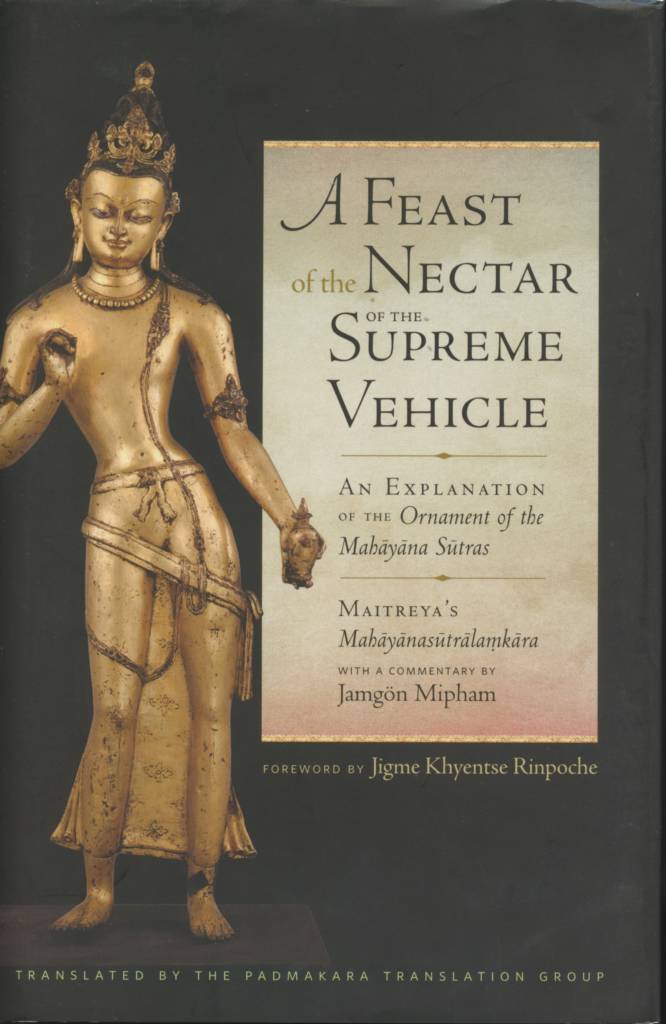
An Explanation of the Ornament of the Mahāyāna Sūtras; Maitreya's Mahāyānasūtrālaṃkāra with a Commentary by Jamgön Mipham
Translated by Stephen Gethin — Padmakara Translation Group
Shambhala · Boulder · ISBN 9781611804676
A monumental work and Indian Buddhist classic, the Ornament of the Mahāyāna Sūtras (Mahāyānasūtrālamkāra) is a precious resource for students wishing to study in-depth the philosophy and path of Mahāyāna Buddhism.
English DRL record

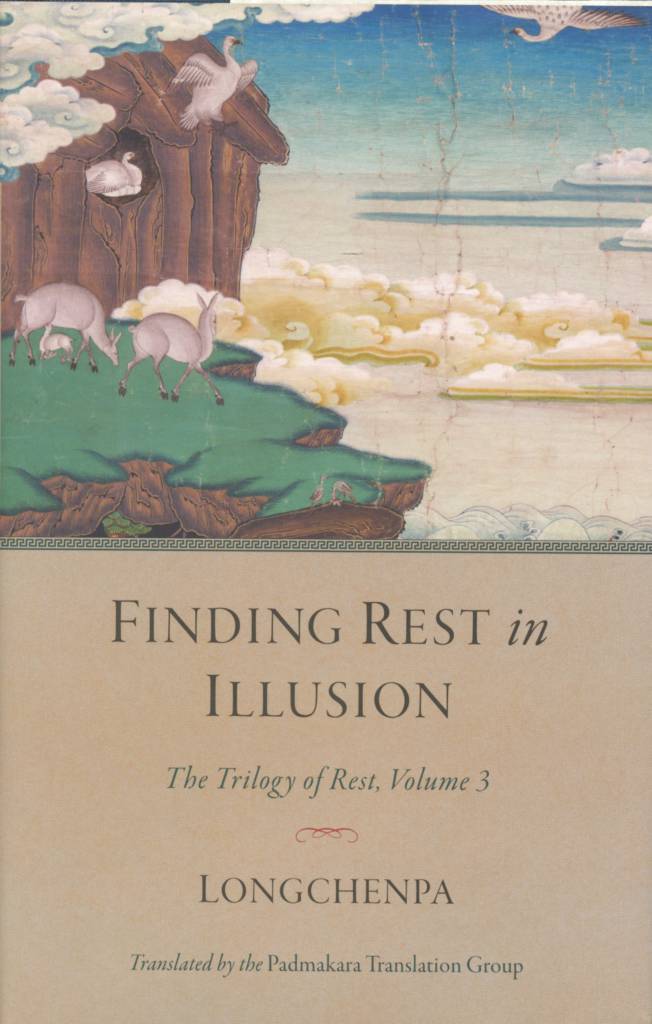
The Trilogy of Rest, Volume 3
Translated by Helena Blankleder and Wulstan Fletcher — Padmakara Translation Group
Shambhala · Boulder · ISBN 9781611805925
Finding Rest in Illusion is the third volume of the Trilogy of Rest, Longchenpa’s classic exposition of the Buddhist path. The purpose of these teachings is to introduce us to our most basic nature—the clear and pristine awareness that is the nature of the mind.
English DRL record

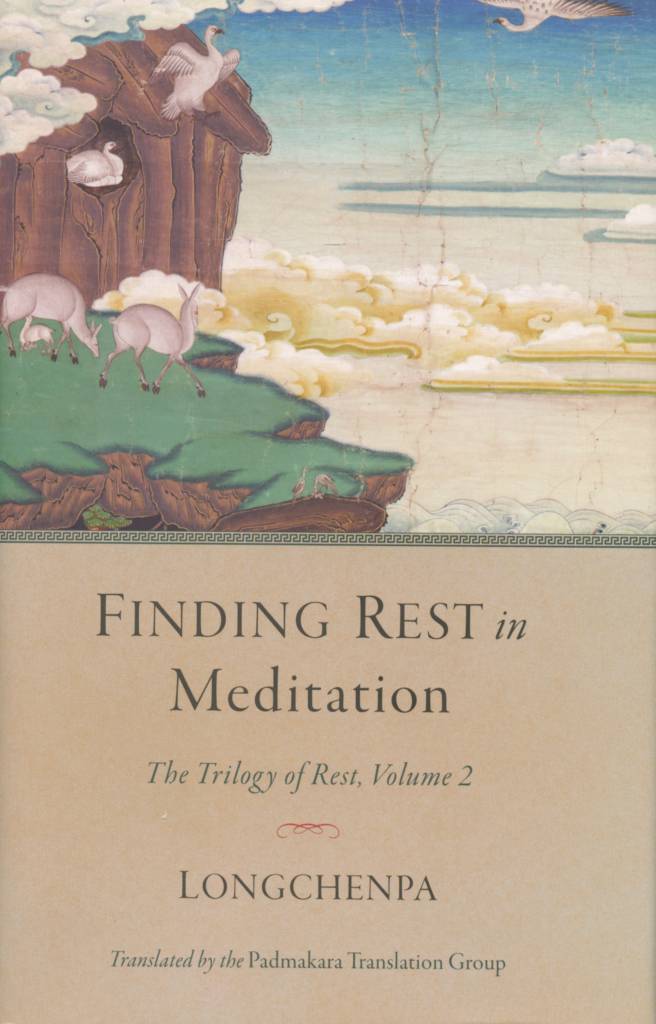
Translated by Helena Blankleder and Wulstan Fletcher — Padmakara Translation Group
Shambhala · Boulder · ISBN 9781611805529
Longchenpa’s classic exposition of the Buddhist path, the Trilogy of Rest, teaches us how to familiarize ourselves with our most basic nature—the clear and pristine awareness that is the nature of the mind.
English DRL record

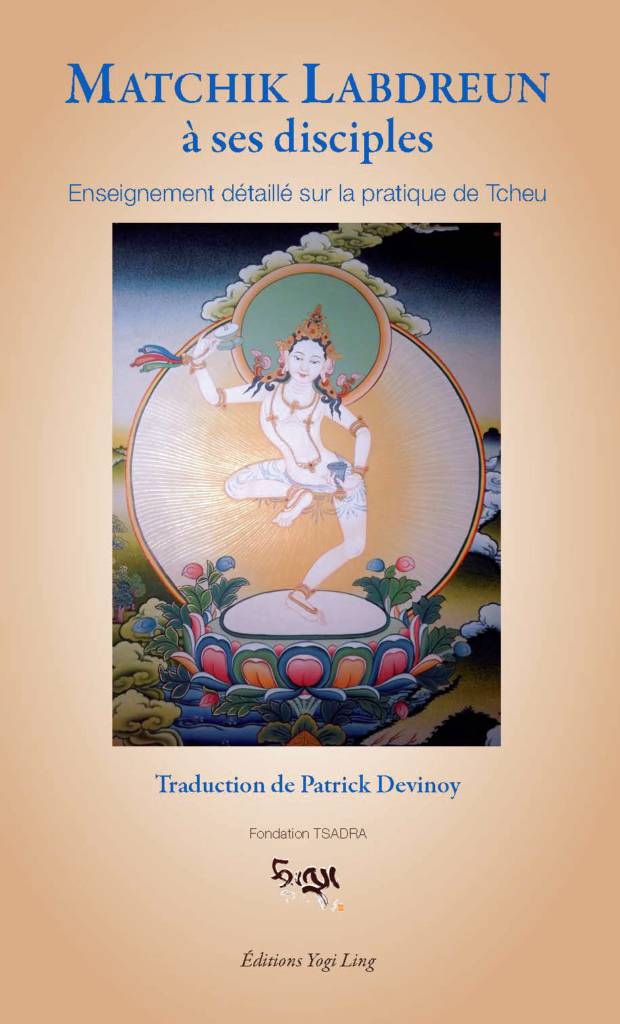
Matchik Labdreun à ses disciples - Enseignements détaillés sur la pratique de Tcheu
Translated by Patrick Devinoy
Yogi Ling · Ygrande, France · ISBN 9782911417337
Français DRL record

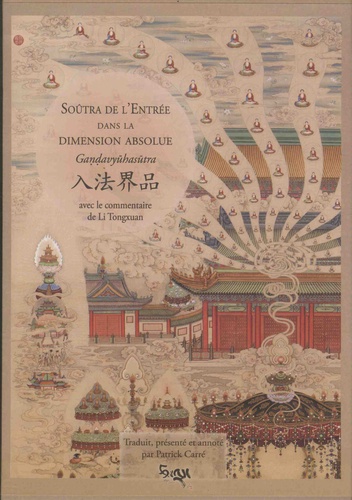
Gaṇḍavyūhasūtra; extrait du grand Soūtra des Ornements du Bouddha - Buddhāvataṃsakasūtra. Vol. 1, Fusion Parfaite
Translated by Patrick Carré
Padmakara · Plazac, France · ISBN 9782370411136
Le Soûtra de l’Entrée dans la dimension absolue est un texte essentiel du Grand Véhicule en l’honneur de l’esprit d’Éveil relatif et absolu. Il raconte, à travers l’allégorie d’un voyage initiatique, la formation du bodhisattva Sudhana à sa bouddhéité intrinsèque.
Français DRL record

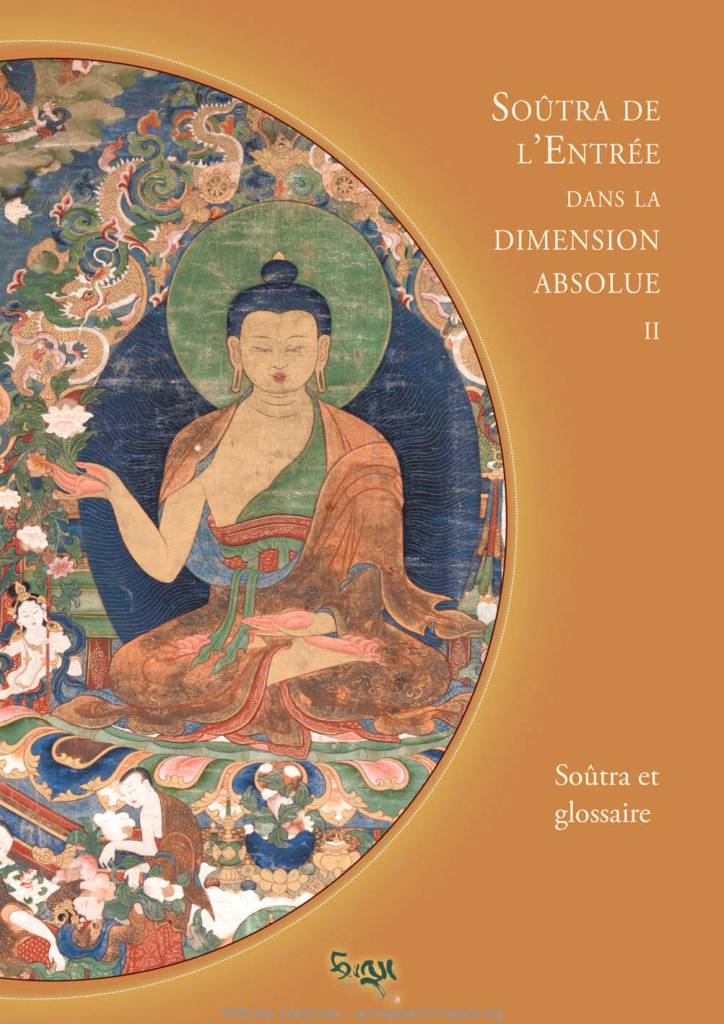
Gaṇḍavyūhasūtra; extrait du grand Soutra des Ornements du Bouddha - Buddhāvataṃsakasūtra. Vol. 2, Traduction du Soutra et Glossaire
Translated by Patrick Carré
Padmakara · Plazac, France · ISBN 9782370411136
Le Soûtra de l’Entrée dans la dimension absolue est un texte essentiel du Grand Véhicule en l’honneur de l’esprit d’Éveil relatif et absolu. Il raconte, à travers l’allégorie d’un voyage initiatique, la formation du bodhisattva Sudhana à sa bouddhéité intrinsèque.
Français DRL record

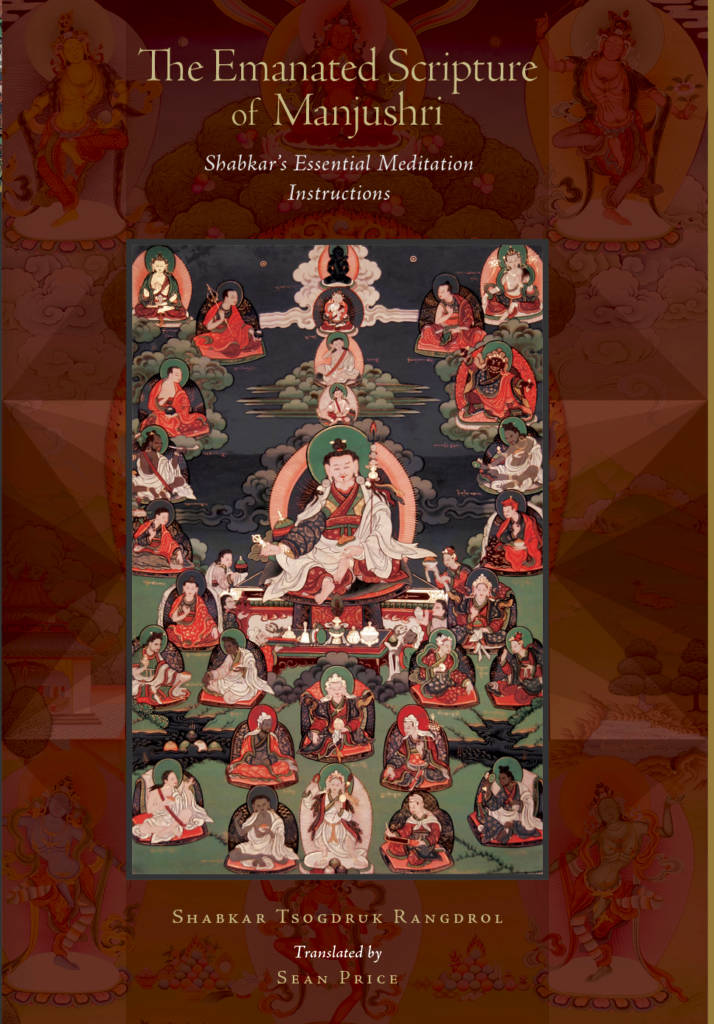
Shabkar's Essential Meditation Instructions from Lam-Rim to Mahamudra and Dzogchen
Translated by Sean Price
Snow Lion · Boulder · ISBN 9781559394611
"The Emanated Scripture of Manjushri is quite unique in Tibetan literature, not only because of its being written in the form of questions and answers, alternating verse and prose, but because it is a compendium of short teachings that presents a limpid, concise, and yet profound instruction on the entire graded path to enlightenment.
English DRL record

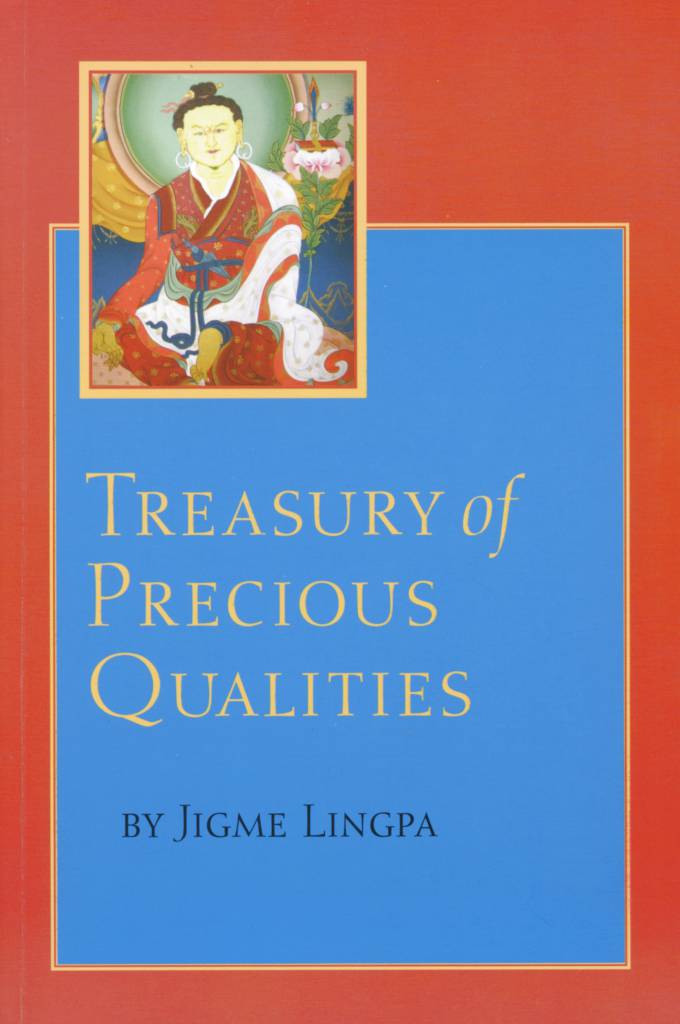
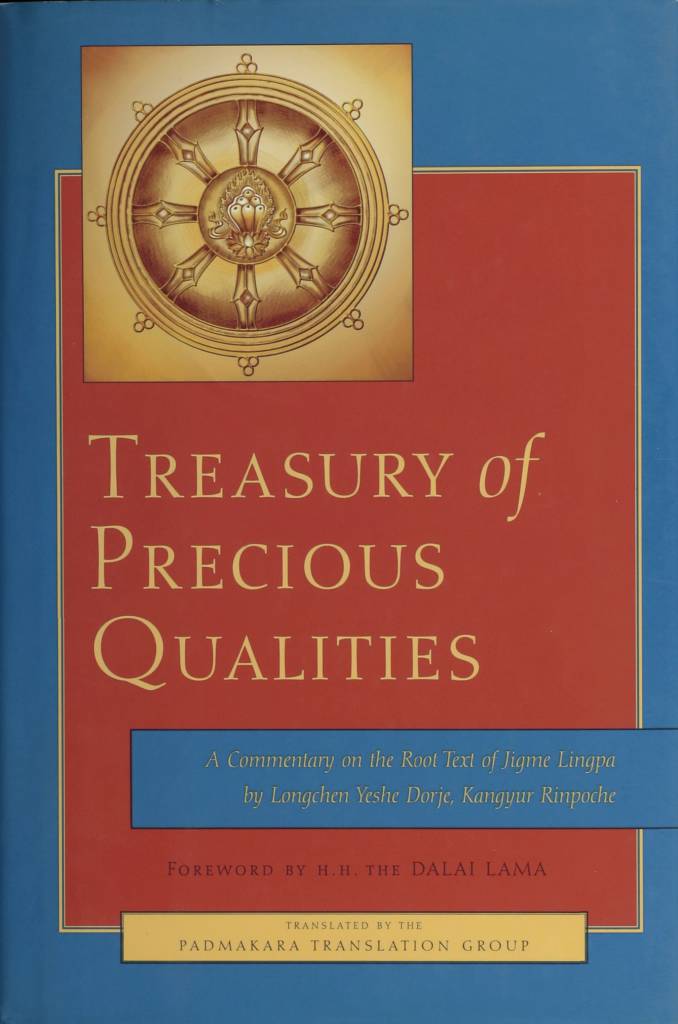
The Treasury of Precious Qualities Called The Rain of Joy
Translated by Helena Blankleder and Wulstan Fletcher — Padmakara Translation Group
Shechen · New Delhi · ISBN 9788174722430
Rigzin Jigme Lingpa (1730–1798) was one of the most important masters of the Nyingma tradition of Tibetan Buddhism. He and the great fourteenth century master Longchen Rabjam (1308–1363), with whom he was closely linked through visionary experience, are known as the "two omniscient masters, father and son.
English DRL record
2017[edit]

Translated by Helena Blankleder and Wulstan Fletcher — Padmakara Translation Group
Shambhala · Boulder, CO · ISBN 9781611805161
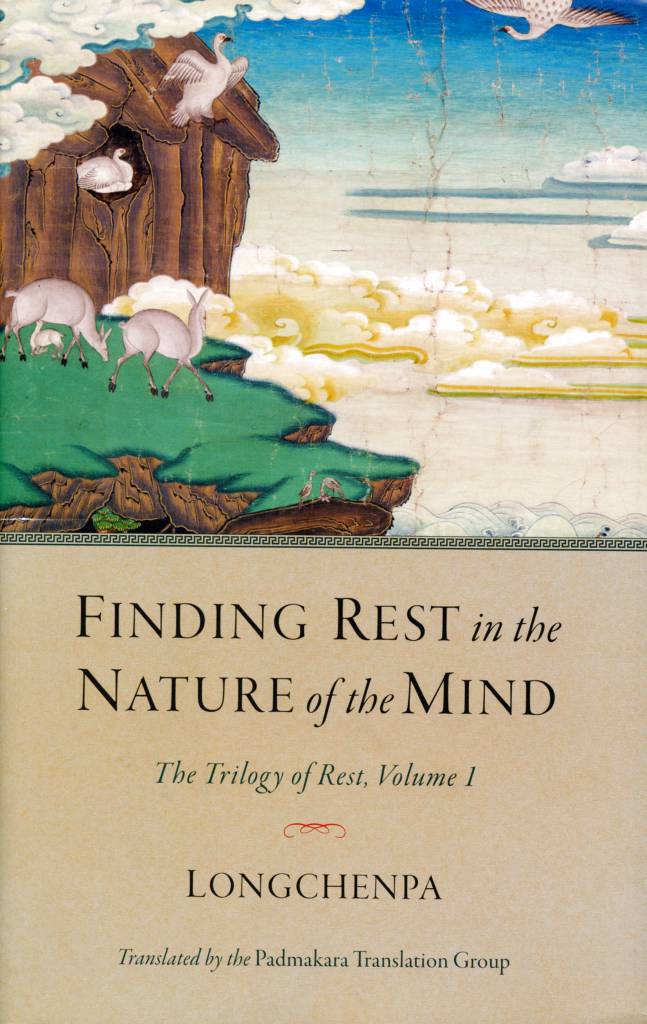
Longchenpa’s classic Buddhist manual for attaining liberation teaches us how to familiarize ourselves with our most basic nature—the clear, pristine, and aware mind. Written in the fourteenth century, this text is the first volume of Longchenpa’s Trilogy of Rest, a work of the Tibetan Dzogchen tradition.
English DRL record

L’Essence du soleil - Explication du véhicule le plus sublime
l’insurpassable et très secrète Lumineuse Essence Adamantine
Translated by Anne Benson
Padmakara · Le Plantou, France · ISBN 9782370411020
Français DRL record

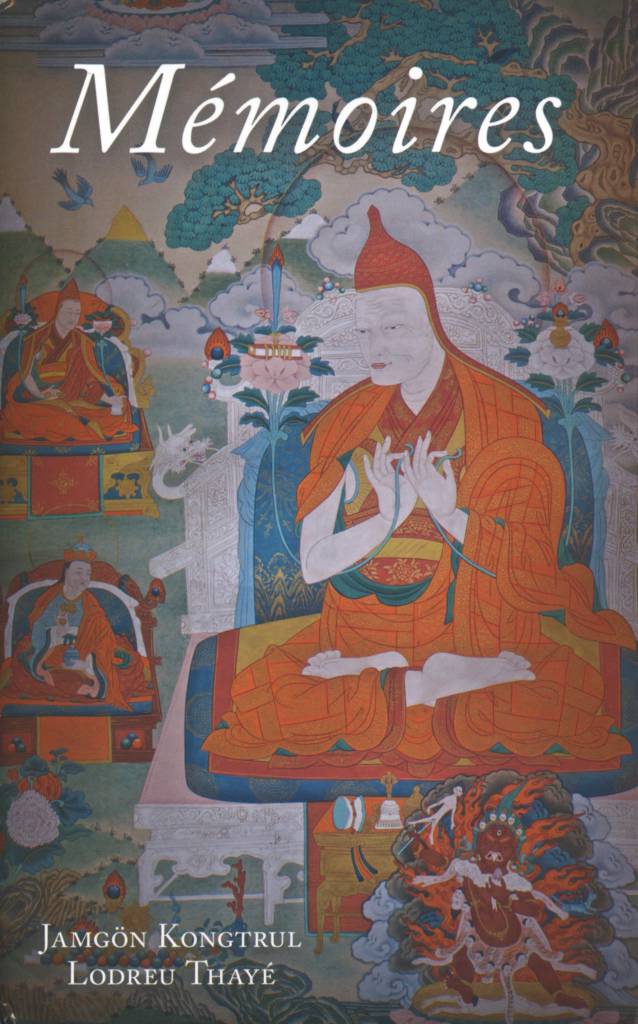
La Vie et L'œuvre de Jamgön Kongtrul
Translated by Richard Barron (Chokyi Nyima) and Christian Charrier
Padmakara · Le Plantou, France · ISBN 978-2-37041-099-3
Français DRL record

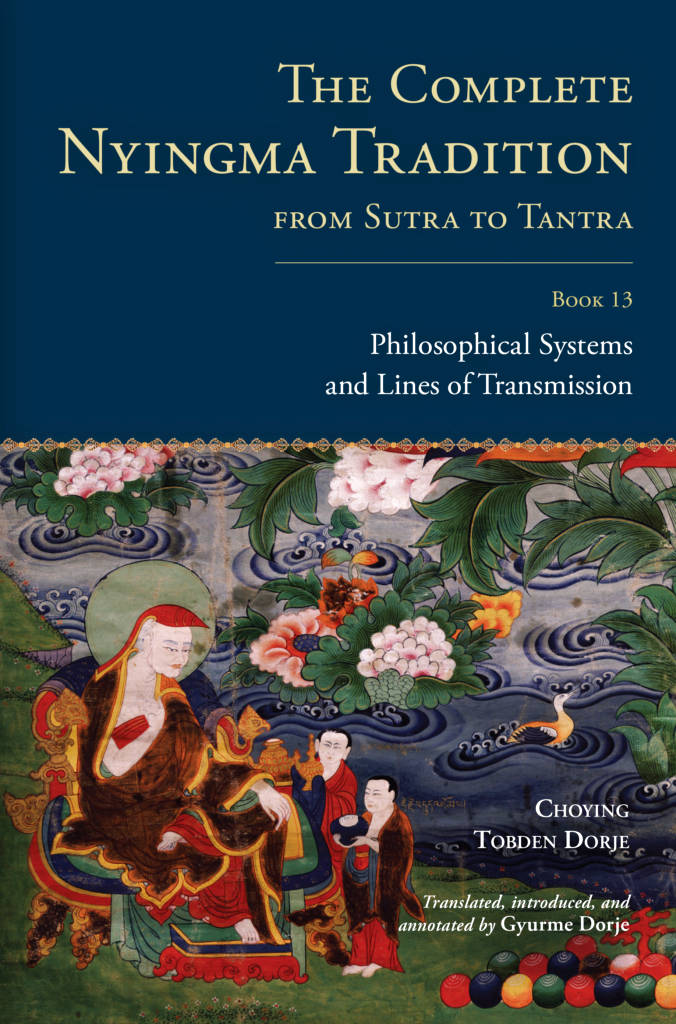
Philosophical Systems and Lines of Transmission
Translated by Gyurme Dorje
Snow Lion · Boulder, CO · ISBN 9781559394604
In 1838, Choying Tobden Dorje, a yogin and scholar of northeastern Tibet, completed a multivolume masterwork that traces the entire path of the Nyingma tradition of Tibetan Buddhism from beginning to end.
English DRL record

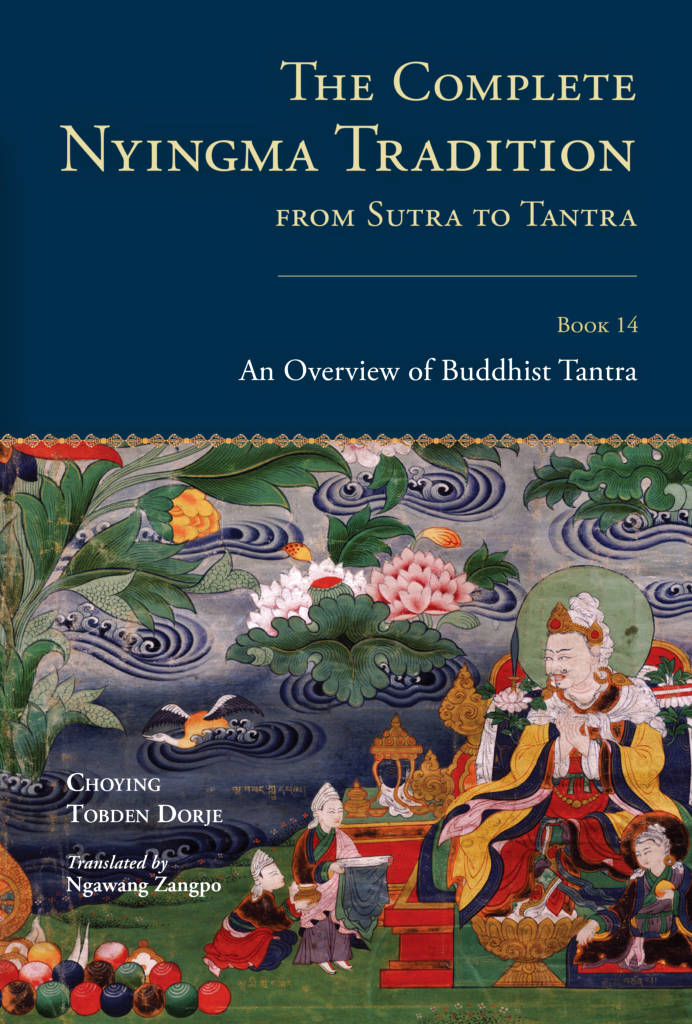
An Overview of Buddhist Tantra
Translated by Ngawang Zangpo
Snow Lion · Boulder, CO · ISBN 9781559394598
In 1838, Choying Tobden Dorje, a Buddhist yogi-scholar of eastern Tibet, completed a multivolume masterwork that traces the entire path of the Nyingma tradition of Tibetan Buddhism from beginning to end. Written by a lay practitioner for laypeople, it was intended to be accessible, informative, inspirational, and above all, practical.
English DRL record

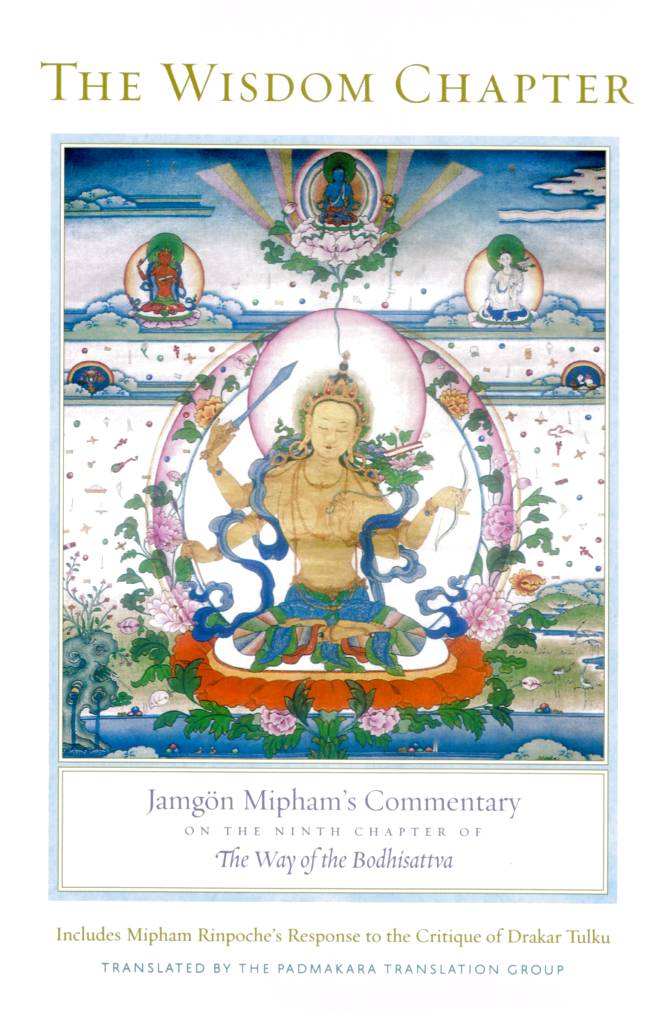
Jamgön Mipham's Commentary on the Ninth Chapter of "The Way of the Bodhisattva"
Translated by Helena Blankleder and Wulstan Fletcher — Padmakara Translation Group
Shambhala · Boulder · ISBN 9781611804164
Shāntideva’s guide to the training of a Bodhisattva is one of the most important and beloved texts in the Tibetan tradition. The ninth chapter, however, dealing with Madhyamaka, the Middle Way, the most profound wisdom view of Mahayana Buddhism, has always posed unique challenges to readers.
English DRL record
2016[edit]


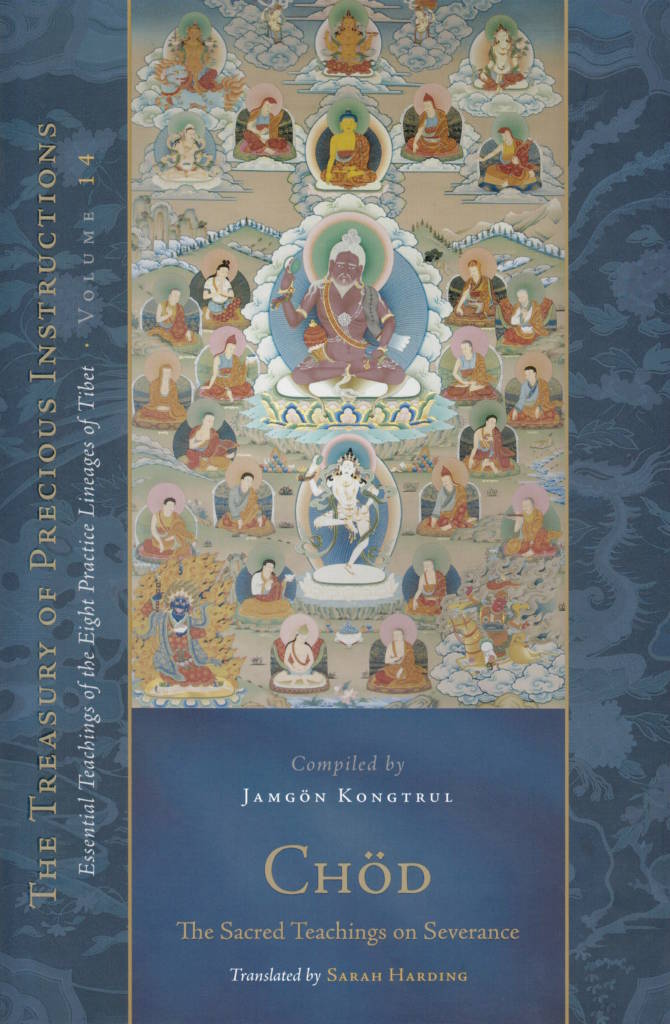
The Sacred Teachings on Severance
Damngak Dzö 14
Translated by Sarah Harding
Snow Lion · Boulder, CO · ISBN 9781611803723
The Treasury of Precious Instructions by Jamgön Kongtrul Lodrö Taye, one of Tibet’s greatest Buddhist masters, is a shining jewel of Tibetan literature, presenting essential teachings from the entire spectrum of practice lineages that existed in Tibet.
English DRL record

L'Essence de la sagesse primordiale
Instructions cruciales sur les étapes de la voie - extraites de l'Accomplissement de l'Esprit du Maître Puissance du Terrible Vajra. Trésor de Gourou Padmasambhava: transcrit par Yéshé Tsogyal, découvert et décrypté par Jamyang Khyentsé Wangpo et Chogyour Détchen Lingpa et le Commentaire: L'Immense Éclat de la sagesse primordiale - rédigé par Jamgön Kongtrul Lotreu Thayé - Volume 3
Padmakara Translation Group
Padmakara · Le Plantou · ISBN 9782370410955
Français DRL record

L'Essence de la sagesse primordiale
Instructions cruciales sur les étapes de la voie - extraites de l'Accomplissement de l'Esprit du Maître Puissance du Terrible Vajra. Trésor de Gourou Padmasambhava: transcrit par Yéshé Tsogyal, découvert et décrypté par Jamyang Khyentsé Wangpo et Chogyour Détchen Lingpa et le Commentaire: L'Immense Éclat de la sagesse primordiale - rédigé par Jamgön Kongtrul Lotreu Thayé - Volume 4
Padmakara Translation Group
Padmakara · Le Plantou · ISBN 9782370410979
Français DRL record

Lamrim Yeshe Nyingpo
The Wisdom Essence of Oral Instruction in the Stages of the Path, The Heart Essence of Pasmasambhava According to The Guru's Heart Practice of Dorje Drakpo Tsal, Powerful Vajra Wrath
Translated by Erik Pema Kunsang
Rangjung Yeshe · Kathmandu · ISBN 9780990997870
This is a special publication with red cover and gold leaf arranged by Rangjung Yeshe Publications, provided for free distribution by the generosity of George MacDonald and Eric Colombel. It was for limited release and is not available for purchase.
English DRL record

Présentation générale des quatre classes de tantras bouddhistes
Translated by Christian Charrier
Padmakara · Plazac, France · ISBN 9782370410818
English DRL record

A Complete Translation of the Bodhisattvabhūmi
Translated by Artemus Engle
Snow Lion · Boulder, CO · ISBN 9781559394291
Ārya Asanga’s Bodhisattvabhūmi, or The Stage of a Bodhisattva, is the Mahāyāna tradition’s most comprehensive manual on the practice and training of bodhisattvas—by the author’s own account, a compilation of the full range of instructions contained in the entire collection of Mahāyāna sutras.
English DRL record

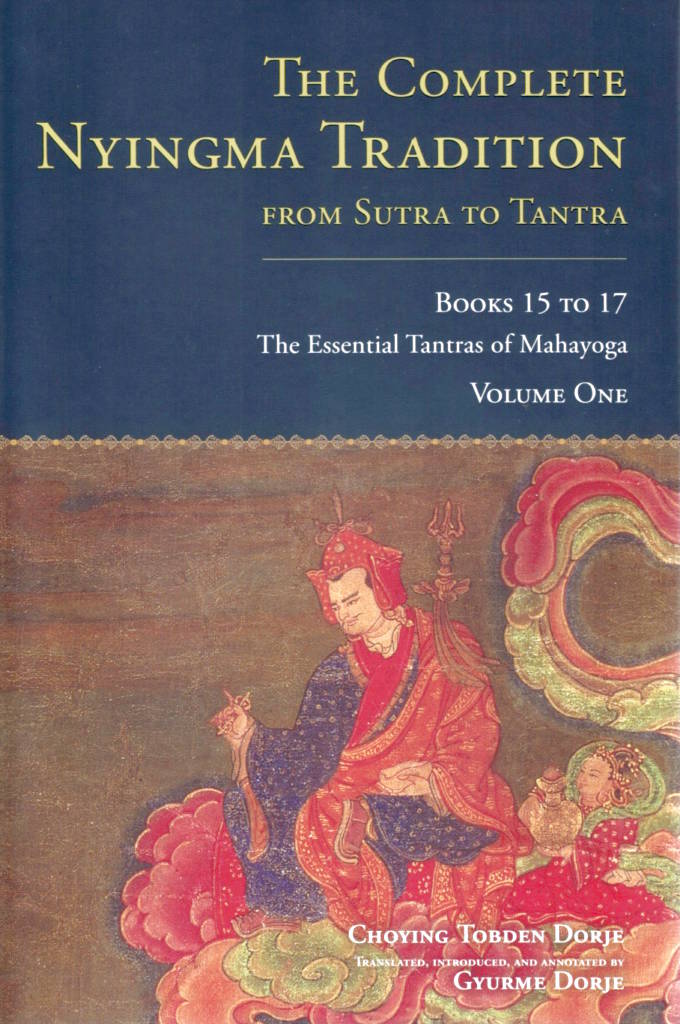
The Essential Tantras of Mahayoga. Vol. 1.
Translated by Gyurme Dorje
Snow Lion · Boulder, CO · ISBN 9781559394369
In 1838, Choying Tobden Dorje, a yogin and scholar of northeastern Tibet, completed a multivolume masterwork that traces the entire path of the Nyingma tradition of Tibetan Buddhism from beginning to end.
English DRL record

The Essential Tantras of Mahayoga. Vol. 2
Translated by Gyurme Dorje
Snow Lion · Boulder, CO · ISBN 9781559394369
In 1838, Choying Tobden Dorje, a yogin and scholar of northeastern Tibet, completed a multivolume masterwork that traces the entire path of the Nyingma tradition of Tibetan Buddhism from beginning to end.
English DRL record

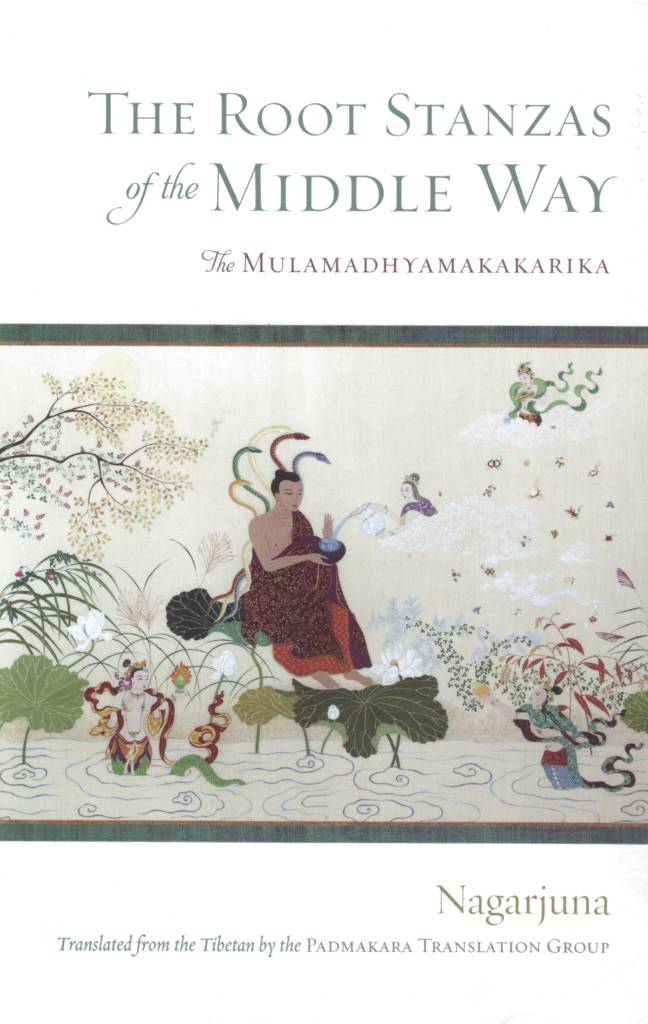
The Mulamadhyamakakarika
Translated by Helena Blankleder and Wulstan Fletcher — Padmakara Translation Group
Shambhala · Boulder · ISBN 9781611803426
This volume presents a new English translation of the founding text of the Madhyamaka (Middle Way) school of Mahayana Buddhism, Nagarjuna’s Root Stanzas of the Middle Way, and includes the Tibetan version of the text.
English DRL record
2015[edit]

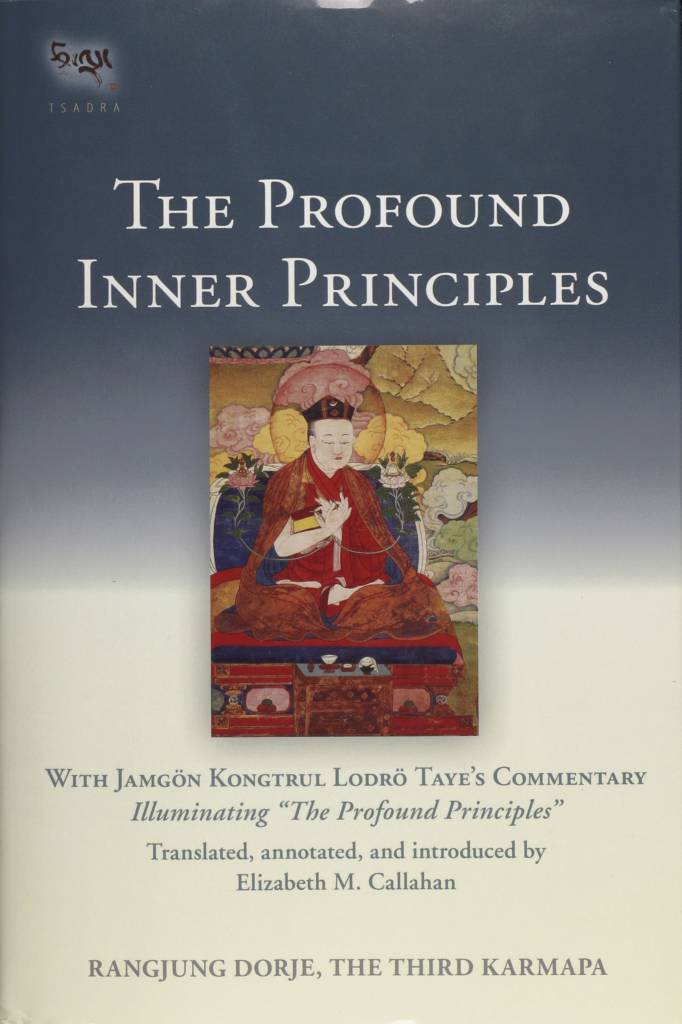
Translated by Elizabeth Callahan
Snow Lion · Boston · ISBN 9781559394161
With masterful clarity and precision, The Profound Inner Principles delineates the principles and foundations of Vajrayāna practice. Rangjung Dorje presents the nature of things—mental and physical—and looks at the cause of delusion, what delusion creates, and how delusion is corrected.
English DRL record
2014[edit]

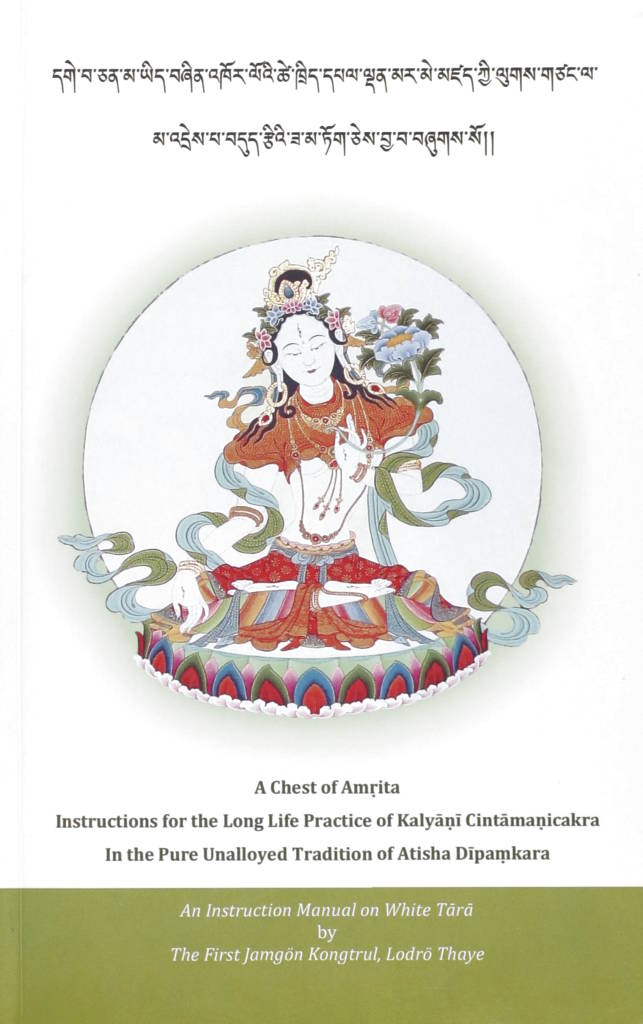
Instructions for the Long Life Practice of Kalyāṇī Cintāmaṇicakra In the Pure Unalloyed Tradition of Atisha Dīpaṃkara, An Instruction Manual on White Tārā
Translated by Gelong Sherab Drime
Benchen · Kathmandu, Nepal
A Jamgön Kongtrul text on White Tara: A Chest of Amṛita: Instructions for the Long Life Practice of Kalyāṇī Cintāmaṇicakra In the Pure Unalloyed Tradition of Atisha Dīpaṃkara, An Instruction Manual on White Tārā. Translated by Gelong Sherab Drime (Thomas Roth) and published with the support of Tsadra Foundation by Benchen Publications.
English DRL record

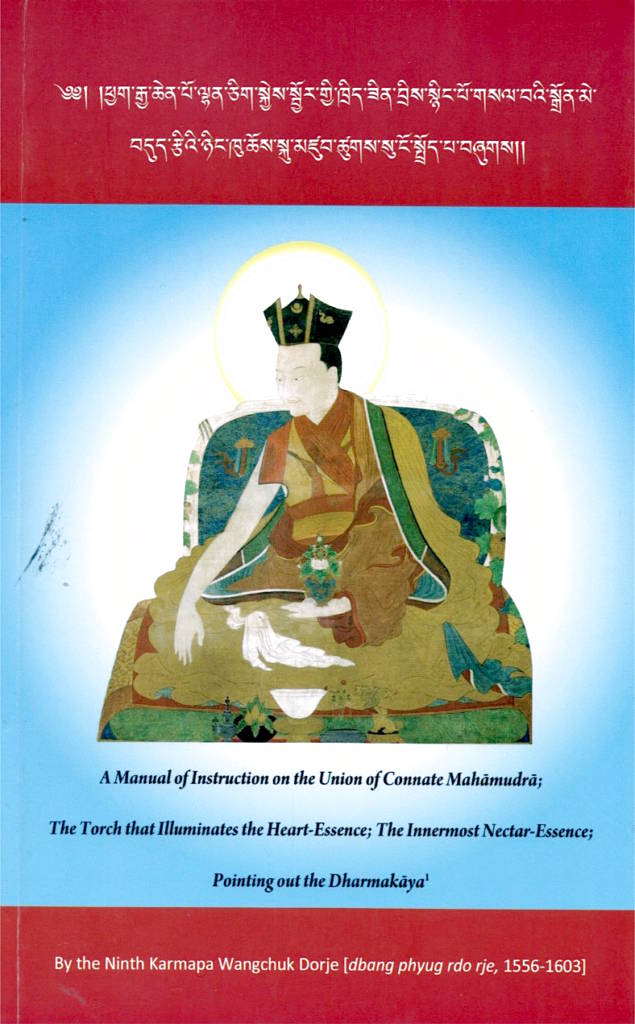
The Torch that Illuminates the Heart-Essence, The Innermost Nectar-Essence, Pointing out the Dharmakāya
Translated by Gelong Sherab Drime
Benchen · Kathmandu, Nepal
"Among the most profound teachings the karma Kamtshang has to offer". A Manual of Instruction on the Union of Connate Mahāmudrā; The Torch that Illuminates the Heart-Essence; The Innermost Nectar-Essence; Pointing out the Dharmakāya by the Ninth Karmapa Wangchuk Dorje (dbang phyug rdo rje, 1556-1603).
English DRL record

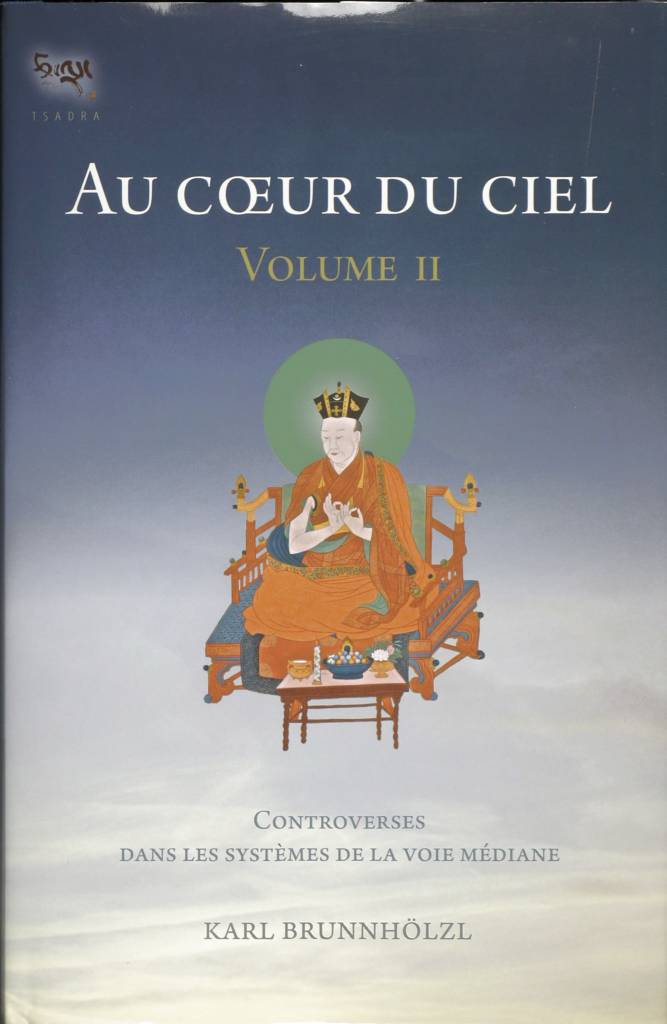
Controverses dans les systèmes de la voie médiane
Translated by Christian Charrier
Padmakara · Plazac, France · ISBN 9782370410351
Ce deuxième volume nous plonge au cœur des grands débats qui ont entraîné des divergences doctrinales au sein de ce système philosophique. Qu’est-ce qui distingue vraiment les Prāsangikas des Svātantrikas ? Réfutent-ils un objet différent ? Qu’est-ce que le courant shentong au Tibet ?
Français DRL record

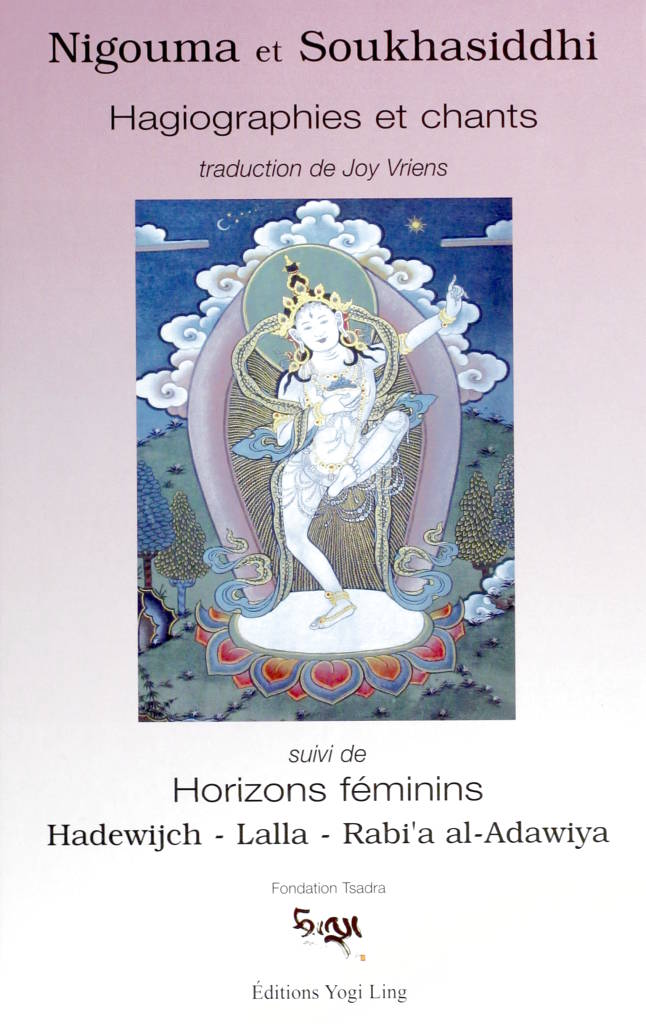
Hadewijch, Lalla, Rabi'a al-Adawiya
By Joy Vriens
Yogi Ling · Ygrande, France · ISBN 978-2-911-41724-5
A bilingual, annotated edition of the hagiographies of two wisdom dakinis, Niguma and Sukhasiddhi, of the Shangpa lineage in Tibet. The volume concludes with excerpts from the writings of three mystics: the Christian Hadewijch of Antwerp, the Shaivite Lalla Arifa, and the Sufi Muslim Rabi'a al-Adawiya.
Français DRL record

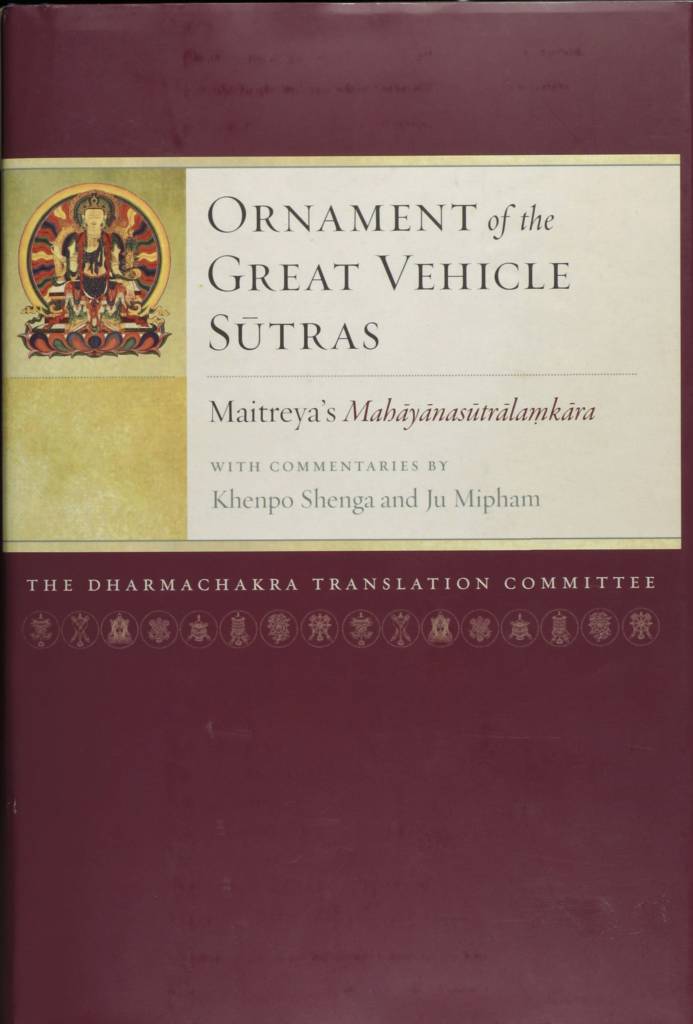
Maitreya's Mahāyānasūtrālaṃkāra with Commentaries by Khenpo Shenga and Ju Mipham
Translated by Cortland Dahl, Douglas Duckworth, Thomas Doctor, James Gentry, Heidi Köppl, and Hilary Herdman — Dharmachakra Translation Committee
Snow Lion · Boston · ISBN 978-1-55939-428-4
The Buddhist masterpiece Ornament of the Great Vehicle Sūtras, often referred to by its Sanskrit title, Mahāyānasūtrālaṃkāra, is part of a collection known as the Five Maitreya Teachings, a set of philosophical works that have become classics of the Indian Buddhist tradition.
English DRL record

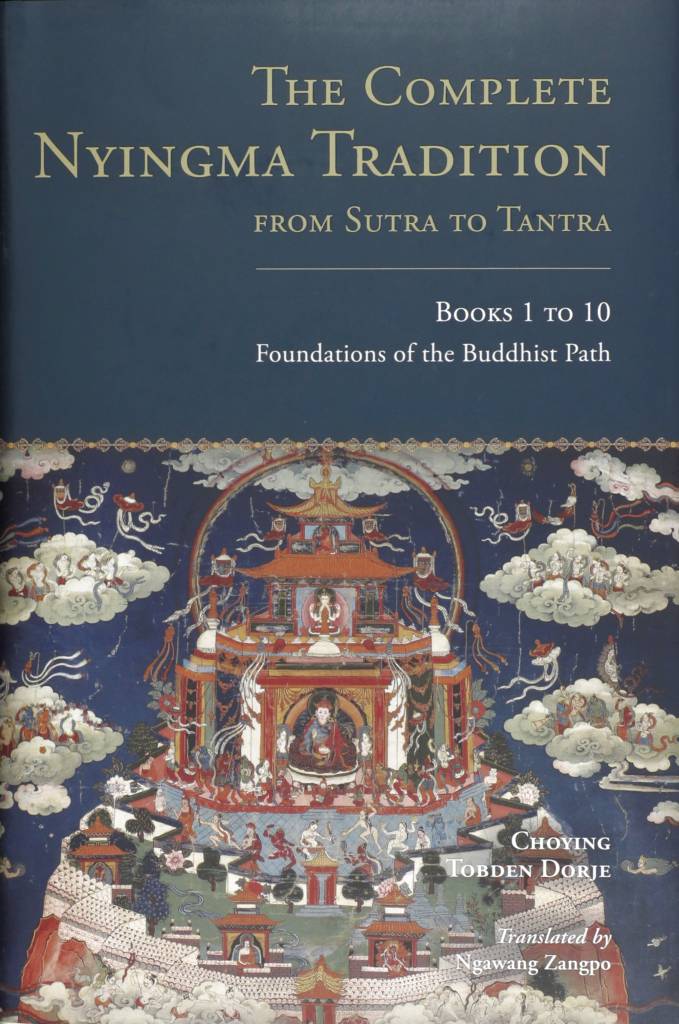
Foundations of the Buddhist Path
Translated by Ngawang Zangpo
Snow Lion · Boston · ISBN 978-1-55939-435-2
In 1838, Choying Tobden Dorje, a Buddhist yogi-scholar of eastern Tibet, completed a multivolume masterwork that traces the entire path of the Nyingma tradition of Tibetan Buddhism from beginning to end. Written by a lay practitioner for laypeople, it was intended to be accessible, informative, inspirational, and above all, practical.
English DRL record

By Karl Brunnhölzl
Snow Lion · Boston · ISBN 9781559394178
"Buddha nature" (tathāgatagarbha) is the innate potential in all living beings to become a fully awakened buddha.
English DRL record
2013[edit]

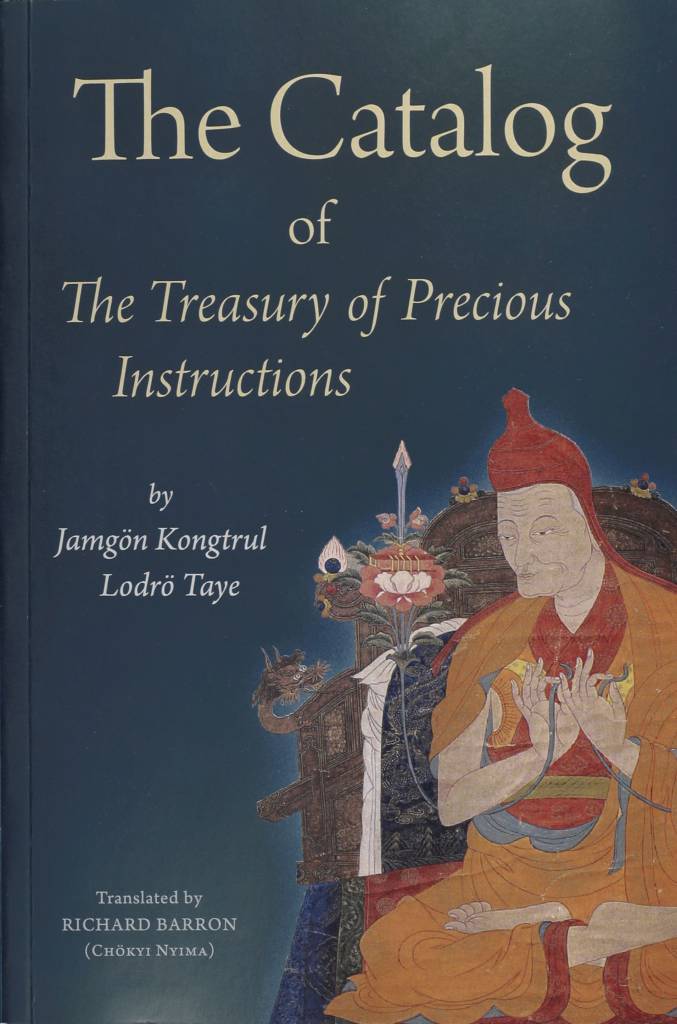
The Catalog of The Treasury of Precious Instructions
Damngak Dzö
Translated by Richard Barron (Chokyi Nyima)
Tsadra Foundation · New York
An initial draft translation of the Karchag or catalog text found in volume 18 of the gdams ngag mdzod by Jamgon Kongtrul Lodro Taye, translated by Richard Barron.
English DRL record

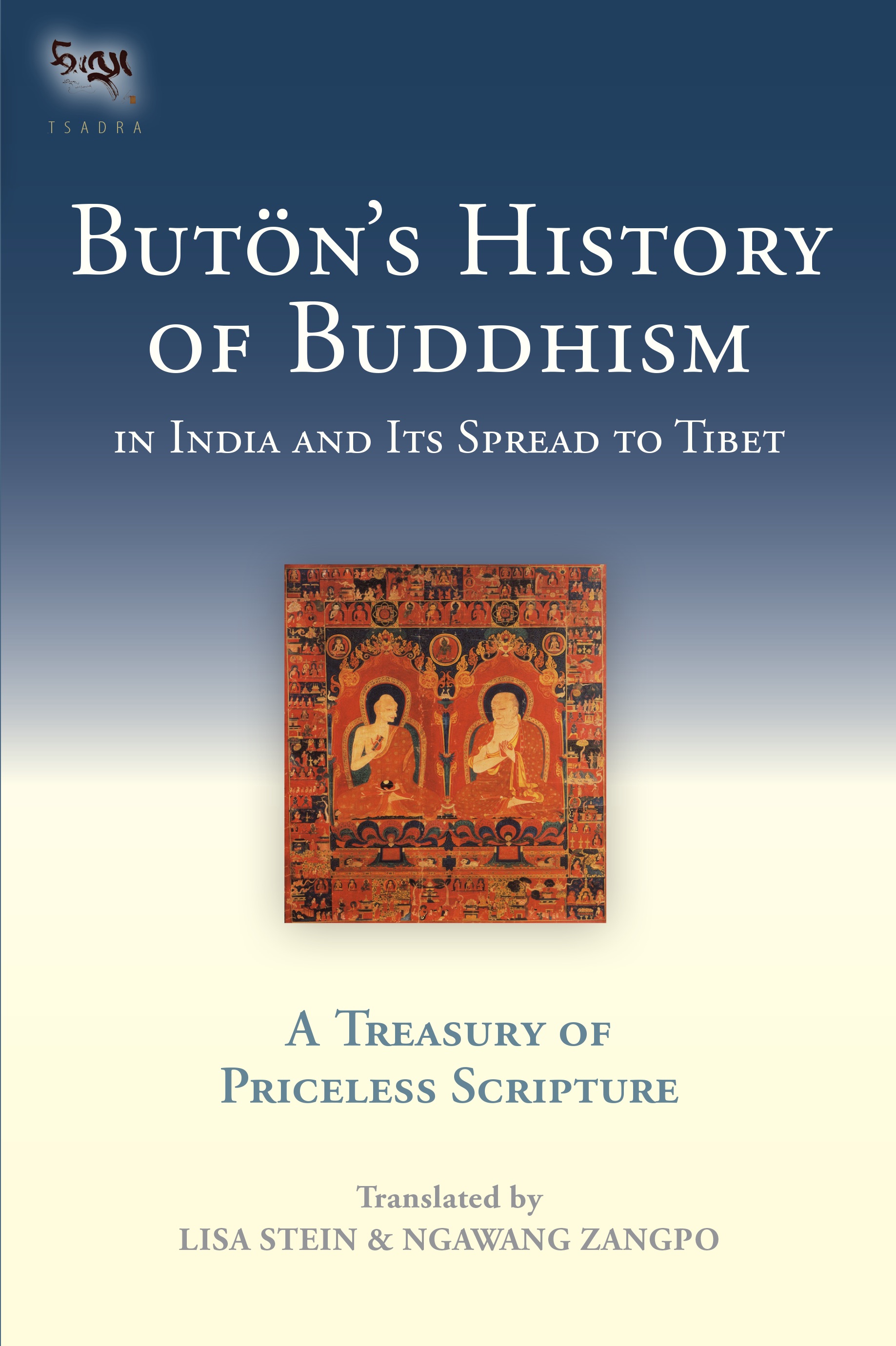
A Treasury of Priceless Scripture
Translated by Ngawang Zangpo and Lisa Pickford-Stein
Snow Lion · Boston & London · ISBN 9781559394130
This fourteenth-century Tibetan classic serves as an excellent introduction to basic Buddhism as practiced throughout India and Tibet and describes the process of entering the Buddhist path through study and reflection.
English DRL record

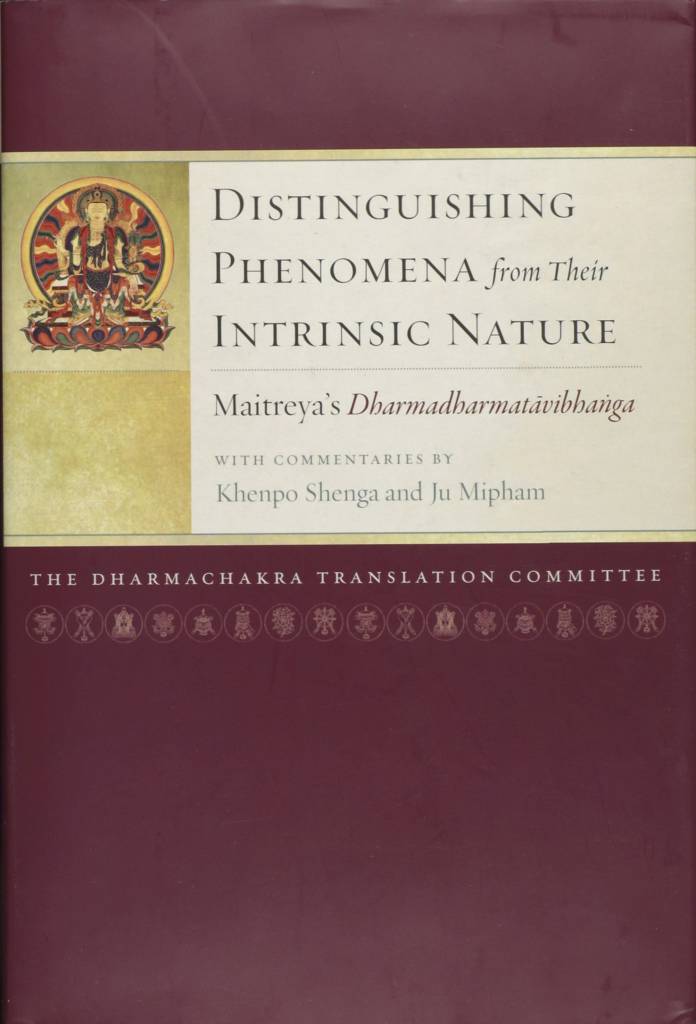
Maitreya's Dharmadharmatāvibhaṅga with Commentaries by Khenpo Shenga and Ju Mipham
Translated by Cortland Dahl, Thomas Doctor, and Zachary Beer — Dharmachakra Translation Committee
Snow Lion · Boston · ISBN 9781559394093
The Buddhist masterpiece Distinguishing Phenomena from Their Intrinsic Nature, often referred to by its Sanskrit title, Dharmadharmatāvibhaṅga, is part of a collection known as the Five Maitreya Teachings, a set of philosophical works that have become classics of the Indian Buddhist tradition.
English DRL record

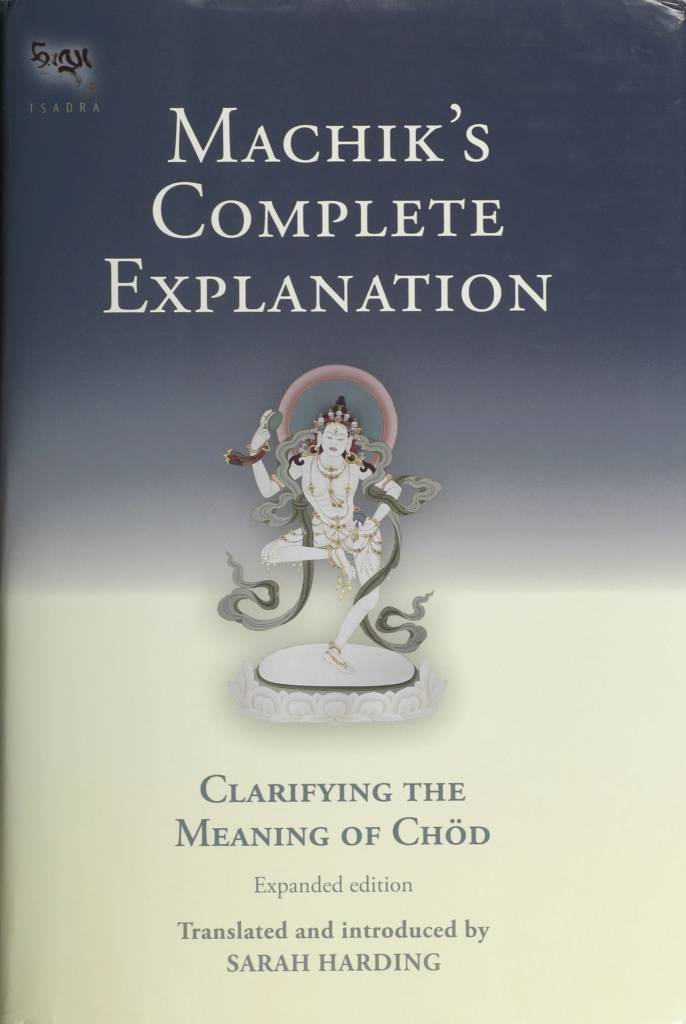
Clarifying the Meaning of Chöd, a Complete Explanation of Casting out the Body as Food
Translated by Sarah Harding
Snow Lion · Boston · ISBN 9781559394147
Machik's Complete Explanation, the most famous book of the teachings of Machik Lapdrön, the great female saint and yogini of eleventh- to twelfth-century Tibet, addresses these issues in a practical, direct way.
English DRL record

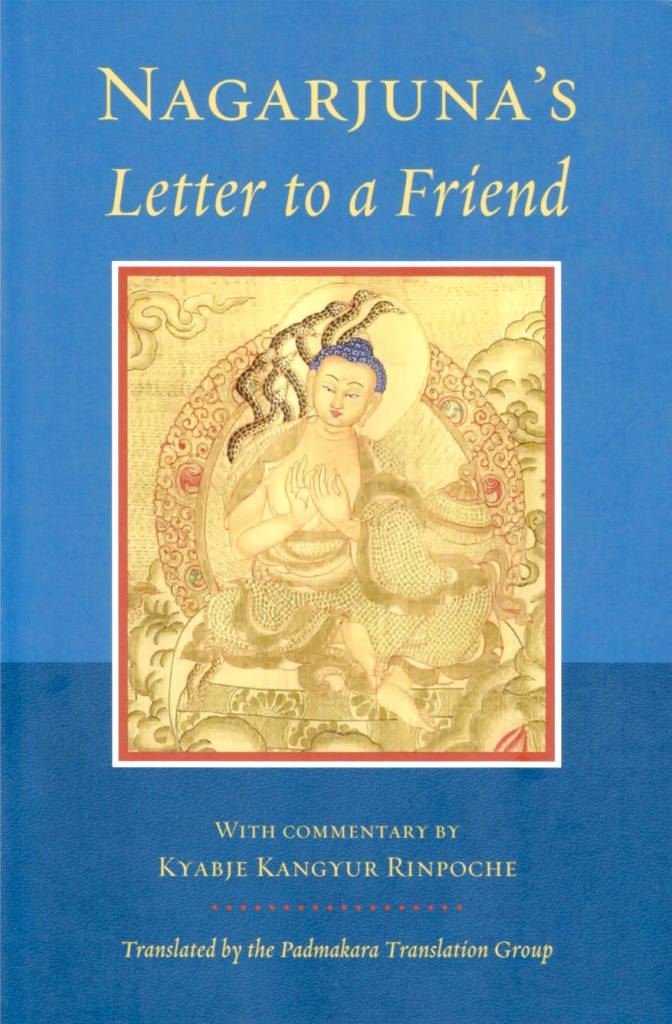
Translated by Stephen Gethin — Padmakara Translation Group
Snow Lion · Boston · ISBN 9781559394154
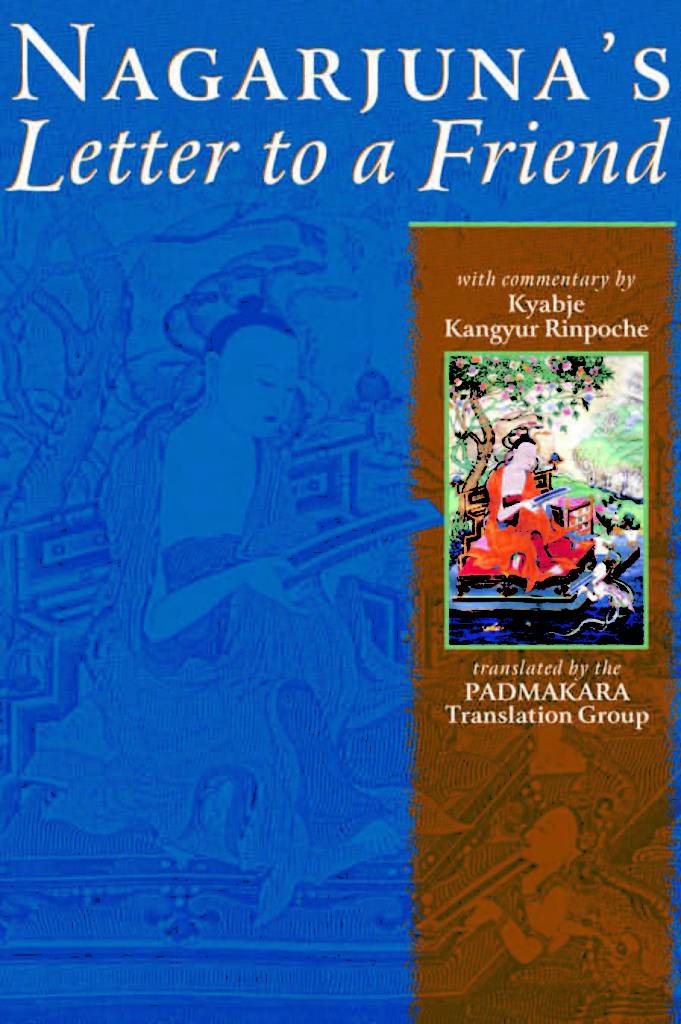
This is a translation of Kangyur Rinpoche's (1897-1975) commentary on Nagarjuna's famous text Letter to a Friend (सुहृल्लेख, suhṛllekha. བཤེས་པའི་སྤྲིང་ཡིག, bshes pa'i spring yig. Derge 4182).
English DRL record

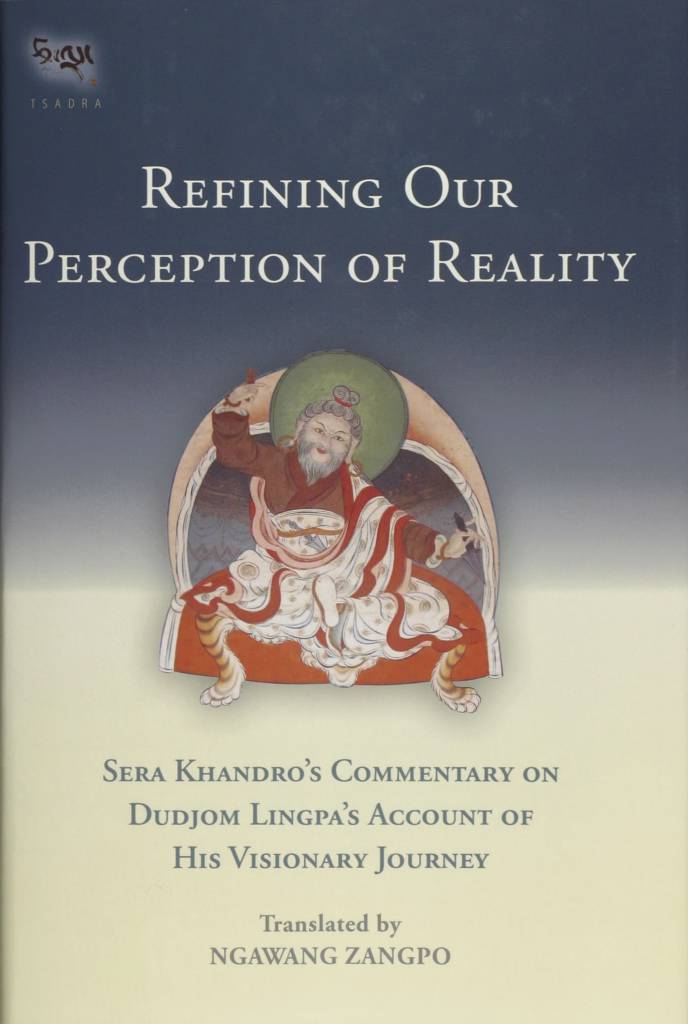
Sera Khandro's Commentary on Dudjom Lingpa's Account of His Visionary Journey
Translated by Ngawang Zangpo and Christina Monson
Snow Lion · Boston · ISBN 9781559394246
Dakini Sukha Vajra, widely known as Sera Khandro, wrote this commentary of an account by the great Dudjom Lingpa of visions he had of enlightened beings and the teachings he received from them regarding our perception of reality. This book contains four Tibetan texts in translation.
English DRL record

The Poetic Travel Journal of Tsarchen Losal Gyatso. Celebration of the Cuckoo: My Autobiographical Song of the Road
Translated by Cyrus Stearns
Wisdom · Boston, MA · ISBN 9781614290551
In Song of the Road, Tsarchen Losal Gyatso (1502-66), a tantric master of the Sakya tradition of Tibetan Buddhism, weaves ecstatic poetry, song, and accounts of visionary experiences into a record of pilgrimage to central Tibet.
English DRL record

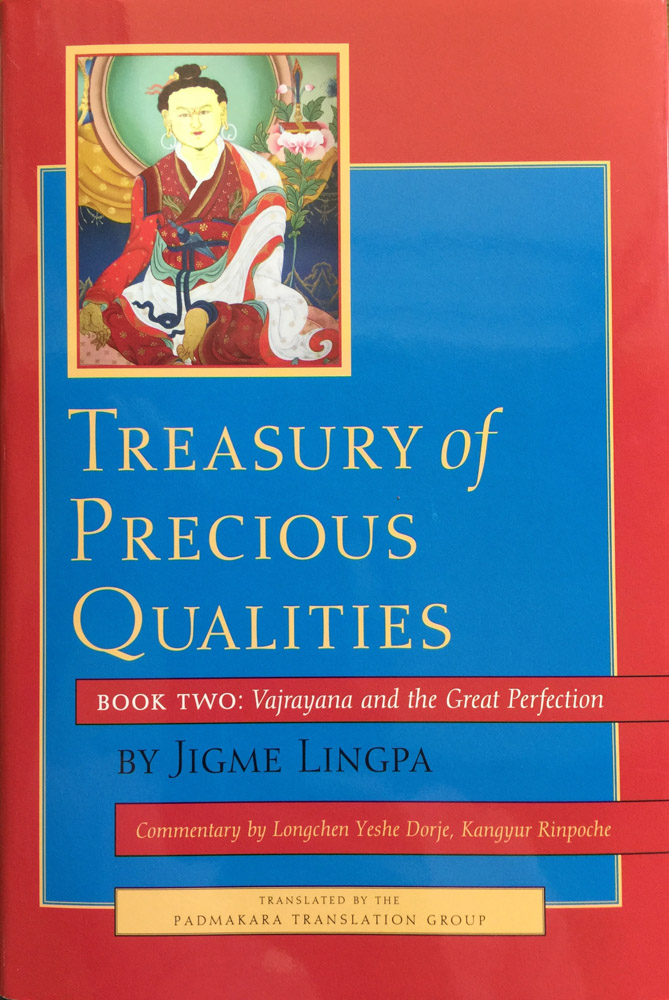
The Rain of Joy. Book Two: Vajrayana and the Great Perfection
Translated by Helena Blankleder and Wulstan Fletcher — Padmakara Translation Group
Shambhala · Boston · ISBN 1570625980
This second and concluding volume of Jigme Lingpa’s classic Treasury of Precious Qualities is presented together with a detailed commentary by Kangyur Rinpoche. Composed in the form of a lamrim, or presentation of the stages of the path, the first volume set out the teachings of the sutras.
English DRL record

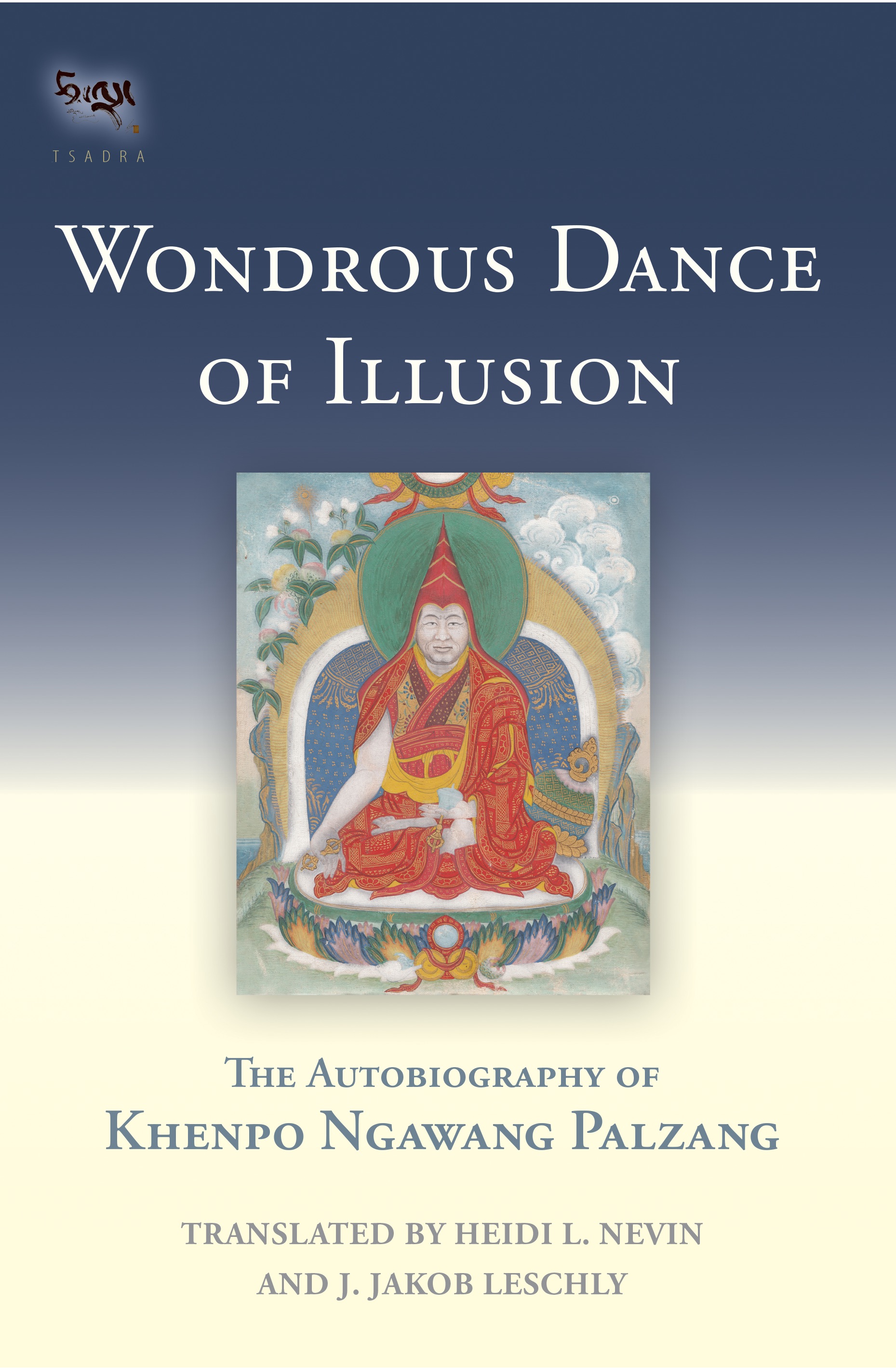
The Autobiography of Khenpo Ngawang Palzang
Translated by Jakob Leschly and Heidi Nevin
Snow Lion · Boston · ISBN 9781559394277
The Autobiography of Khenpo Ngawang Palzang (Ngag dbang dpal bzang, b. 1879 - d. 1941). This book, listed as "restricted", was translated by Heidi Nevin and Jakob Leschly and dedicated to Chatral Sangye Dorje Rinpoche, who helped create the edition of the Tibetan used for translation.
English DRL record
2012[edit]

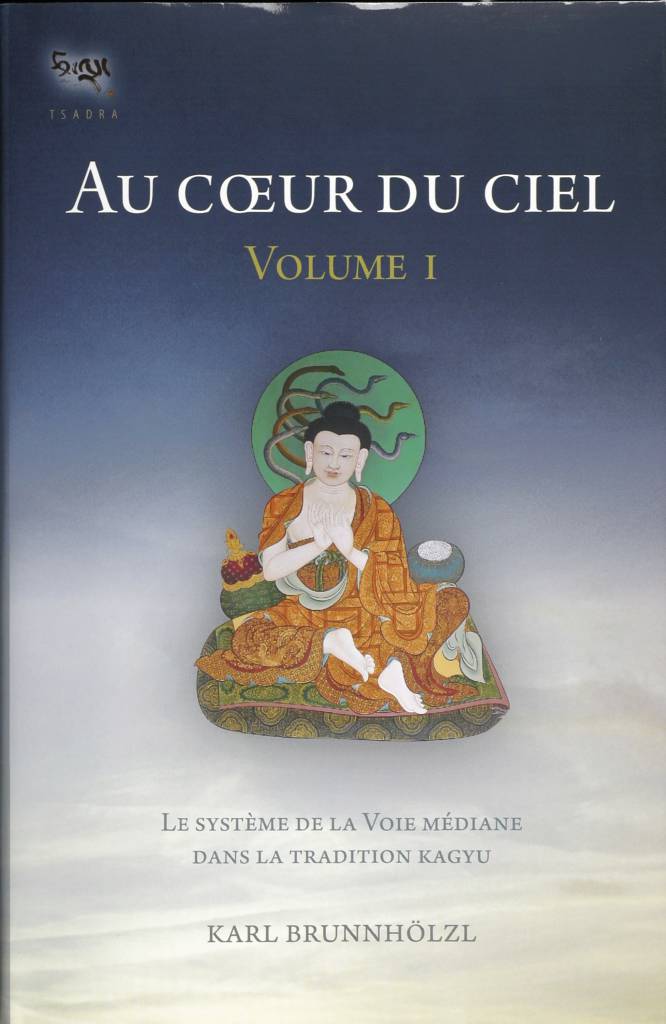
Le système de la voie médiane dans la tradition kagyu
Translated by Christian Charrier
Padmakara · Plazac, France · ISBN 9782916915661
Voie d'accès au réel par le raisonnement analytique et l'expérience directe de la vacuité, le Madhyamaka permet à tout un chacun d'évincer la souffrance et de réveiller la sagesse innée qui dort en lui.
Français DRL record

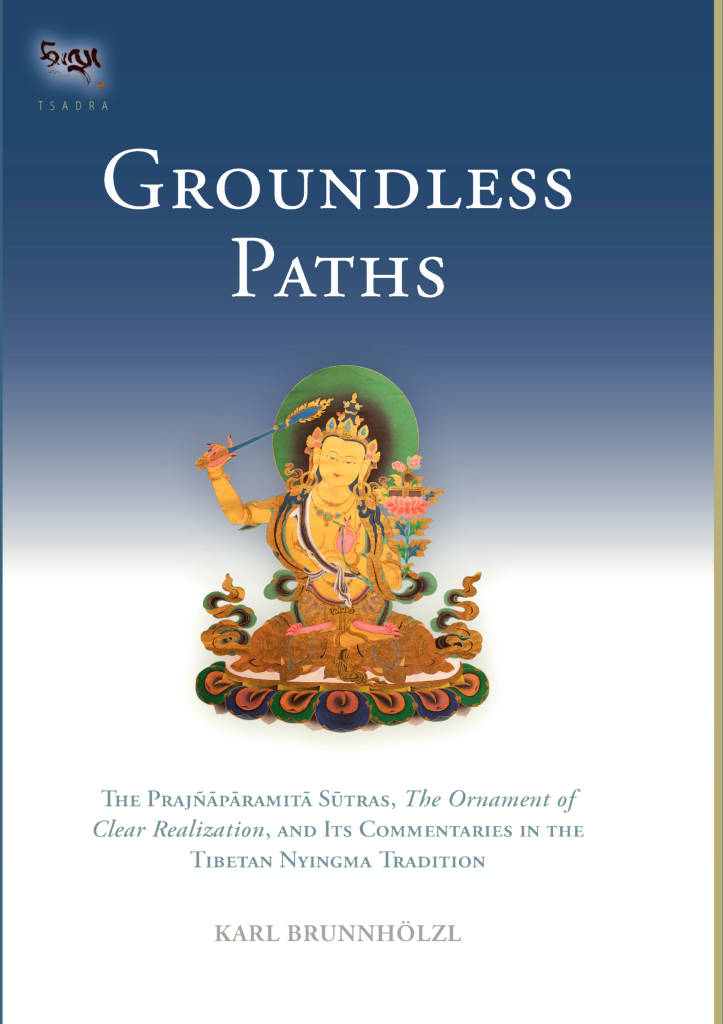
The Prajñāpāramitā Sūtras, The Ornament of Clear Realization, and Its Commentaries in the Tibetan Nyingma Tradition
Translated by Karl Brunnhölzl
Snow Lion · Ithaca, NY · ISBN 1-55939-375-0 978-1-55939-375-1
The Abhisamayalamkara summarizes all the topics in the vast body of the prajñaparamita sutras. Resembling a zip-file, it comes to life only through its Indian and Tibetan commentaries.
English DRL record

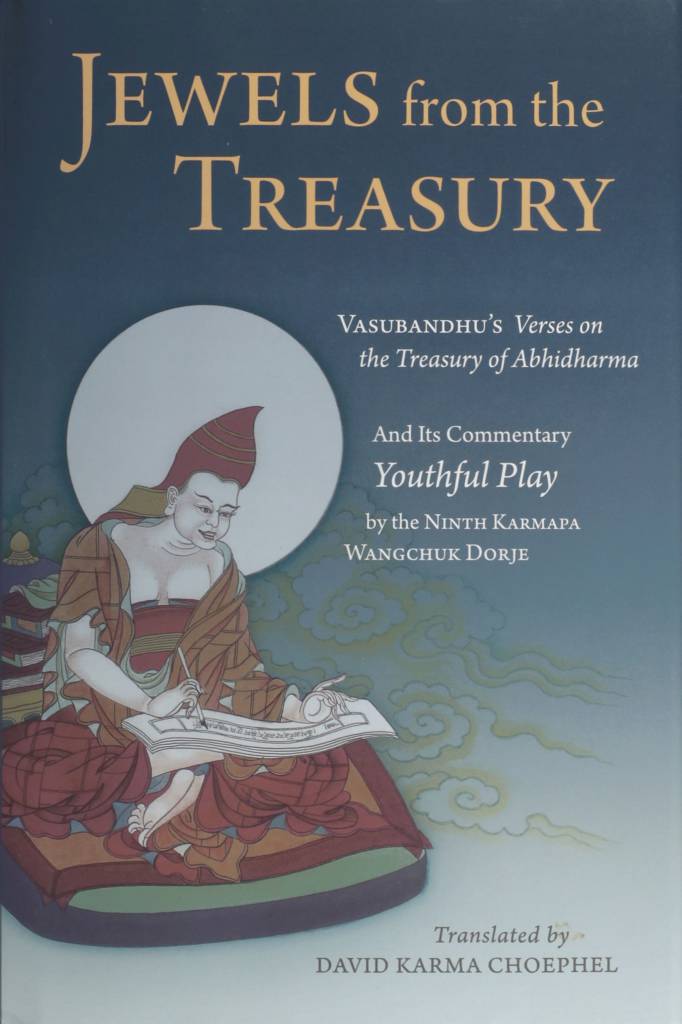
Vasubandhu's Verses on the Treasury of Abhidharma: And Its Commentary Youthful Play by the Ninth Karmapa Wangchuk Dorje
By David Karma Choephel
KTD · Woodstock, NY · ISBN 9781934608258
This book presents Vasubandhu's Verses on the Treasury of Abhidharma, a key text studied in Tibetan monastic colleges, along with its commentary Youthful Play by the Ninth Karmapa Wangchuk Dorje. The text was translated by David Karma Choephel under the guidance of His Eminence Thrangu Rinpoche of the Kagyu tradition.
English DRL record

L'Essence de la sagesse primordiale
Instructions cruciales sur les étapes de la voie - extraites de l'Accomplissement de l'Esprit du Maître Puissance du Terrible Vajra. Trésor de Gourou Padmasambhava: transcrit par Yéshé Tsogyal, découvert et décrypté par Jamyang Khyentsé Wangpo et Chogyour Détchen Lingpa et le Commentaire: L'Immense Éclat de la sagesse primordiale - rédigé par Jamgön Kongtrul Lotreu Thayé - Volume 2
Padmakara Translation Group
Padmakara · Le Plantou · ISBN 9782916915678
Français DRL record

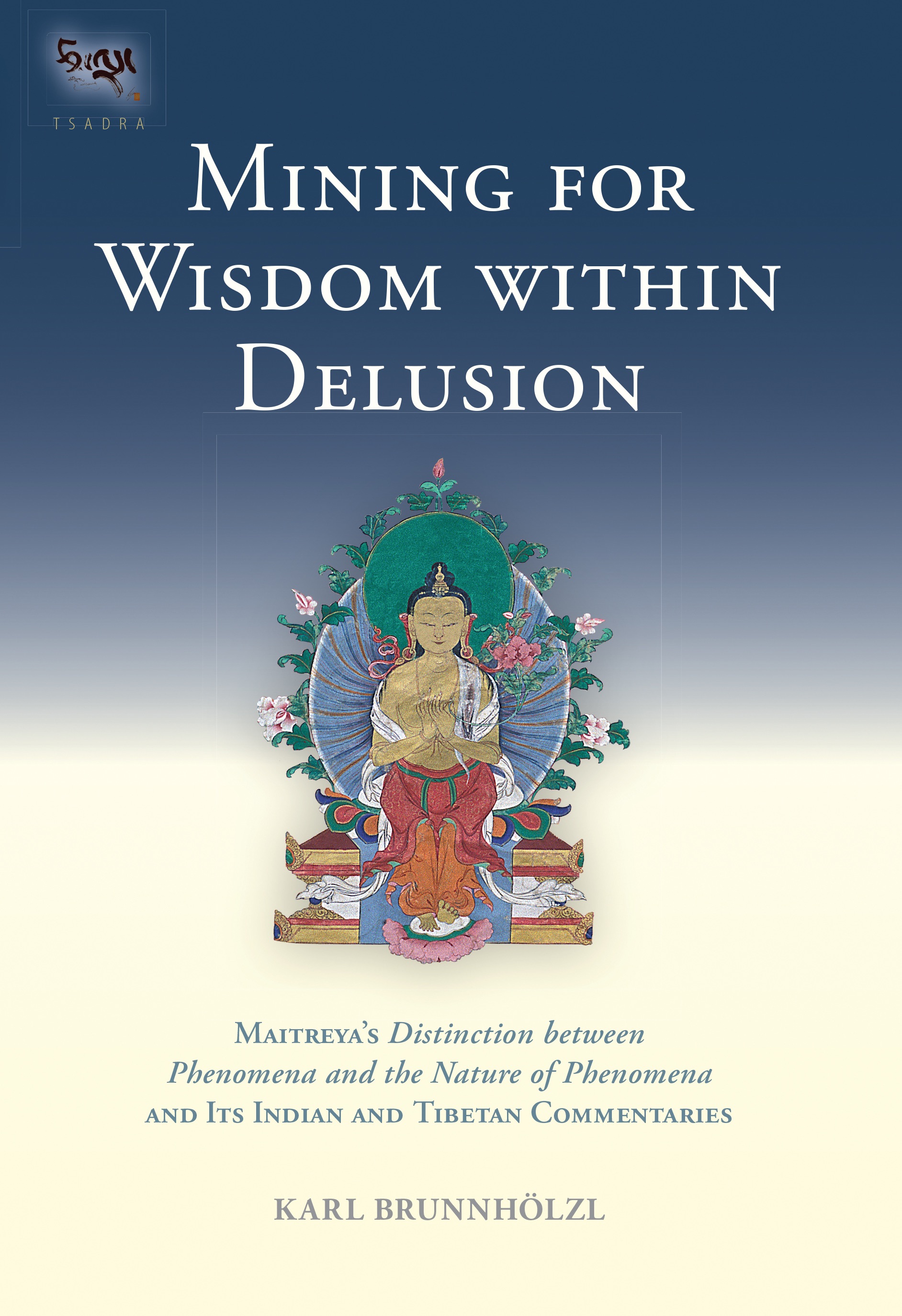
Maitreya's Distinction between Phenomena and the Nature of Phenomena and Its Indian and Tibetan Commentaries
Translated by Karl Brunnhölzl
Snow Lion · Boston · ISBN 9781559393959
Maitreya’s Distinction between Phenomena and the Nature of Phenomena distinguishes the illusory phenomenal world of saṃsāra produced by the confused dualistic mind from the ultimate reality that is mind’s true nature. The transition from the one to the other is the process of “mining for wisdom within delusion.
English DRL record

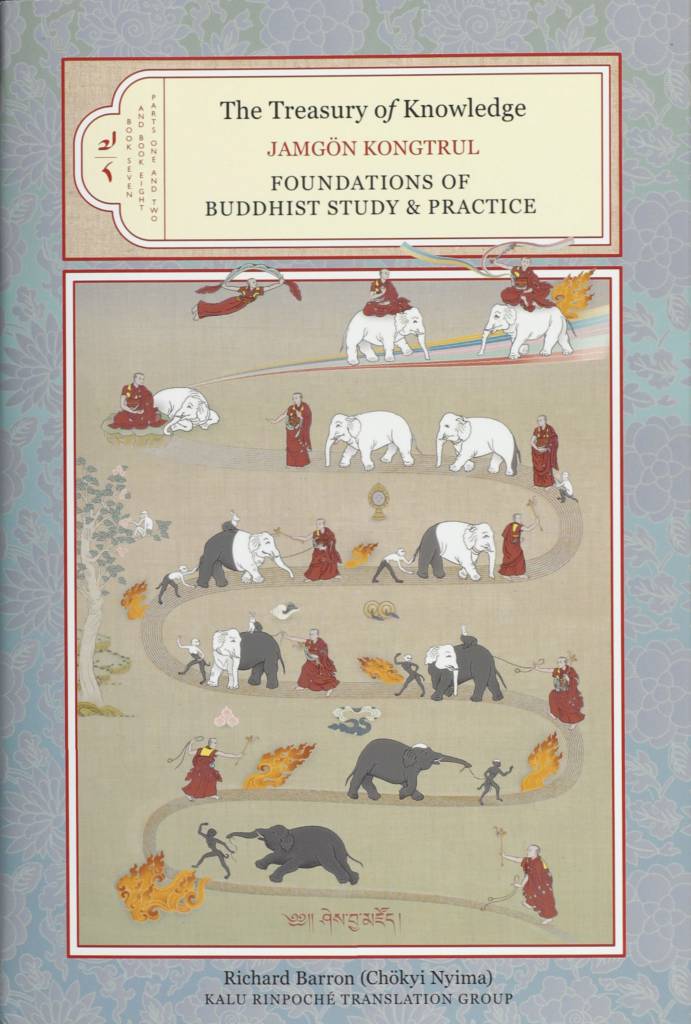
Foundations of Buddhist Study and Practice, The Higher Trainings in Sublime Intelligence and Meditative Absorption
Translated by Richard Barron (Chokyi Nyima)
Snow Lion · Boston · ISBN 9781559393997
Foundations of Buddhist Study and Practice comprises Book Seven and Book Eight, Parts One and Two of the Treasury of Knowledge. Book Seven elucidates the various keys needed to correctly interpret, understand, and contemplate Buddhist teachings, including the secret teachings of the Vajrayana.
English DRL record

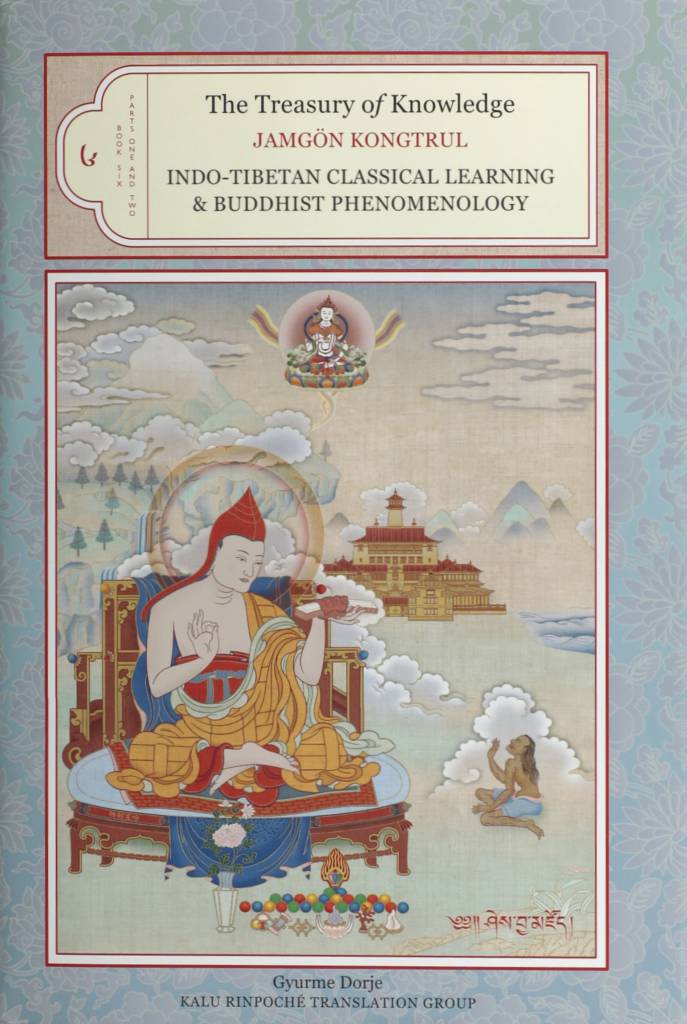
Indo-Tibetan Classical Learning and Buddhist Phenomenology
Translated by Gyurme Dorje
Snow Lion · Ithaca, NY · ISBN 9781559393898
The first two parts of Book Six, contained in this volume, respectively concern Indo-Tibetan classical learning and Buddhist phenomenology. The former analyzes the traditional subjects of phonology and Sanskrit grammar, logic, fine art, and medicine, along with astrology, poetics, prosody, synonymics, and dramaturgy.
English DRL record

Deity Practice in Tibetan Buddhism
Translated by Cortland Dahl, Andreas Doctor, James Gentry, Catherine Dalton, and Benjamin Collet-Cassart — Dharmachakra Translation Committee
Snow Lion · Boston · ISBN 1559393971 9781559393973
Vajra Wisdom presents the commentaries of two great nineteenth-century Nyingma masters that guide practitioners engaged in development stage practice through a series of straightforward instructions. The rarity of this kind of material in English makes it indispensable for practitioners and scholars alike.
English DRL record
2011[edit]

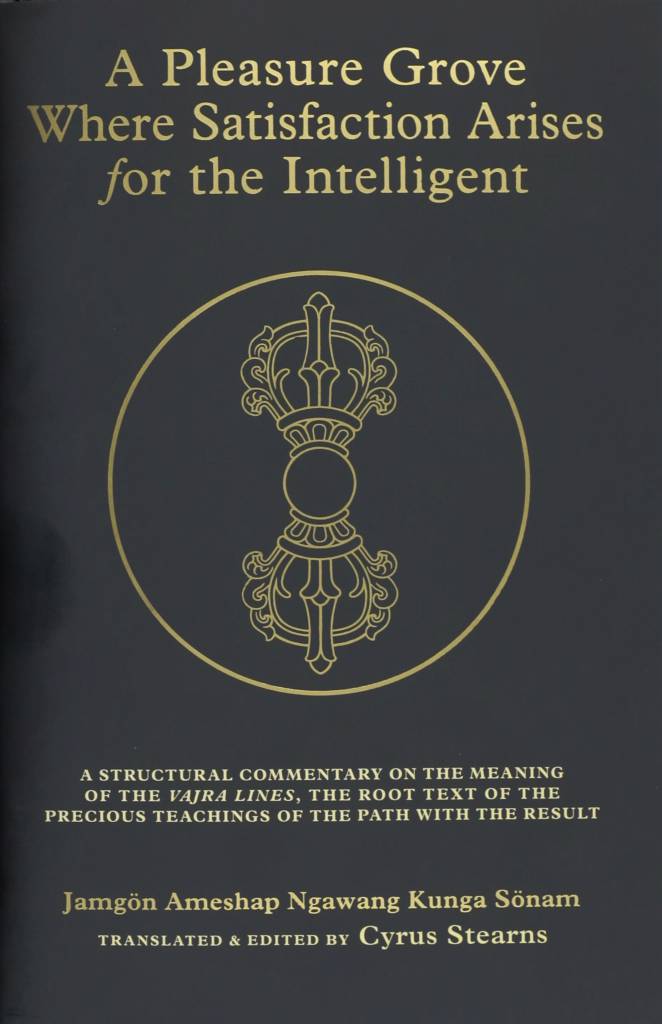
A structural commentary on the meaning of the Vajra Lines, the root text of the Precious Teaching of the Path with the Result, by which absolutely all the commentaries will be easily understood
By Cyrus Stearns
Snow Lion · Ithaca, NY · ISBN 1-55939-338-6
English DRL record

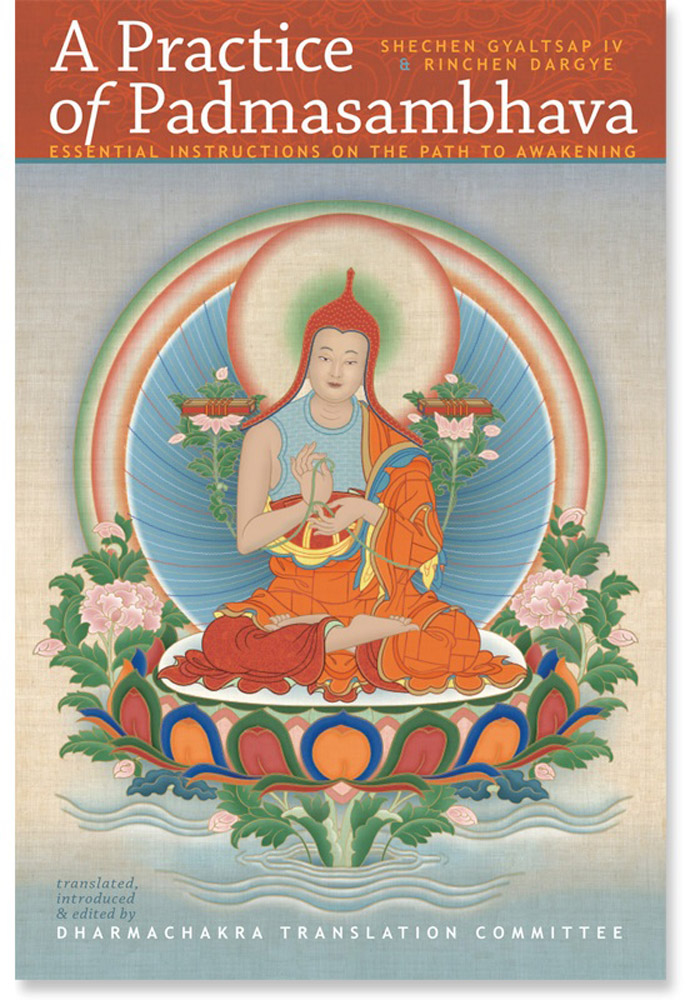
Essential Instructions on the Path to Awakening
Translated by Zachary Beer and Catherine Dalton — Dharmachakra Translation Committee
Snow Lion · Ithaca, N.Y · ISBN 9781559393621
A Practice of Padmasambhava presents two practical and compelling works related to a visualization and mantra practice of Padmasambhava. This practice is based on the most important revelation of the renowned nineteenth-century treasure revealer Chokgyur Lingpa, Accomplishing the Guru's Mind: Dispeller of All Obstacles.
English DRL record

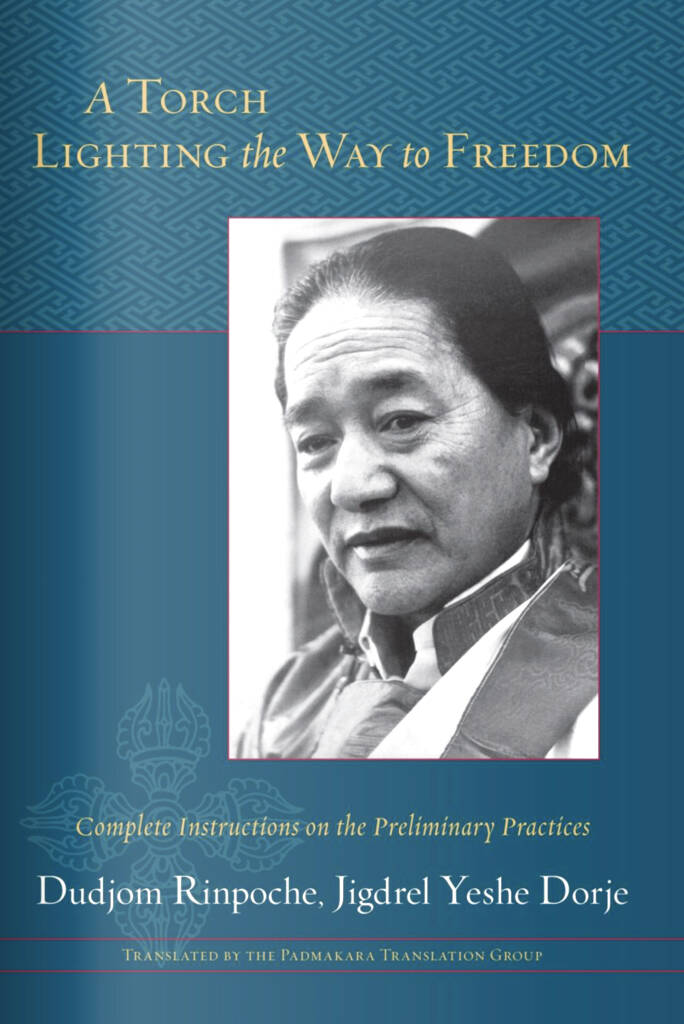
Complete Instructions on the Preliminary Practice of the Profound and Secret Heart Essence of the Dakini
Translated by Stephen Gethin — Padmakara Translation Group
Shambhala · Boston · ISBN 9781590309094
The foundations of Vajrayana practice are laid out with eloquence and precision here by one of the greatest Tibetan Buddhist masters of our age.
English DRL record

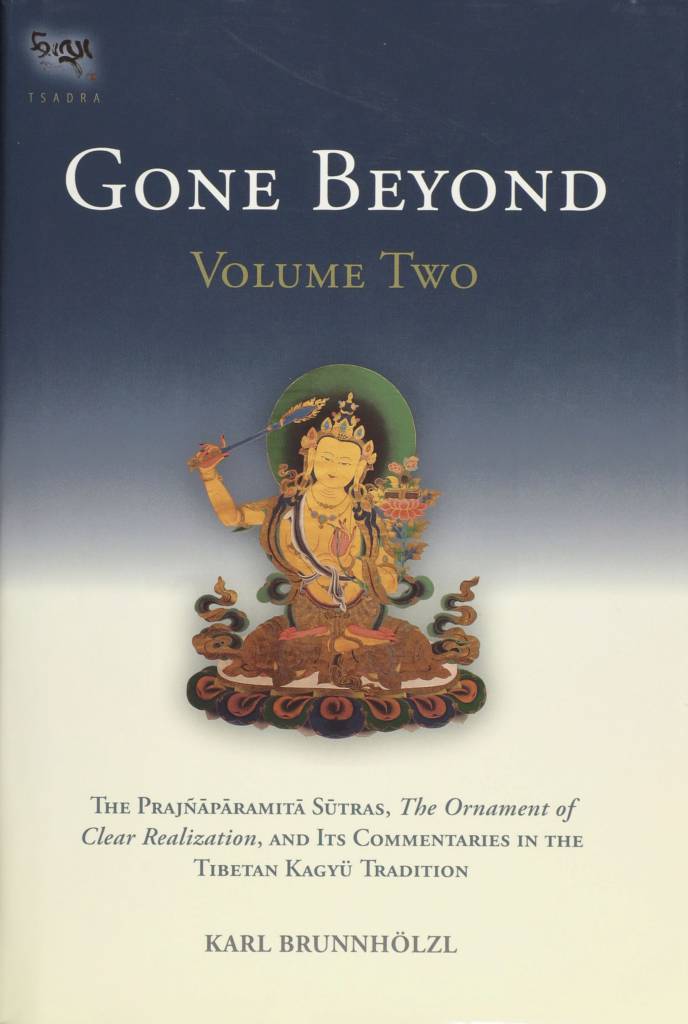
The Prajñāpāramitā Sūtras, The Ornament of Clear Realization, and its Commentaries in the Tibetan Kagyü Tradition (Volume Two)
Translated by Karl Brunnhölzl
Snow Lion · Ithaca, NY · ISBN 978-1-55939-356-0
The Abhisamayalamkara summarizes all the topics in the vast body of the Prajnaparamita Sutras. Resembling a zip-file, it comes to life only through its Indian and Tibetan commentaries.
English DRL record

Instructions cruciales sur les étapes de la voie - extraites de l'Accomplissement de l'Esprit du Maître Puissance du Terrible Vajra. Trésor de Gourou Padmasambhava: transcrit par Yéshé Tsogyal, découvert et décrypté par Jamyang Khyentsé Wangpo et Chogyour Détchen Lingpa et le Commentaire: L'Immense Éclat de la sagesse primordiale - rédigé par Jamgön Kongtrul Lotreu Thayé - Volume 1
Padmakara Translation Group
Padmakara · Le Plantou · ISBN 9782916915630
Français DRL record

By Ngawang Zangpo, Pamela Gayle White, and Joy Vriens
Yogi Ling · Bourbon-l'Archambault, France · ISBN 2911417038
English DRL record

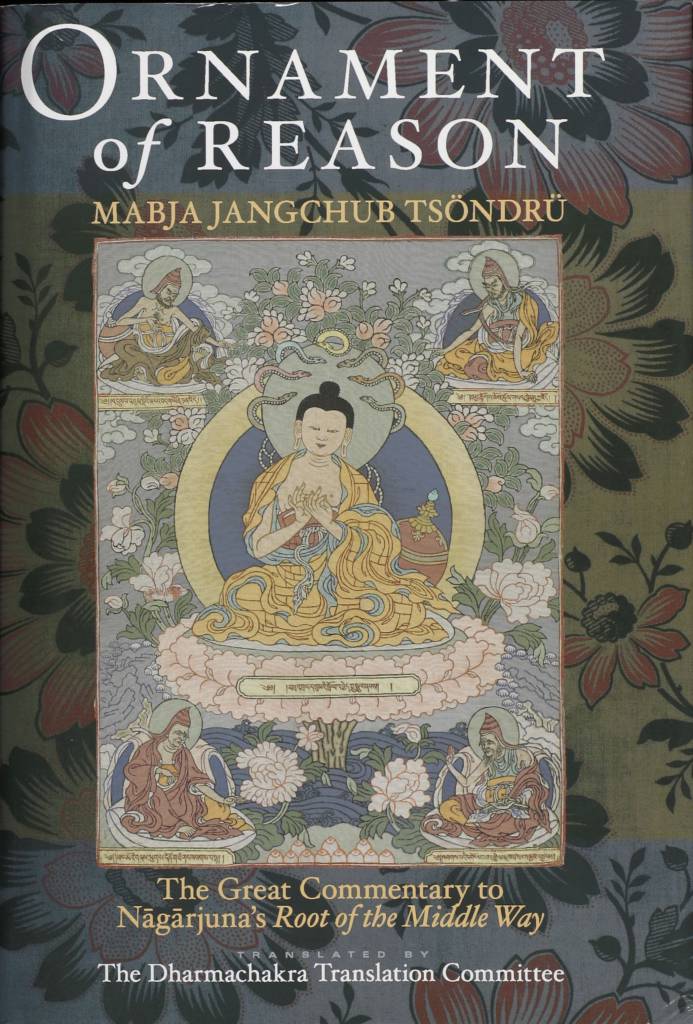
The Great Commentary to Nāgārjuna's Root of the Middle Way
By Thomas Doctor — Dharmachakra Translation Committee
Snow Lion · Ithaca, NY · ISBN 9781559393683
The present work contains Nagarjuna's verses on the Middle Way accompanied by Mabja Jangchub Tsöndrü's famed commentary, the Ornament of Reason.
English DRL record

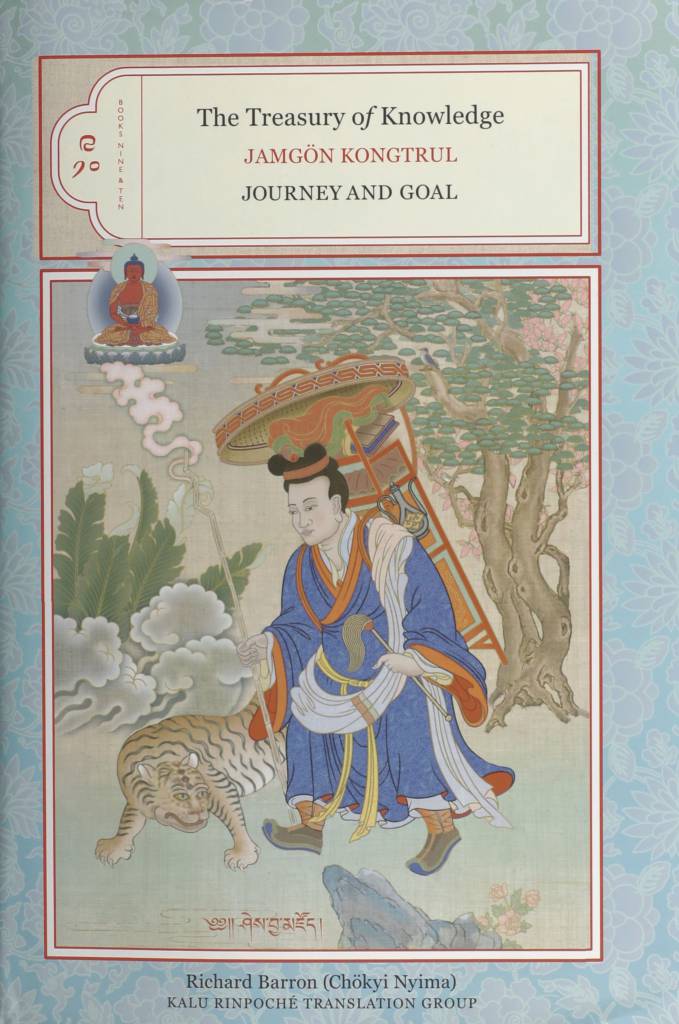
Journey and Goal, An Analysis of the Spiritual Paths and Levels to Be Traversed and the Consummate Fruition State
Translated by Richard Barron (Chokyi Nyima)
Snow Lion · Ithaca, NY · ISBN 9781559393607
Journey and Goal focuses on the spiritual path—the journey and the resultant state of enlightenment to which it leads—the goal. Extensively varied perspectives are offered not only from within the many schools of Buddhism but also from the different levels of practice and attainment.
English DRL record

An Explication of the Oral Instructions of the Path with the Result
By Cyrus Stearns
Snow Lion · Ithaca, NY · ISBN 9781559393379
The Lamdré, or the Path with the Result, is the most important system of tantric practice in the Sakya tradition of Tibetan Buddhism. The goddess Vajra Nairatmya first transmitted these teachings to the Indian adept Virupa (ca. seventh–eighth centuries) who then composed the Vajra Lines.
English DRL record
2010[edit]

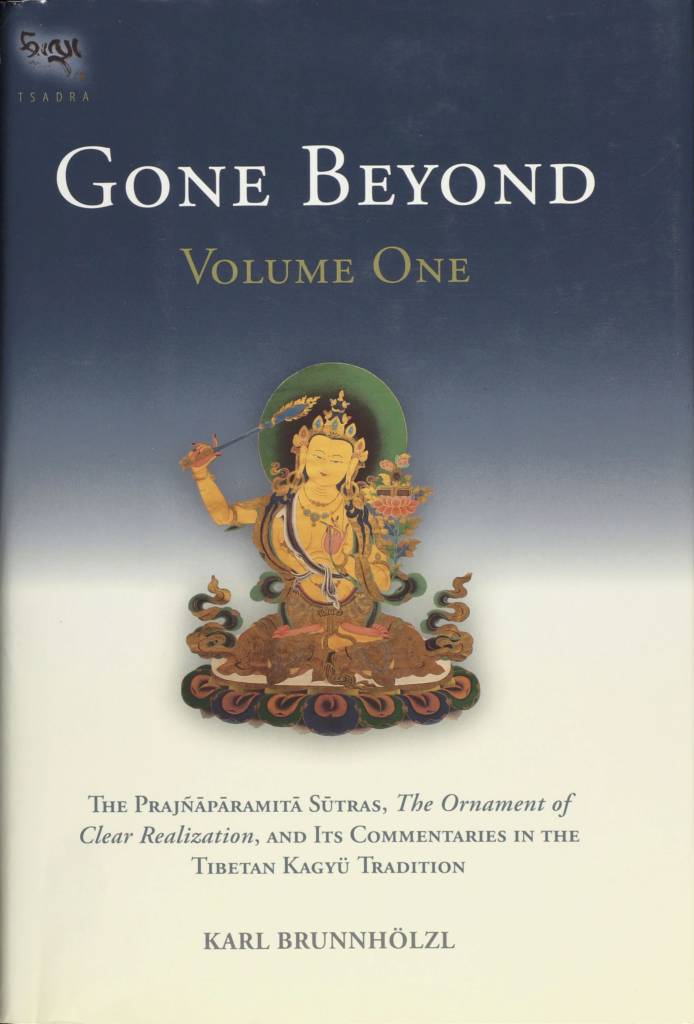
The Prajñāpāramitā Sūtras, The Ornament of Clear Realization, and its Commentaries in the Tibetan Kagyü Tradition (Volume One)
Translated by Karl Brunnhölzl
Snow Lion · Ithaca, NY · ISBN 978-1-55939-356-0
The Abhisamayalamkara summarizes all the topics in the vast body of the Prajnaparamita Sutras. Resembling a zip-file, it comes to life only through its Indian and Tibetan commentaries.
English DRL record

Volume 1, Véhicule causal des caractéristiques
Translated by Patrick Carré and Gwenola le Serrec — Padmakara Translation Group
Padmakara · Saint-Léon-sur-Vézère, FR · ISBN 2916915559
Français DRL record

By Sarah Harding
Snow Lion · Ithaca, NY · ISBN 1-55939-361-0
Providing a rare glimpse of feminine Buddhist history, Niguma, Lady of Illusion brings to the forefront the life and teachings of a mysterious eleventh-century Kashmiri woman who became the source of a major Tibetan Buddhist practice lineage, the Shangpa Kagyu.
English DRL record

Les étapes de la méditation du Mahāmudrā: Éloquente explication qui éclaire la progression dans la méditation du Mahāmudrā de sens définitif
Translated by Christian Charrier
Padmakara · Plazac, France · ISBN 9782916915579
Français DRL record

A Study of the Life and Thought of the Tibetan Master Dolpopa Sherab Gyaltsen
By Cyrus Stearns
Snow Lion · Ithaca, NY · ISBN 9781559393430
The Buddha from Dölpo is a revised and enlarged edition of the only book about the most controversial Buddhist master in the history of Tibet, Dölpopa Sherab Gyaltsen (1292-1361), who became perhaps the greatest Tibetan expert of the Kālacakra, or Wheel of Time, a vast system of tantric teachings.
English DRL record

A Detailed Commentary on Shantideva's Way of the Bodhisattva
Translated by Helena Blankleder and Wulstan Fletcher — Padmakara Translation Group
Shambhala · Boston · ISBN 9781590304396
This book is an essential companion volume to the root text of Śāntideva's The Way of the Bodhisattva, translated by Helena and Wulstan of the Padmakara Translation Group.
English DRL record

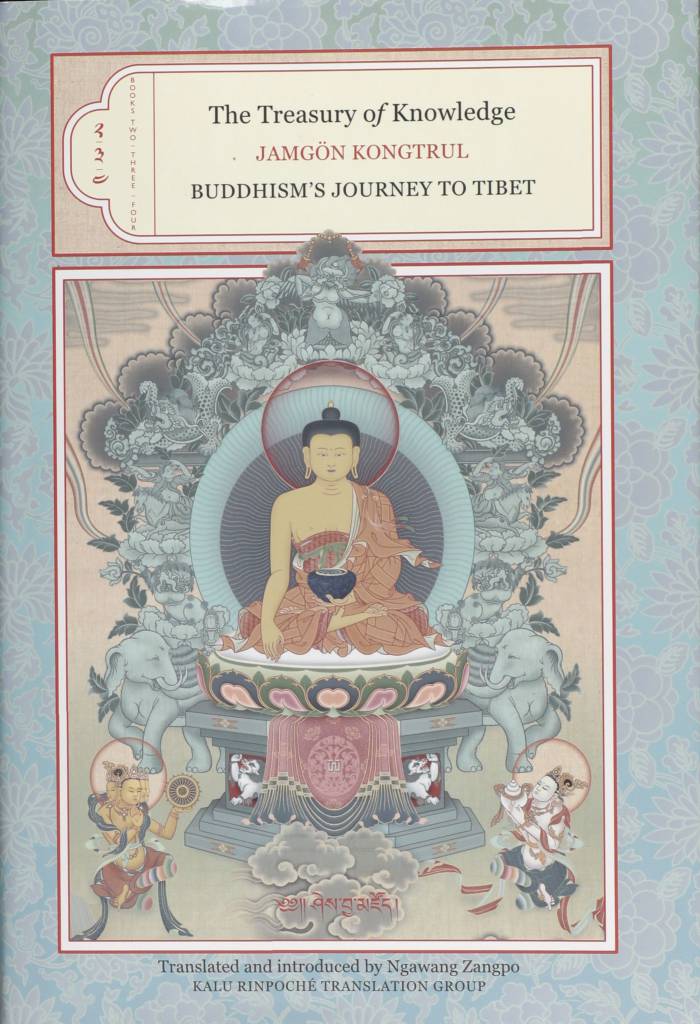
Buddhism's Journey to Tibet
Translated by Ngawang Zangpo
Snow Lion · Ithaca, NY · ISBN 9781559393454
Jamgön Kongtrül’s ten-volume Treasury of Knowledge is a unique, encyclopedic masterpiece embodying the entire range of Buddhist teachings as they were preserved in Tibet.
English DRL record

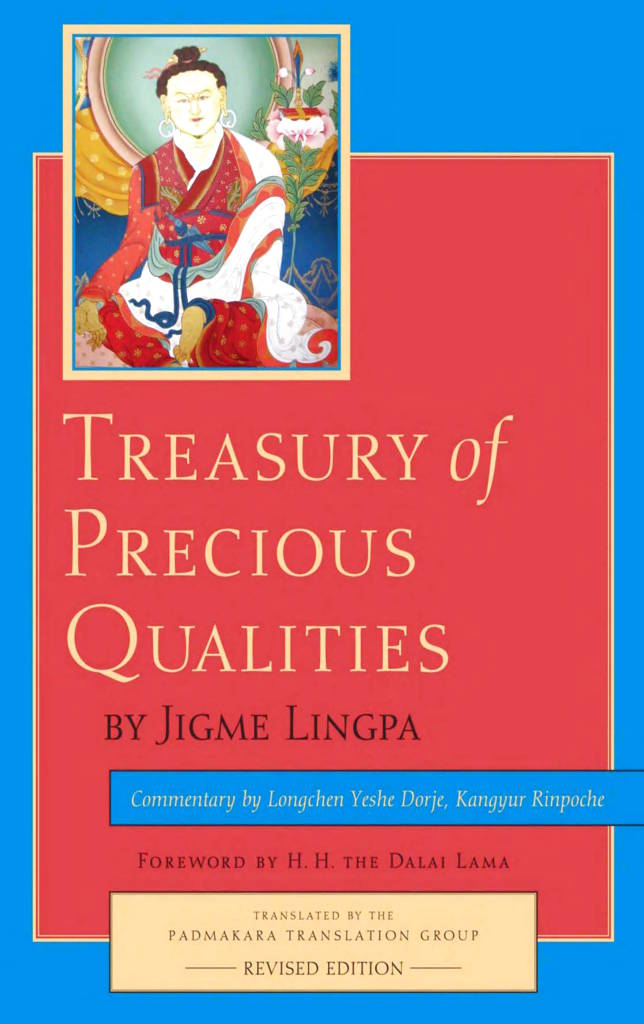
The Rain of Joy; Book One
Translated by Helena Blankleder and Wulstan Fletcher — Padmakara Translation Group
Shambhala · Boston · ISBN 9781590307113
This book is a translation of the first part of Jigme Lingpa's Treasury of Precious Qualities, which in a slender volume of elegant verses sets out briefly but comprehensively the Buddhist path according to the Nyingma school.
English DRL record
2009[edit]


A Guide to the Guhyagarbha Tantra
Translated by Cortland Dahl, Andreas Doctor, Douglas Duckworth, Thomas Doctor, and Heidi Köppl — Dharmachakra Translation Committee
Snow Lion · Ithaca, NY · ISBN 9781559393270
Luminous Essence is a complete introduction to the world of tantric thought and practice. Composed by the renowned Tibetan master Jamgön Mipham (1846–1912), the text provides an overview of the theory and experiential assimilation of a seminal tantric scripture, the Tantra of the Secret Essence (Guhyagarbha Tantra).
English DRL record

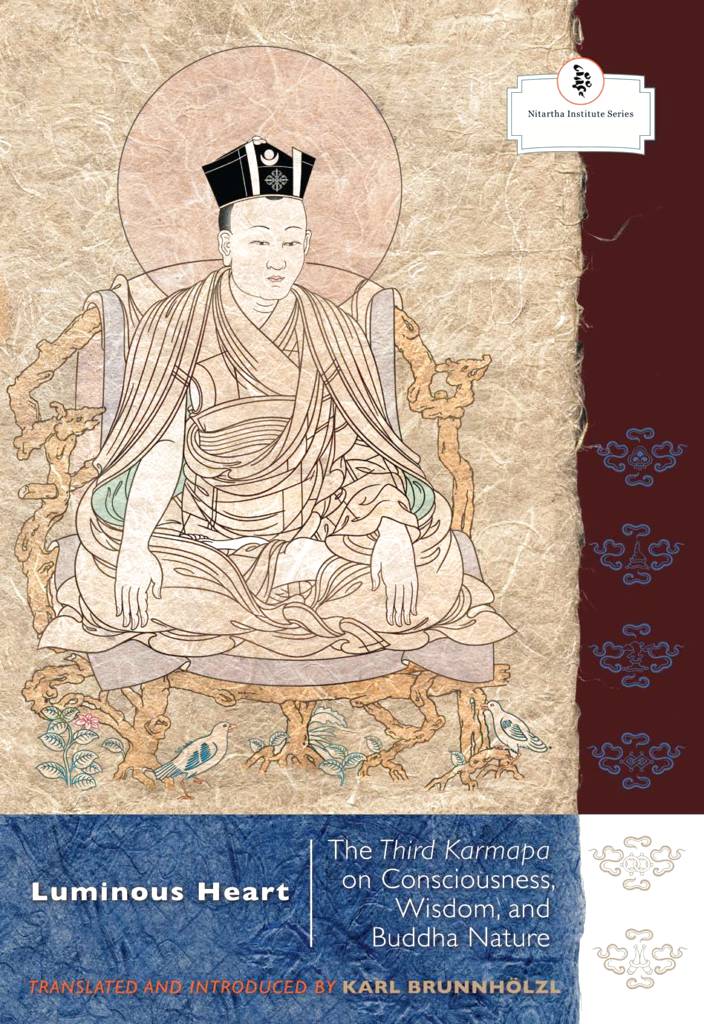
The Third Karmapa on Consciousness, Wisdom, and Buddha Nature
Translated by Karl Brunnhölzl
Snow Lion · Ithaca, NY · ISBN 1559393181
This superb collection of writings on buddha nature by the Third Karmapa Rangjung Dorje (1284–1339) focuses on the transition from ordinary deluded consciousness to enlightened wisdom, the characteristics of buddhahood, and a buddha’s enlightened activity. Most of these materials have never been translated comprehensively.
English DRL record

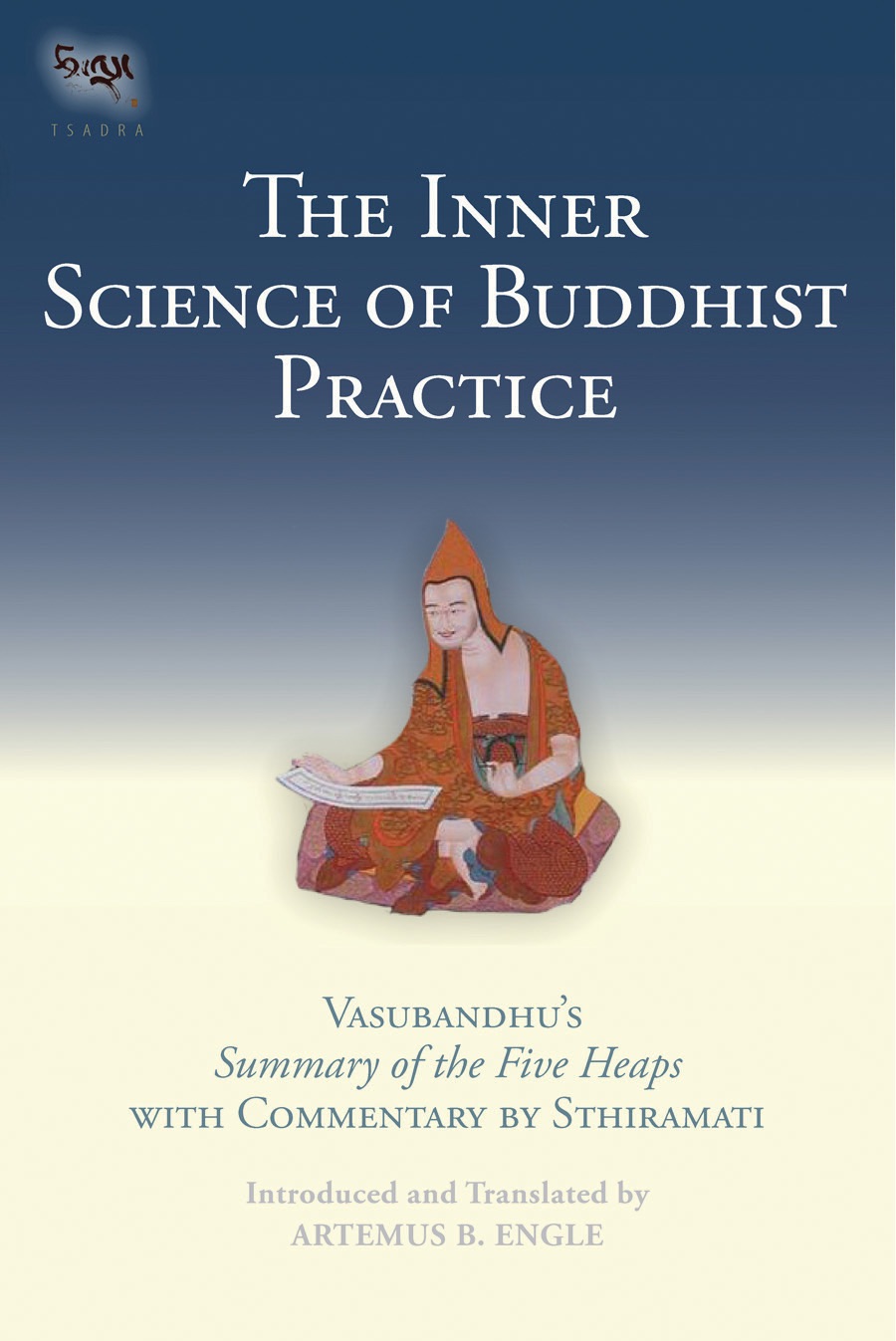
Vasubandhu's Summary of the Five Heaps with Commentary by Sthiramati
Translated by Artemus Engle
Snow Lion · Ithaca, NY · ISBN 9781559393225, 155939322X
The Inner Science of Buddhist Practice contains translations of texts by two historically important Indian Buddhist scholars: Vasubandhu's Summary of the Five Heaps and Sthiramati's commentary on Vasubandhu's root text.
English DRL record
2008[edit]

Padmakara Translation Group
Padmakara · Saint-Léon-sur-Vézère · ISBN 9782916915395
Français DRL record

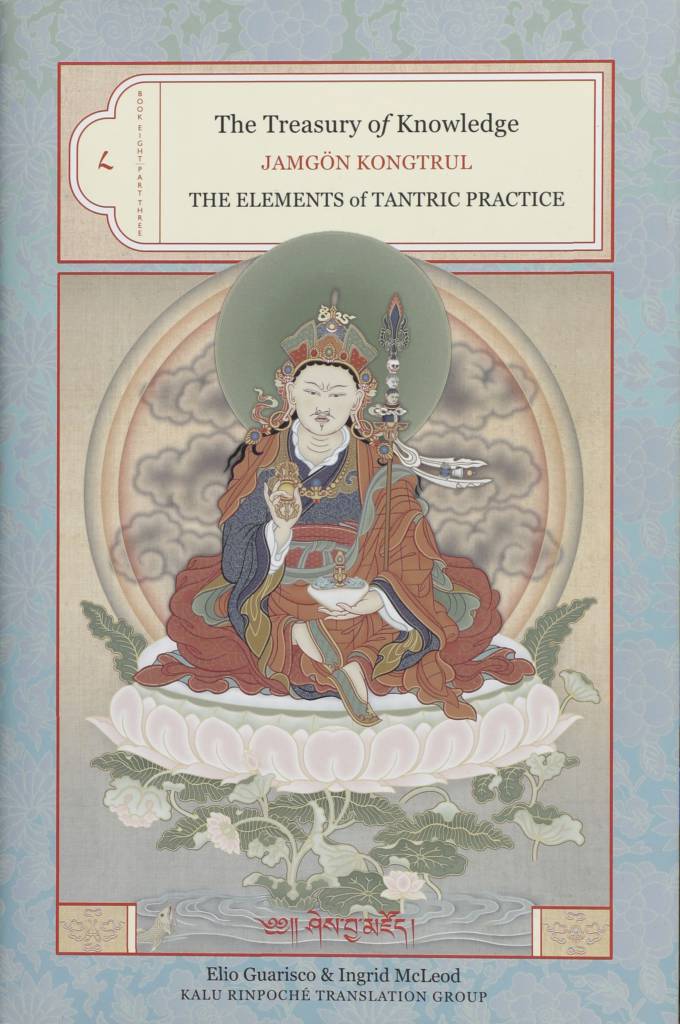
The Elements of Tantric Practice, A General Exposition of the Process of Meditation in the Indestructible Way of Secret Mantra
Translated by Ingrid McLeod and Elio Guarisco — Kalu Rinpoche Translation Group
Snow Lion · Ithaca, NY · ISBN 9781559393058
Jamgön Kongtrül's Treasury of Knowledge in ten volumes is a unique encyclopedic masterpiece embodying the entire range of Buddhist teachings as they were presented in Tibet.
English DRL record
2007[edit]

La marche vers l'éveil; Nouvelle traduction
Translated by Christian Bruyat and Patrick Carré — Padmakara Translation Group
Padmakara · Saint-Léon-sur-Vézère, France · ISBN 9782916915357
« Le Bodhicaryâvatâra est le guide essentiel de tous ceux qui s’entraînent sur la voie des bodhisattvas.
Français DRL record

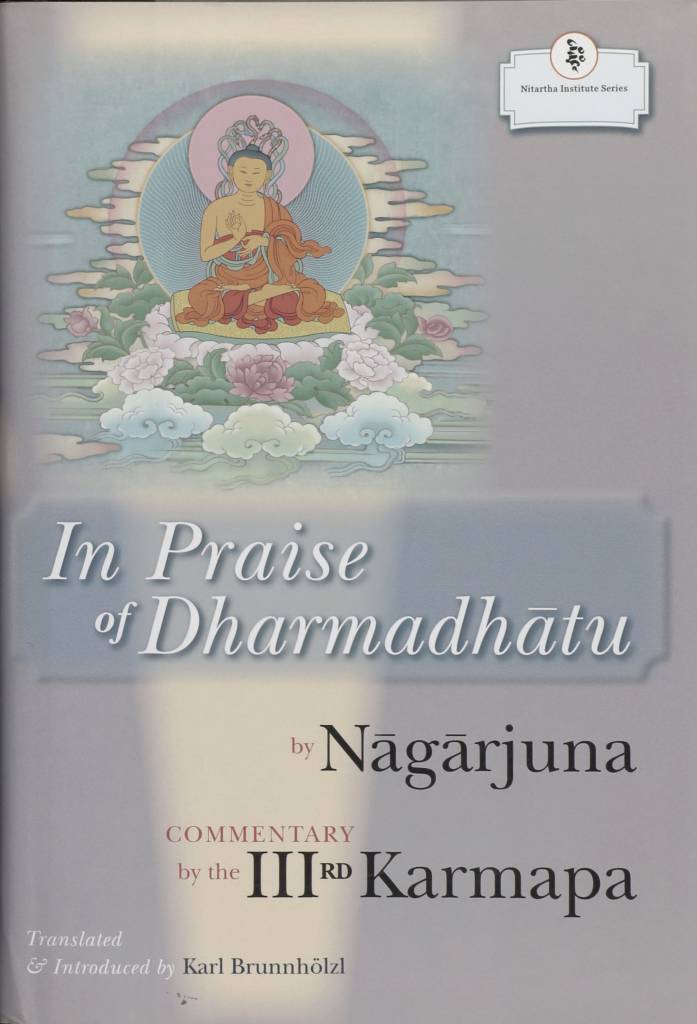
Translated by Karl Brunnhölzl
Snow Lion · Boulder · ISBN 155939286X
Nagarjuna is famous in the West for his works not only on Madhyamaka but his poetic collection of praises, headed by In Praise of Dharmadhatu. This book explores the scope, contents, and significance of Nagarjuna's scriptural legacy in India and Tibet, focusing primarily on the title work.
English DRL record

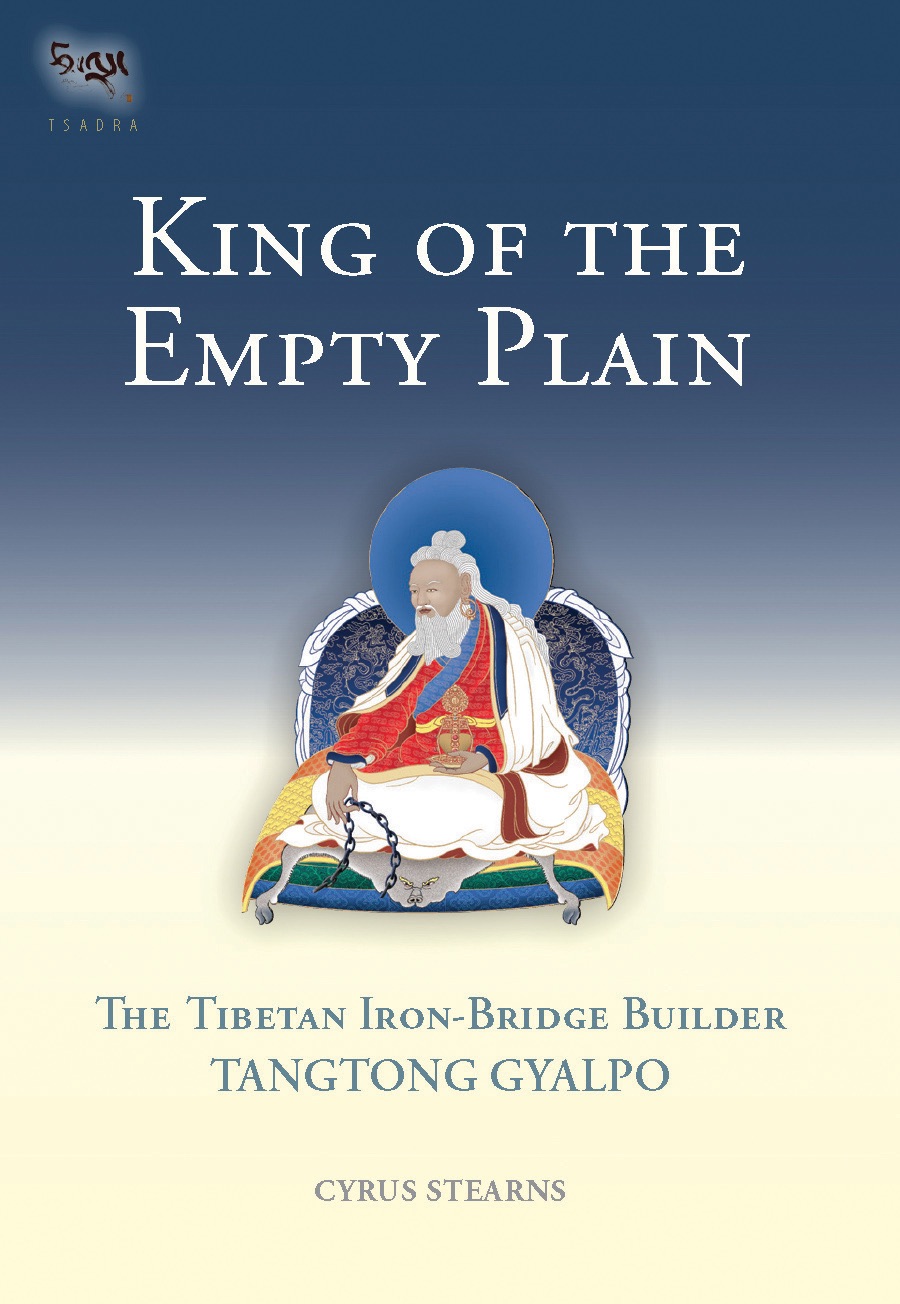
The Tibetan Iron-Bridge Builder Tangtong Gyalpo
Translated by Cyrus Stearns
Snow Lion · Ithaca, NY · ISBN 9781559392754
Another masterpiece of scholarship and translation from Cyrus Stearns, this book is a detailed study of the life and legacy of Tangtong Gyalpo (1385–1464).
English DRL record

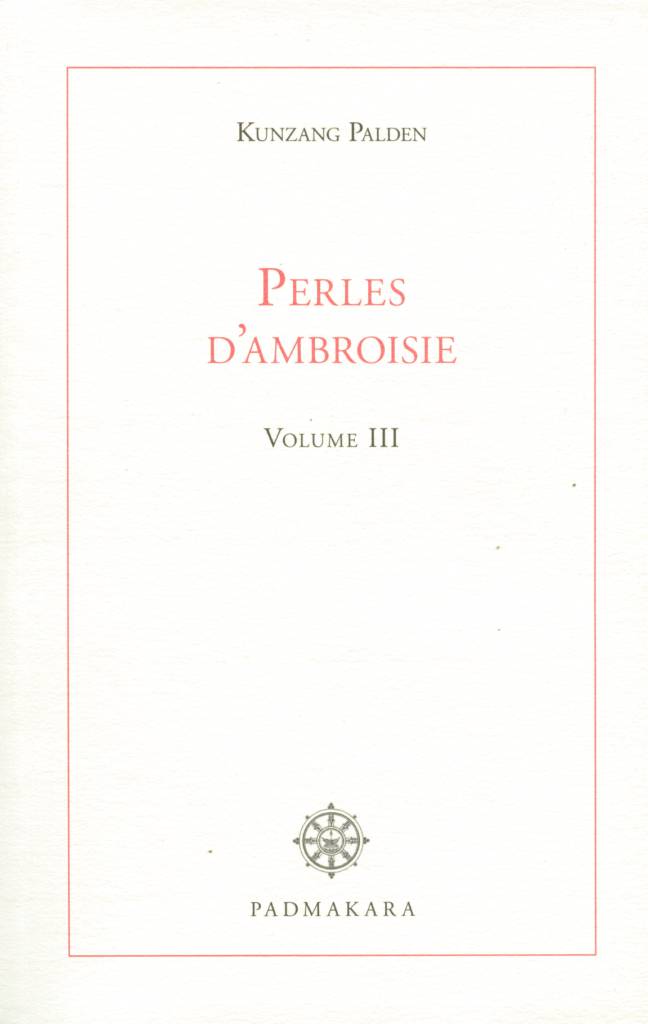
Développement de l'esprit d'Éveil
Translated by Christian Bruyat, Patrick Carré, and Gwenola le Serrec — Padmakara Translation Group
Padmakara · Saint-Léon-sur-Vézère · ISBN 9782906949348
Ce troisième et dernier volume des Perles d'ambroisie traite d'abord du courage, cet «enthousiasme pour le bien» qui accompagne nécessairement toute pratique spirituelle, puis de la concentration méditative et des conditions qui la favorisent, avant d'aborder l'aboutissement et la culmination de L'Entrée dans la pratique des bodhisattvas, autrement dit la connaissance de la vacuité de tous les phénomènes.
Français DRL record

Buddhist Pith Instructions
Translated by Karl Brunnhölzl
Snow Lion · Ithaca, New York · ISBN 1-55939-279-7
Straight from the Heart brings together an inspiring collection of Buddhist teachings, songs of realization, meditation instructions, and enlightened poetry—all chosen for their power to speak directly to the student.
English DRL record

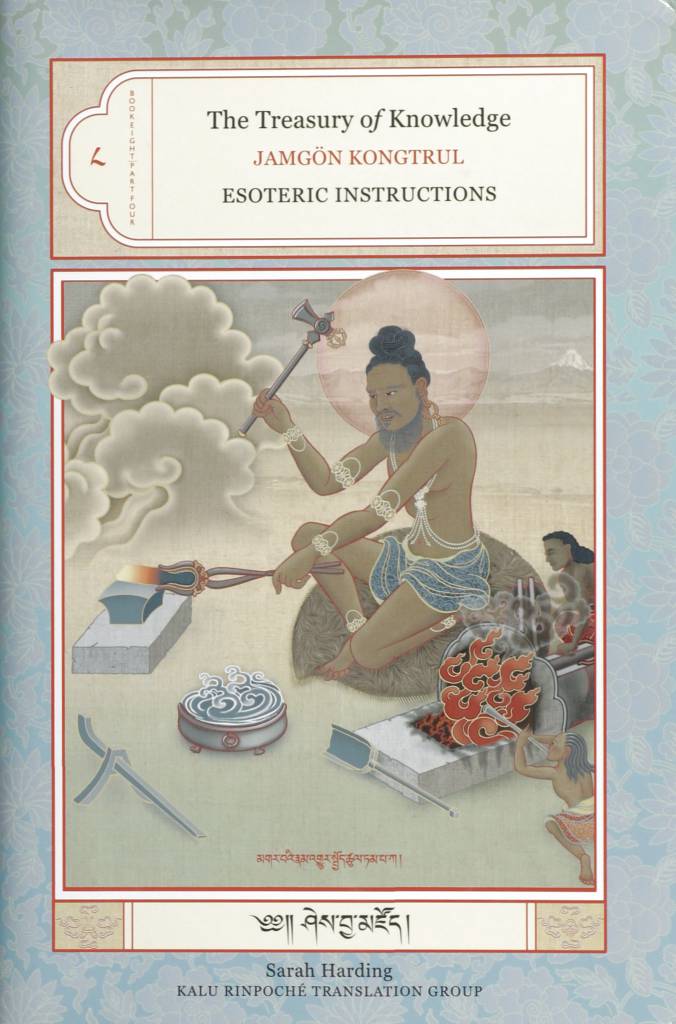
Esoteric Instructions, A Detailed Presentation of the Process of Meditation in Vajrayāna.
Translated by Sarah Harding
Snow Lion · Ithaca, NY · ISBN 9781559392846
This volume, Esoteric Instructions, deals with meditation—specifically tantric meditation. Esoteric Instructions is a collection of intimate records of personal teachings by masters that simplify tantric meditations by providing pertinent examples and very personal and helpful hints to disciples based on the master's own experience.
English DRL record

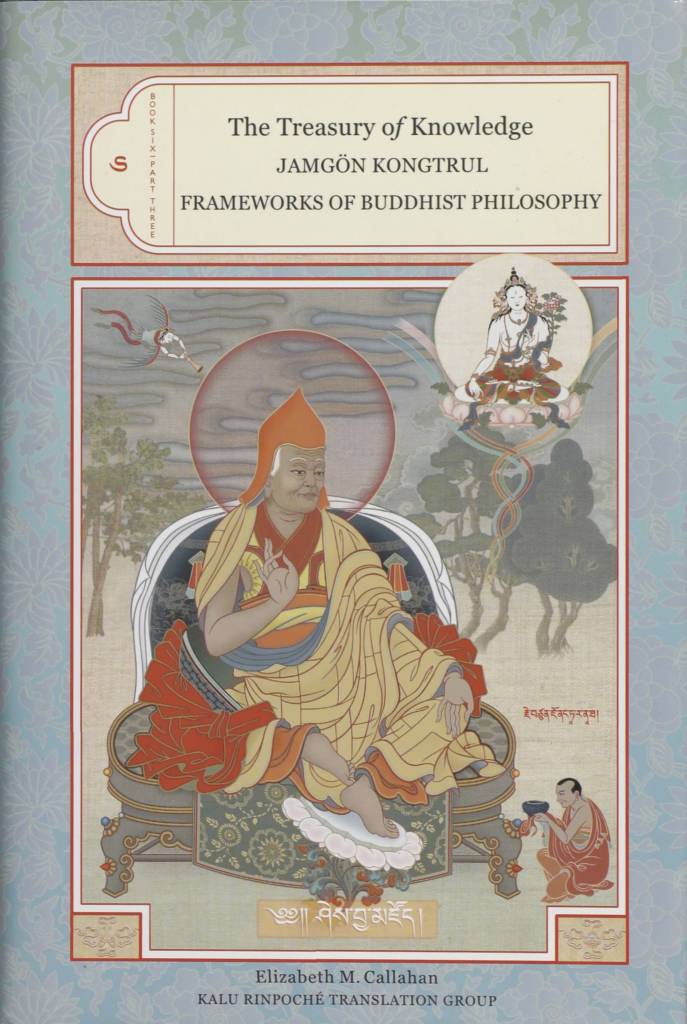
Frameworks of Buddhist Philosophy, A Systematic Presentation of the Cause-Based Philosophical Vehicles
Translated by Elizabeth Callahan
Snow Lion · Ithaca, NY · ISBN 9781559392778
In Tibetan religious literature, Jamgön Kongtrül's Treasury of Knowledge in ten books stands out as a unique, encyclopedic masterpiece embodying the entire range of Buddhist teachings as it was preserved in Tibet.
English DRL record

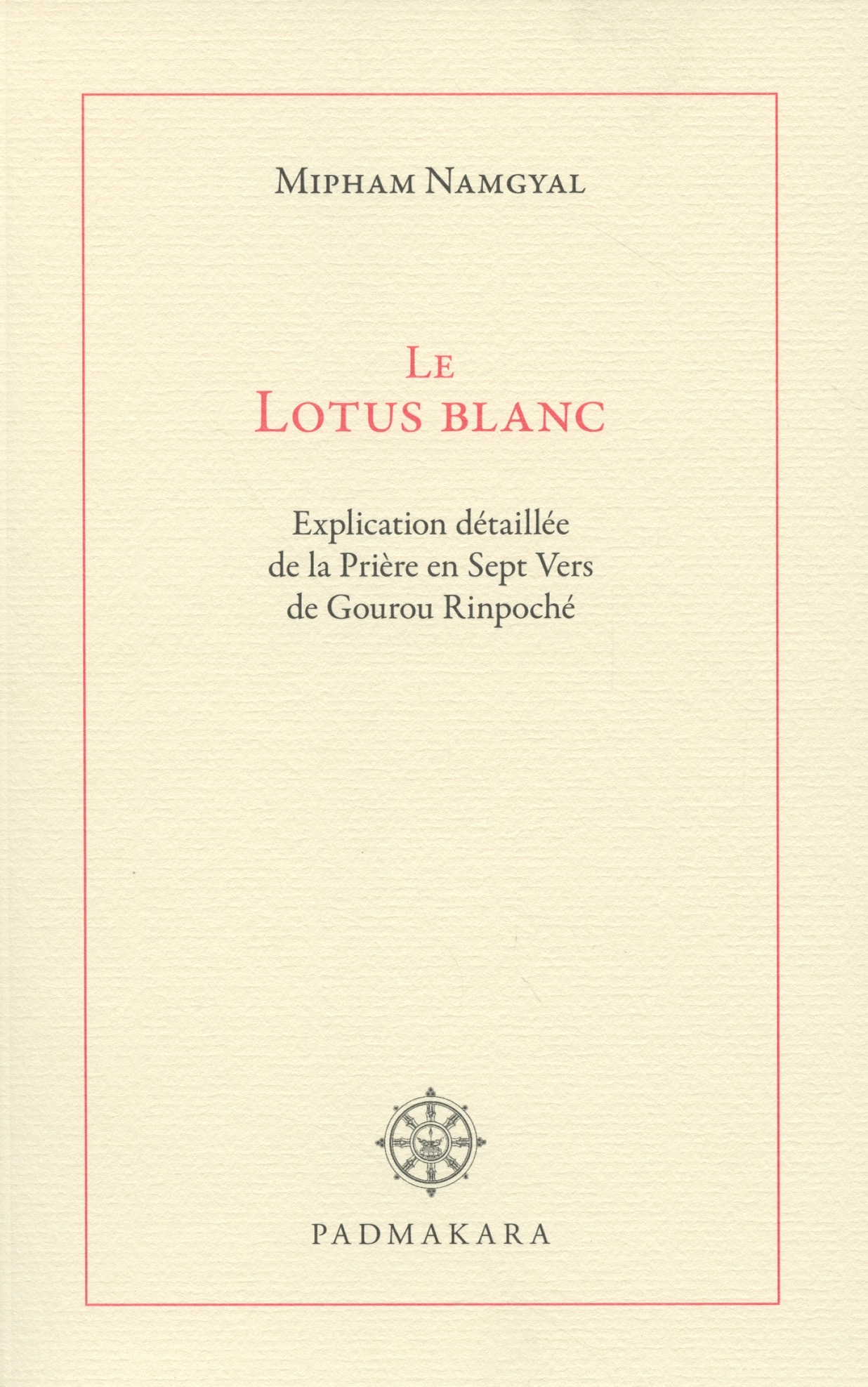
An Explanation of the Seven-line Prayer to Guru Padmasambhava
Padmakara Translation Group
Shambhala · Boston · ISBN 9781590305119
The text called the “Seven-Line Prayer” is said to contain the most sacred and important teachings of the Nyingma school and is recited daily by many Tibetan Buddhists. White Lotus unlocks the secret of the prayer and explains its meaning on many levels.
English DRL record
2006[edit]

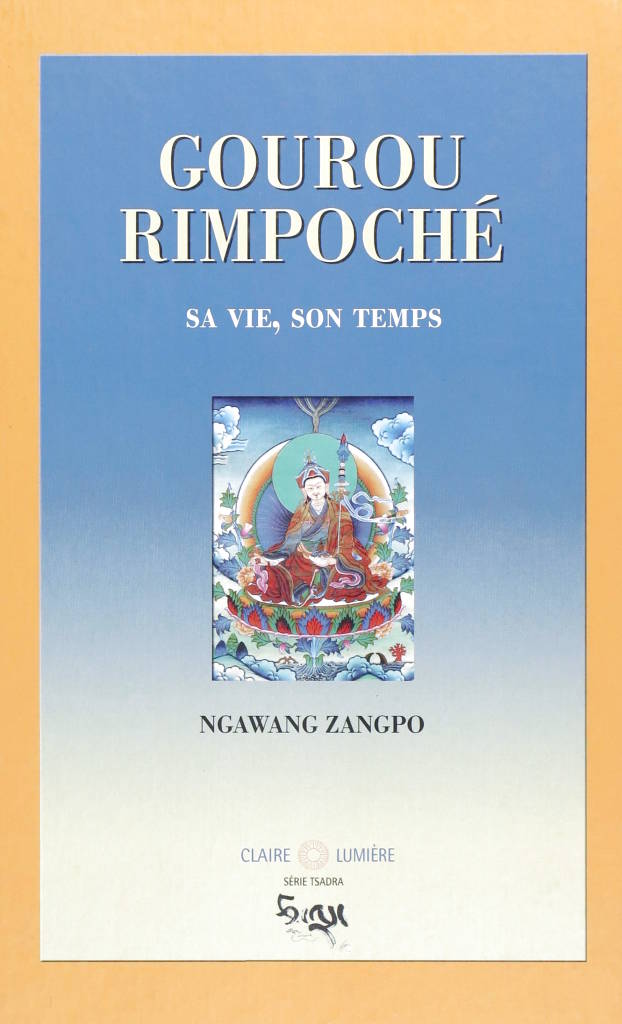
Sa Vie, Son Temps.
By Kristophe Lanier
Claire Lumière · Saint-Cannat · ISBN 9782905998828
Originally published in English as Guru Rinpoché: His Life and Times (2002) by Ngawang Zangpo, this text includes translations of sections of six different Tibetan texts by various authors, including Jamgon Kongtrul Lodro Taye, Sera Khandro, and Taranatha.
English DRL record

Chants de la lignée Kagyu
Translated by Christian Charrier
Claire Lumière · Saint-Cannat, France · ISBN 290598814
English DRL record

Maitreya's Madhyāntavibhāga with Commentaries by Khenpo Shenga and Ju Mipham
Translated by Cortland Dahl, Thomas Doctor, Catherine Dalton, Ryan Damron, Hilary Herdman, Nir Levi, Matthew Stephenson, and Beatrice Volt — Dharmachakra Translation Committee
Snow Lion · Ithaca, NY · ISBN 9781559392709
Middle Beyond Extremes contains a translation of the Buddhist masterpiece Distinguishing the Middle from Extremes. This famed text, often referred to by its Sanskrit title, Madhyāntavibhāga, is part of a collection known as the Five Maitreya Teachings.
English DRL record

Perles d'ambroisie Volume I
Naissance de l'esprit d'Éveil
Translated by Christian Bruyat, Patrick Carré, and Gwenola le Serrec — Padmakara Translation Group
Padmakara · Saint-Léon-sur-Vézère, FR · ISBN 2906949329
Voici la première traduction complète du commentaire littéral que Kunzang Palden (env. 1870-1940), disciple du grand maître tibétain Patrul Rinpoché, composa pour le Bodhicaryavatara (L’Entrée dans la pratique des bodhisattvas) de Shantideva.
Français DRL record

Préservation de l'esprit d'Éveil
Translated by Christian Bruyat, Patrick Carré, and Gwenola le Serrec — Padmakara Translation Group
Padmakara · Saint-Léon-sur-Vézère · ISBN 2906949337
Le premier volume des Perles d'ambroisie, qui contient les trois premiers chapitres du Bodhicaryavatara (L'Entrée dans la pratique des bodhisattvas) de Shantideva commentés par Kunzang Palden, explique comment engendrer l'esprit d'Éveil, qui est le cœur de la pratique des bodhisattvas.
Français DRL record

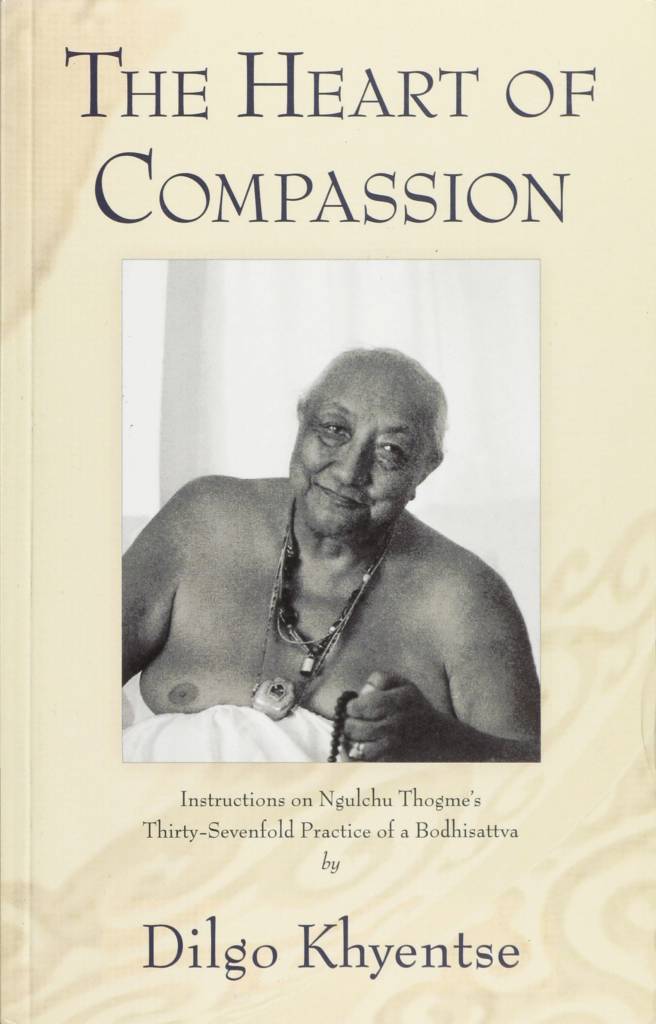
Instructions on Ngulchu Thogme's Thirty-Sevenfold Practice of a Bodhisattva
Translated by Matthieu Ricard — Padmakara Translation Group
Shechen · New Delhi · ISBN 9788174721297
What would be the practical implications of caring more about others than about yourself?
English DRL record

A Translation of the Bodhicharyāvatāra
Translated by Helena Blankleder and Wulstan Fletcher — Padmakara Translation Group
Shambhala · Boston · ISBN 1590303881
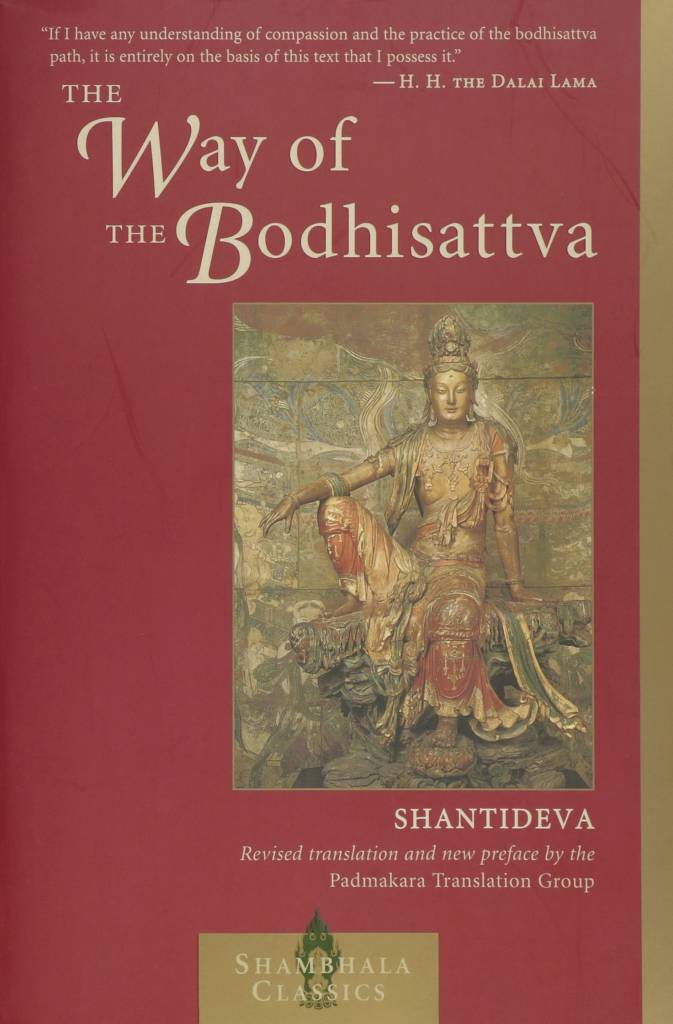
Treasured by Buddhists of all traditions, The Way of the Bodhisattva (Bodhicharyavatara) is a guide to cultivating the mind of enlightenment, and to generating the qualities of love, compassion, generosity, and patience.
English DRL record

Commentary on Zurchung Sherab Trakpa's Eighty Chapters of Personal Advice
Translated by Stephen Gethin — Padmakara Translation Group
Snow Lion · Boulder · ISBN 9781559392648
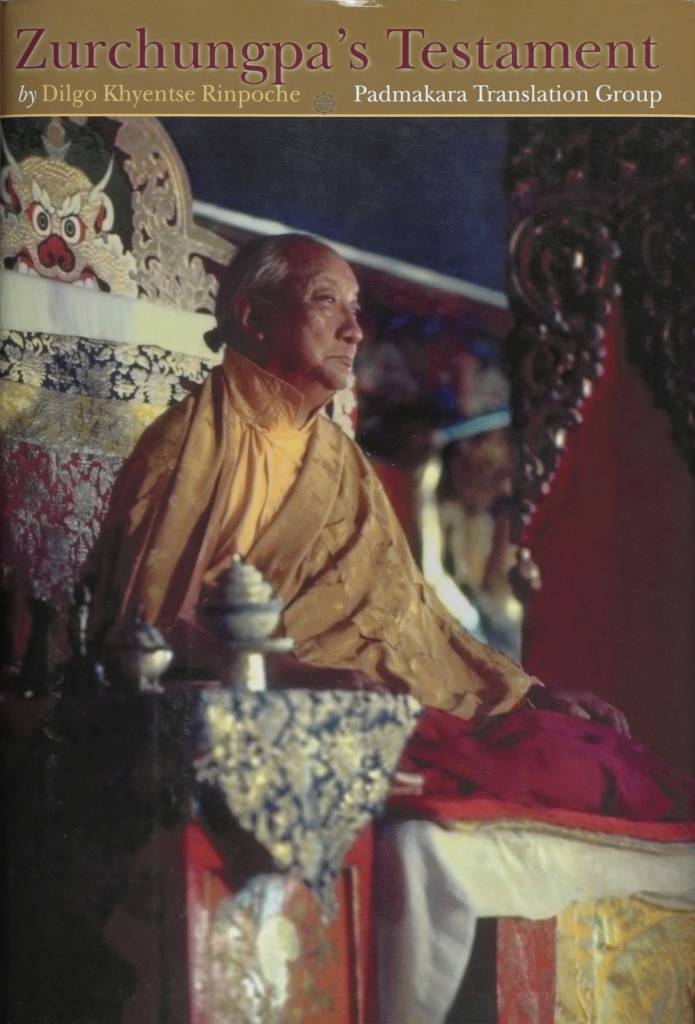
Zurchungpa's Eighty Chapters of Personal Advice was the final teaching given by the great Nyingma master Zurchung Sherab Trakpa. The original text consists of 580 maxims, covering the entire path of Dzogchen from fundamental teachings through to a series of pith instructions that bring the Dzogchen view to life.
English DRL record
2005[edit]

Vie et pensée d'un maître tibétain atypique du XIVe siècle initiateur du Shèntong
By Sylvie Carteron
Claire Lumière · Saint-Cannat, France · ISBN 9782905998743
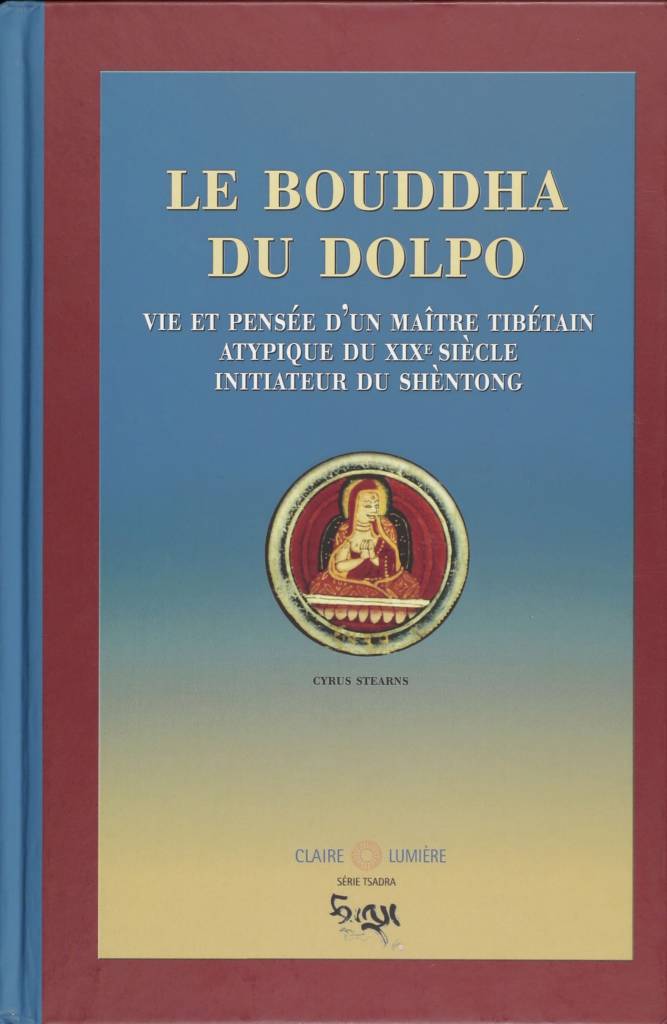
This book is a French translation of Cyrus Stearns's The Buddha from Dolpo: A Study of the Life and Thought of the Tibetan Master Dolpopa Sherab Gyaltsen.
Français DRL record

With Commentary by Kangyur Rinpoche
Translated by Stephen Gethin — Padmakara Translation Group
Snow Lion · Ithaca, NY
The great Indian Buddhist master Nāgārjuna wrote his celebrated poem Letter to a Friend as a gift of advice to a South Indian king, and it has since become a monument in the Indian shastra tradition.
English DRL record

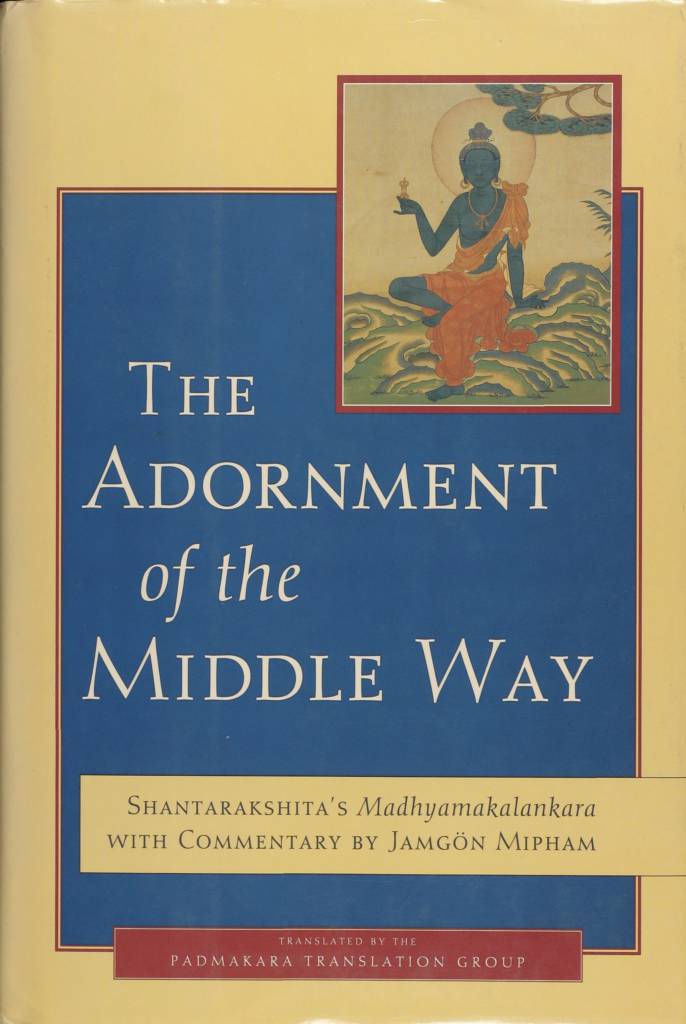
Shantarakshita's Madhyamakalankara with commentary by Jamgon Mipham
Translated by Helena Blankleder and Wulstan Fletcher — Padmakara Translation Group
Shambhala · Boston · ISBN 9781590304198
In the Madhyamakalankara, Shantarakshita synthesized the views of Madhyamaka and Yogachara, the two great streams of Mahayana Buddhism. This was the last great philosophical development of Buddhist India.
English DRL record

Systems of Buddhist Tantra: The Indestructible Way of Secret Mantra
Translated by Ingrid McLeod and Elio Guarisco — Kalu Rinpoche Translation Group
Snow Lion · Boulder · ISBN 155939210X
Volume 6-4 of Jamgon Kongtrul's famous Treasury of Knowledge (ཤེས་བྱ་མཛོད།) explores Buddhist tantric systems, examining ancient and new traditions of the indestructible path of secret mantra.
English DRL record

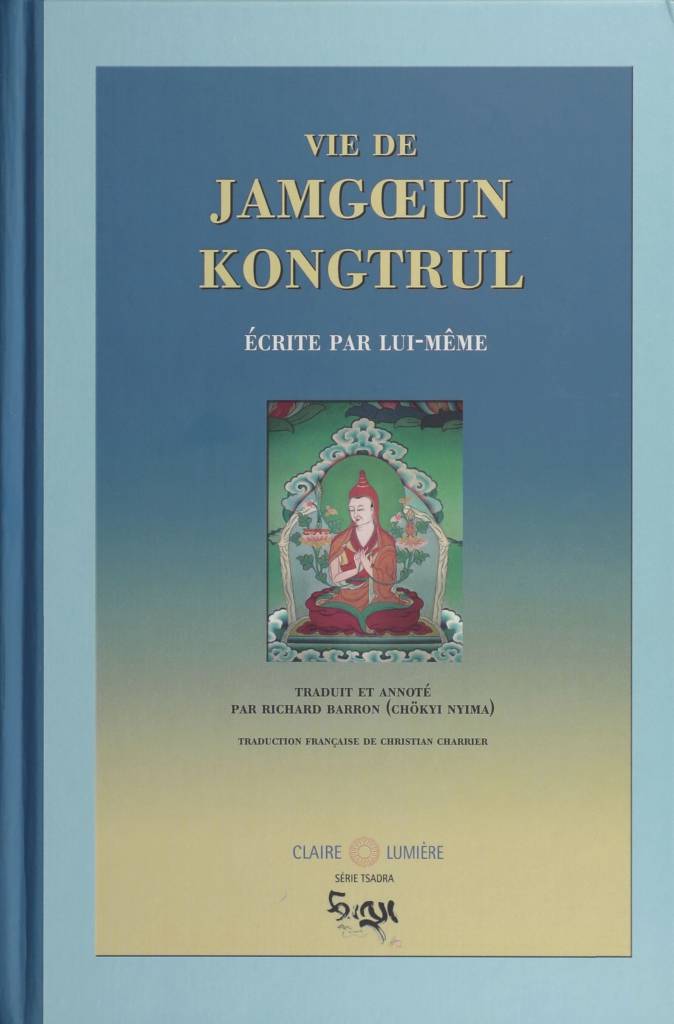
Écrite par lui-même
Translated by Richard Barron (Chokyi Nyima) and Christian Charrier
Claire Lumière · Saint-Cannat, France · ISBN 290599875X
Jamgœun Kongtrul Lodreu Thayé (1813-1900) was an extraordinary master of 19th century Tibet, whose abundant work remains widely used today.
English DRL record

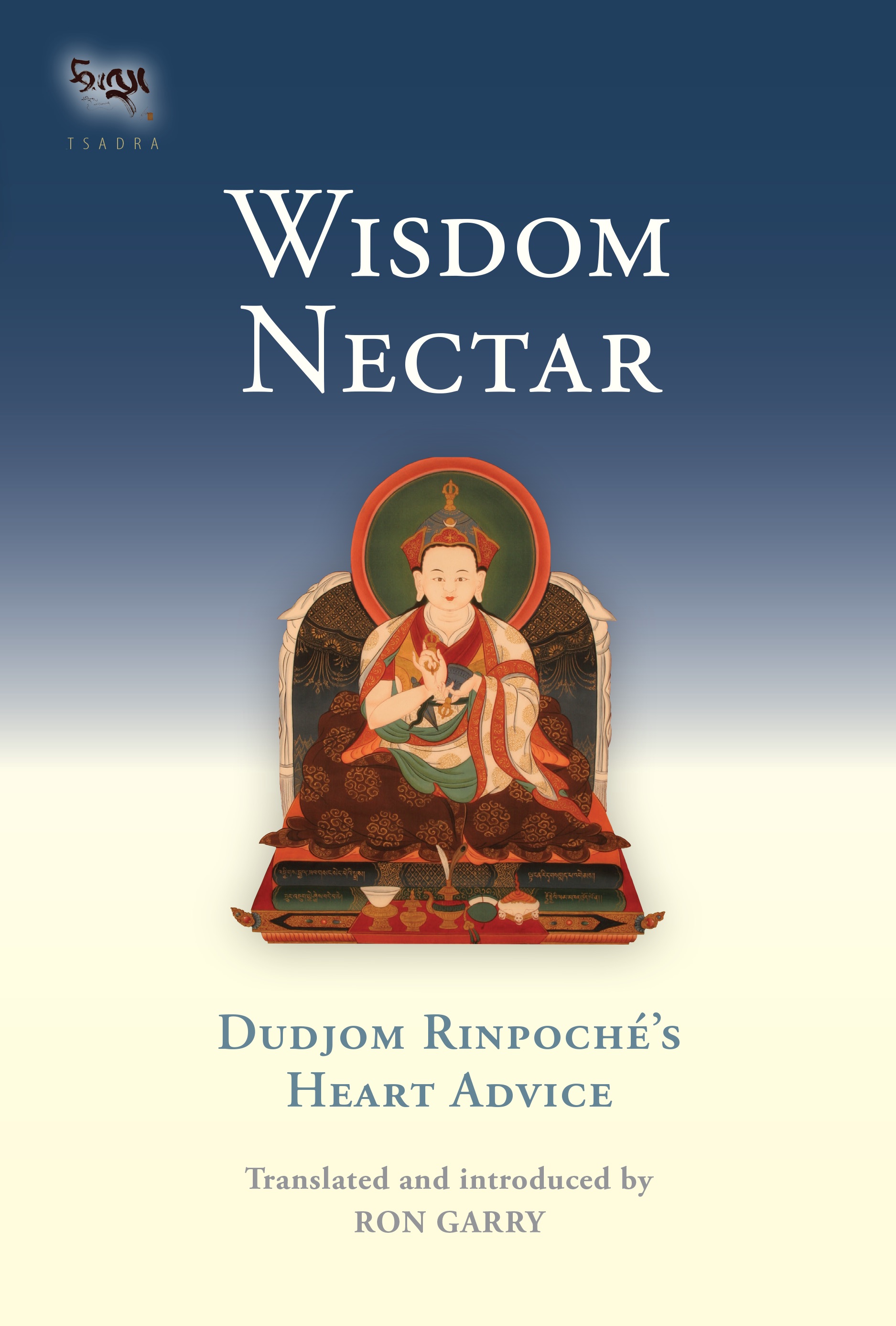
Dudjom Rinpoché's Heart Advice
Translated by Ron Garry
Snow Lion · Ithaca, NY · ISBN 9781559392242
Dudjom Rinpoche was one of the seminal figures in Tibetan Buddhism in the twentieth century, yet very few of his religious writings have been translated into English.
English DRL record
2004[edit]

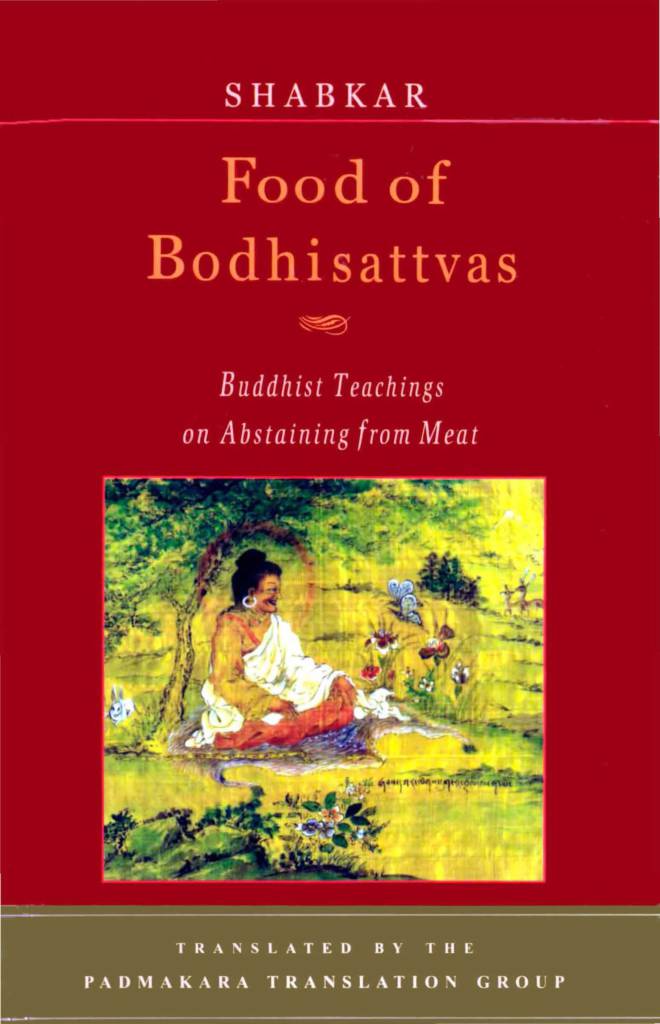
Buddhist Teachings on Abstaining from Meat
Translated by Helena Blankleder and Wulstan Fletcher — Padmakara Translation Group
Shambhala · Boston · ISBN 9781590301166
Based on the teachings of the Buddha, this book offers the most compelling and impassioned indictment of meat-eating to be found in Tibetan literature and is pertinent to anyone interested in vegetarianism as a moral or spiritual issue.
English DRL record

Madhyamaka in the Kagyü Tradition
By Karl Brunnhölzl
Snow Lion · Ithaca, NY · ISBN 1559392185
Madhyamaka is a potent and universally accessible means of calming out suffering and awakening to our innate wisdom. The Center of the Sunlit Sky artfully rescues this brilliant teaching from its unwarranted reputation for intellectual opacity and reinstates it as a supremely practical toolkit for everyday living.
English DRL record
2003[edit]

Translated by Helena Blankleder and Wulstan Fletcher — Padmakara Translation Group
Shambhala · Boston · ISBN 1570628440
Counsels from My Heart is one of the few volumes of teachings by Dudjom Rinpoche, a legendary meditation master of the Nyingma lineage of Tibetan Buddhism, to become available in English.
English DRL record

La vie du Bouddha
Translated by Anne Benson — Padmakara Translation Group
Padmakara · Saint-Léon-sur-Vézère, FR · ISBN 2906949280
Français DRL record

Chants des Realisations des Maîtres de la Lignée Shangpa
Translated by Ngawang Zangpo, Christiane Buchet, and Tcheuky Sèngué
Claire Lumière · Saint-Cannat (Bouches-du-Rhône) · ISBN 2905998695
Français DRL record
Clarifying the Meaning of Chöd, a Complete Explanation of Casting out the Body as Food
Translated by Sarah Harding
Snow Lion · Ithaca, NY · ISBN 1559391820
Fear, anger, and negativity are states that each of us have to contend with. Machik's Complete Explanation, the most famous book of the teachings of Machik Lapdrön, the great female saint and yogini of eleventh- to twelfth-century Tibet, addresses these issues in a practical, direct way.
English DRL record

La vie de 84 sages de l'Inde
Translated by Christian Bruyat and Patrick Carré — Padmakara Translation Group
Padmakara · Saint-Léon-sur-Vézère · ISBN 9782906949270
Au début de notre ère, lorsque se répandirent les enseignements du Bouddha auxquels fut donné le nom de Grand Véhicule, apparurent nombre de maîtres remarquables qui devinrent célèbres sous le nom sanskrit de mahâsiddhas, grands êtres accomplis, parce qu'ils avaient atteint les siddhis, ou accomplissements.
Français DRL record

Maître de Milarépa sa vie, ses chants
Translated by Christian Charrier
Claire Lumière · Saint-Cannat · ISBN 9782905998682
English DRL record

A Gem of Many Colors
Translated by Richard Barron (Chokyi Nyima)
Snow Lion · Boulder · ISBN 1559391847
Jamgön Kongtrul Lodrö Taye (1813–1899) was one of the most influential figures and prolific writers in the Tibetan Buddhist world. He was a founder and the single most important proponent of the nonsectarian movement that flourished in eastern Tibet and remains popular today.
English DRL record

Buddhist Ethics
Translated by Ingrid McLeod and Elio Guarisco — Kalu Rinpoche Translation Group
Snow Lion · Boulder · ISBN 9781559391917
This book provides a detailed introduction to The Qualities of the Spiritual Teacher and Student (chapter 1), The Vows of Personal Liberation (chapter 2), The Commitments of Awakening Mind (bodhicitta vows, chapter 3), and The Vows and Pledges of Secret Mantra (chapter 4).
English DRL record

Myriad Worlds
Translated by Ingrid McLeod — Kalu Rinpoche Translation Group
Snow Lion · Ithaca, NY · ISBN 9781559391887
In Tibetan religious literature, Jamgön Kongtrül's Treasury of Knowledge in ten books stands out as a unique, encyclopedic masterpiece embodying the entire range of Buddhist teachings as they were preserved in Tibet.
English DRL record

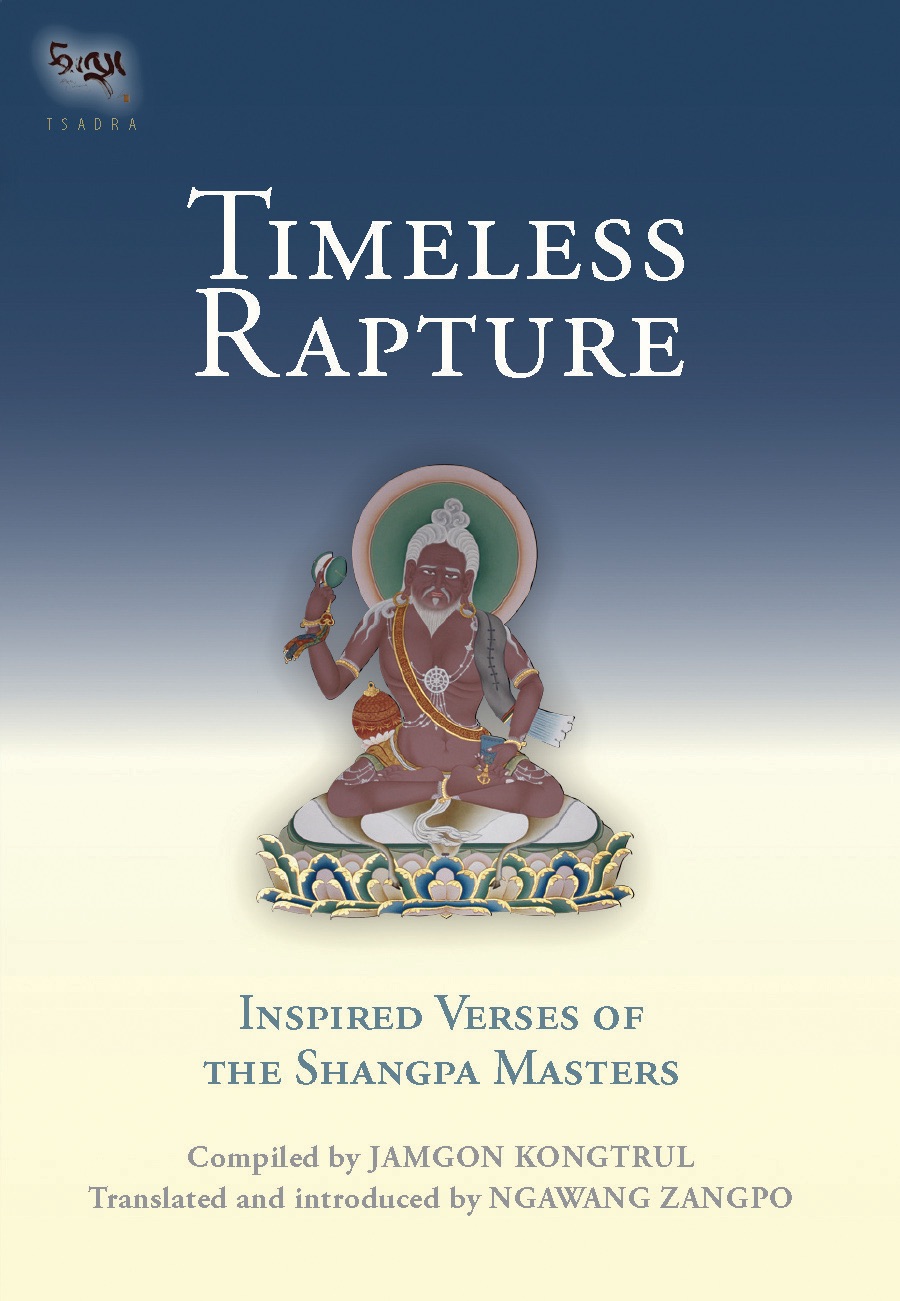
Inspired Verse of the Shangpa Masters
Translated by Ngawang Zangpo
Snow Lion · Boulder · ISBN 9781559392044
Throughout history awakened ones have celebrated the rapture of mystical states with inspired verse sung extemporaneously. This book offers a rare glimpse into the mysticism of the Shangpa Kagyu lineage a tradition based mainly on the profound teaching of two women.
English DRL record

Vie et œuvres du XVIIe Karmapa Ogyèn Trinlé Dorjé
Translated by Christiane Buchet and Tcheuky Sèngué
Claire Lumière · Saint-Cannat, France · ISBN 9782905998736
Français DRL record
2002[edit]

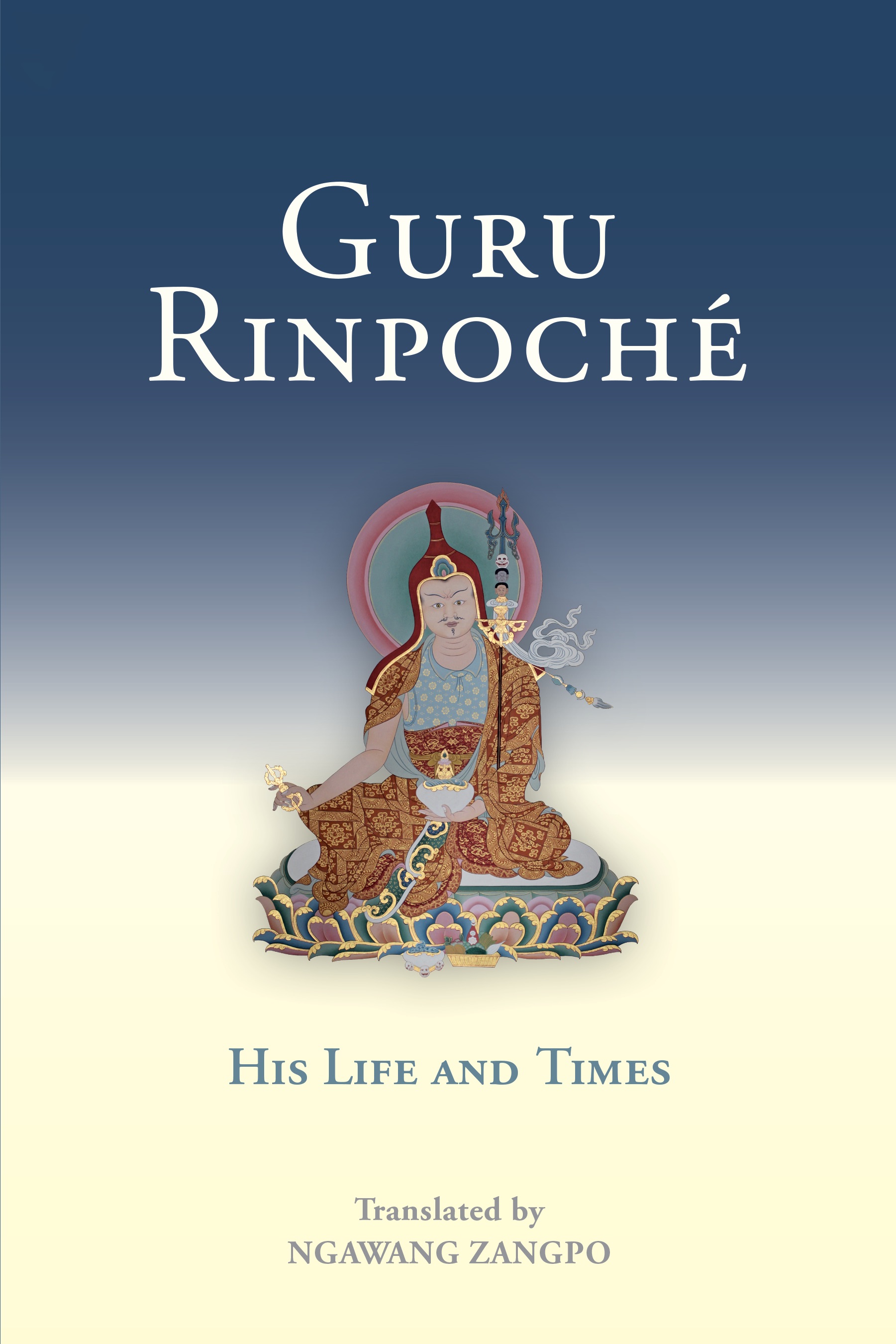
His Life and Times
Translated by Ngawang Zangpo
Snow Lion · Boulder, CO · ISBN 9781559391740
This book recounts Guru Rinpoche's historic visit to Tibet and explains his continuing significance to Buddhists.
English DRL record

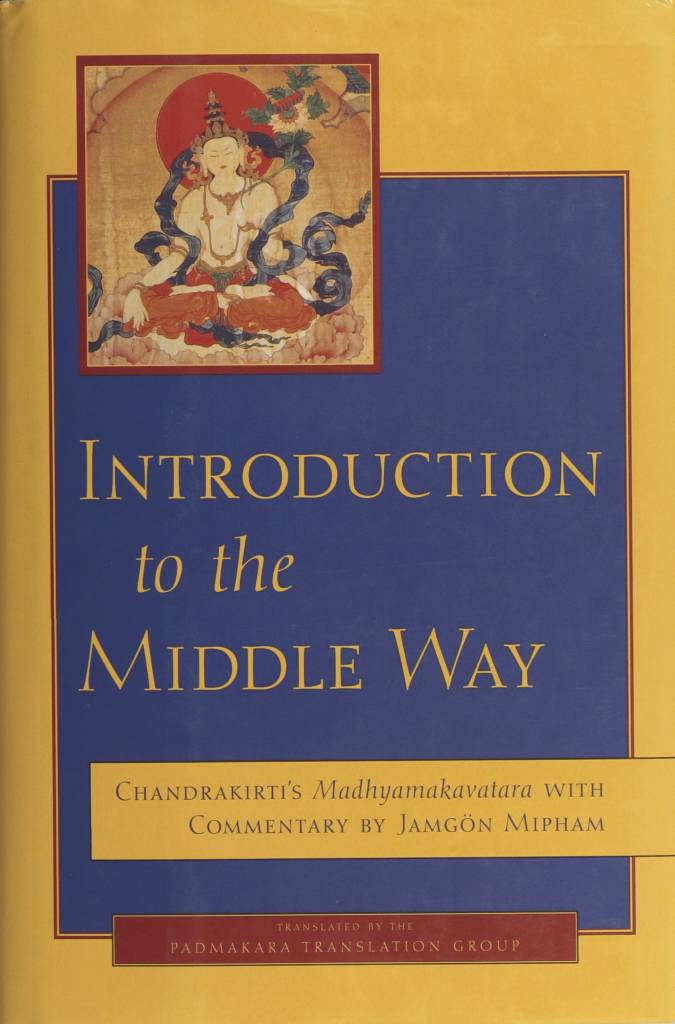
Chandrakirti's Madhyamakavatara with Commentary by Jamgön Mipham
Translated by Helena Blankleder and Wulstan Fletcher — Padmakara Translation Group
Shambhala · Boston · ISBN 1570629420
Introduction to the Middle Way presents an adventure into the heart of Buddhist wisdom through the Madhyamika, or "middle way," teachings, which are designed to take the ordinary intellect to the limit of its powers and then show that there is more.
English DRL record

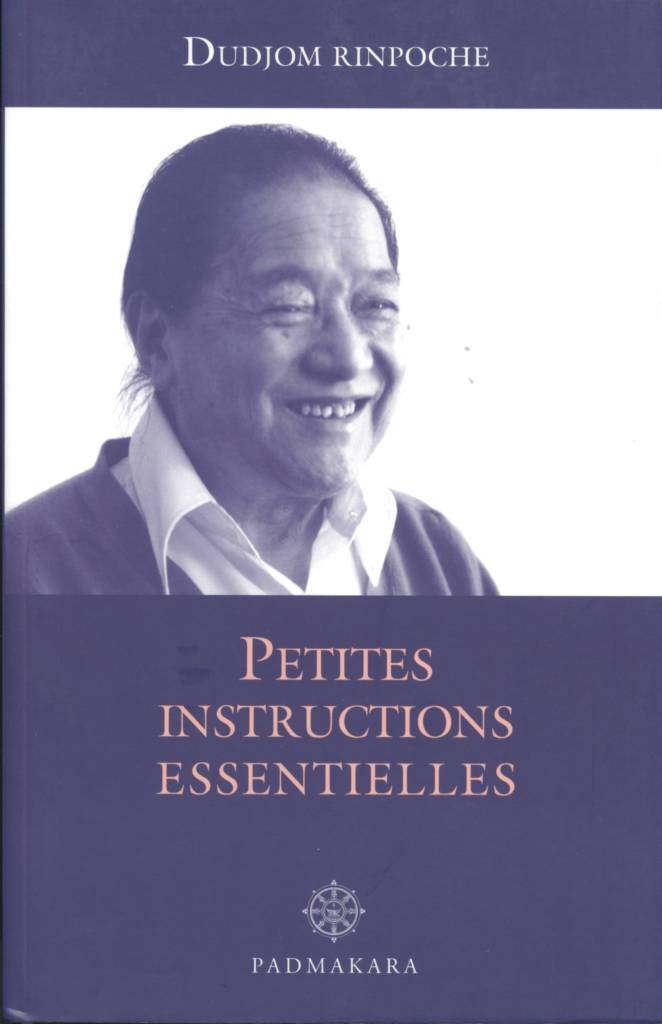
Padmakara Translation Group
Padmakara · Saint-Léon-sur-Vézère · ISBN 2906949256
Ce petit livre consiste essentiellement en une série d’enseignements de Kyabjé Dudjom Rinpoché qui dans l’ensemble furent donnés au cours des années 1970, les uns en Orient et les autres en Occident.
Français DRL record
2001[edit]

Jamgon Kongtrul on "Pilgrimage and Sacred Geography"
Translated by Ngawang Zangpo
Snow Lion · Ithaca, NY · ISBN 1559391642
Sacred Ground describes two journeys: a journey outward to specific pilgrimage places in eastern Tibet, and a journey inward to the sacred world of tantra, accessible through contemplation and meditation.
English DRL record

A Commentary on the Root Text of Jigme Lingpa by Longchen Yeshe Dorje, Kangyur Rinpoche
Translated by Helena Blankleder and Wulstan Fletcher — Padmakara Translation Group
Snow Lion · Boston · ISBN 1570625980
This book is a translation of the first part of Jigme Lingpa’s Treasury of Precious Qualities, which in a slender volume of elegant verses sets out briefly but comprehensively the Buddhist path according to the Nyingma school.
English DRL record