Primary Sources: Difference between revisions
((by SublimeText.Mediawiker)) |
((by SublimeText.Mediawiker)) |
||
| Line 2: | Line 2: | ||
<h1 class="large tibetan">ཐེག་པ་ཆེན་པོ་རྒྱུད་བླ་མའི་བསྟན་བཅོས།</h1> | <h1 class="large tibetan">ཐེག་པ་ཆེན་པོ་རྒྱུད་བླ་མའི་བསྟན་བཅོས།</h1> | ||
*Read the Source Text Here: | |||
**[[A Treatise on the Ultimate Continuum of the Mahāyāna]] - Multilingual Edition of the root text only | |||
**[[Ratnagotravibhāga Mahāyānottaratantraśāstra]] - Multilingual Edition | |||
<div class="col-lg-4 float-right"> | <div class="col-lg-4 float-right"> | ||
< | <h4>The Texts</h4> | ||
{{#ask: [[Category: Source Texts]] | {{#ask: [[Category: Source Texts]] | ||
|?AuthorRaw | |?AuthorRaw | ||
| Line 13: | Line 17: | ||
}} | }} | ||
</div> | </div> | ||
====Sanskrit Texts==== | ====Sanskrit Texts==== | ||
*[[Maitreya]]. [[Ratnagotravibhāgamahāyānottaratantraśāstra]] (Theg pa chen po'i rgyud bla ma). D4024. Sanskrit edition by [[E. H. Johnston]]. Patna, India: [[The Bihar Research Society]], 1950 (includes the Ratnagotravibhāgavyākhyā). | *[[Maitreya]]. [[Ratnagotravibhāgamahāyānottaratantraśāstra]] (Theg pa chen po'i rgyud bla ma). D4024. Sanskrit edition by [[E. H. Johnston]]. Patna, India: [[The Bihar Research Society]], 1950 (includes the Ratnagotravibhāgavyākhyā). | ||
Revision as of 13:28, 25 June 2018
The Source Text:
The Mahāyānottaratantraśāstra
ཐེག་པ་ཆེན་པོ་རྒྱུད་བླ་མའི་བསྟན་བཅོས།
- Read the Source Text Here:
- A Treatise on the Ultimate Continuum of the Mahāyāna - Multilingual Edition of the root text only
- Ratnagotravibhāga Mahāyānottaratantraśāstra - Multilingual Edition
The Texts
Written as a supplement to Nagarjuna’s Fundamental Verses on the Middle Way, Candrakīrti’s text integrates the central insight of Nagarjuna’s thought—the rejection of any metaphysical notion of intrinsic existence—with the well-known Mahayana framework of the ten levels of the bodhisattva, and it became the most studied presentation of Madhyamaka thought in Tibet.
Completed the year before the author’s death, Tsongkhapa’s exposition of Candrakīrti's text is recognized by the Tibetan tradition as the final standpoint of Tsongkhapa on many philosophical questions, particularly the clear distinctions it draws between the standpoints of the Madhyamaka and Cittamatra schools.
Written in exemplary Tibetan, Tsongkhapa’s work presents a wonderful marriage of rigorous Madhyamaka philosophical analysis with a detailed and subtle account of the progressively advancing mental states and spiritual maturity realized by sincere Madhyamaka practitioners. (Source: Thupten Jinpa, Illuminating the Intent, 2021)- (1) Pure View, Practice, and Conduct
- (2-4) The Three Vows
- (5) Three Dharma Wheels
- (6) Dependent Origination
- (7) The Resultant Stage of Buddhahood
Sanskrit Texts[edit]
- Maitreya. Ratnagotravibhāgamahāyānottaratantraśāstra (Theg pa chen po'i rgyud bla ma). D4024. Sanskrit edition by E. H. Johnston. Patna, India: The Bihar Research Society, 1950 (includes the Ratnagotravibhāgavyākhyā).
- Asaṅga. Ratnagotravibhāgavyākhyā or Mahāyānottaratantraśāstravyākhyā (Theg pa chen po'i rgyud bla ma'i bstan bcos rnam par bshad pa). D4025. Sanskrit edition by E. H. Johnston. Patna, India: Bihar Research Society, 1950.[1]
- Prasad, H. S., ed. The Uttaratantra of Maitreya. Containing E.H. Johnston's Sanskrit text and E. Obermiller's English translation. Bibliotheca Indo-Buddhica, 79. Delhi: Sri Satguru Publications, 1991.
Sutra Sources[edit]
- Dhāraṇīśvararājasūtra = ārya-tathāgata-mahākaruṇā-nirdeśa-nāma-mahāyāna-sūtra
- Śrīmālādevīsūtra
- Anūnatvāpūrṇatvanirdeśaparivarta
- Sarvabuddhaviśayāvatārajñānālokālaṃkārasūtra
- Tathāgatagarbhasūtra
- Sāgaramatiparipṛcchāsūtra
- Mahāyānābhidharmasūtra
- Dṛḍhādhyāśayaparivarta (or Sthirādhyāśayaparivartasūtra)
- Tathāgataguṇajñānācintyaviṣayāvatāranirdeśa
- Buddhāvataṃsakasūtra
- Kāśyapaparivartasūtra
- Gaganagañjaparipṛcchāsūtra
- Ratnacūḍaparipṛcchāsūtra
- Mahāparinirvāṇasūtra
- Vajracchedikāprajñāpāramitāsūtra
- Samyutta Nikāya
- Ratnadārikāsūtra
- Saddharmapuṇḍarīkasūtra
Tibetan Texts[edit]
- Please see the Mahāyānottaratantraśāstra or the Mahāyānottaratantraśāstravyākhyā page for a detailed Tibetan catalog and source listing for this text
- ཐེག་པ་ཆེན་པོ་རྒྱུད་བླ་མའི་བསྟན་བཅོས/སྐབས་དང་པོ་/ཚིག་བཅད་༢༧
- ཐེག་པ་ཆེན་པོ་རྒྱུད་བླ་མའི་བསྟན་བཅོས་རྣམ་པར་བཤད་པ།
Chinese Texts[edit]
- Ratnamati 勒那摩提 (508 A.D.), 究竟一乘寶性論 (Chinese translation of Rgvbh), in T 1611. Attributed author is Sāramati.
Commentaries[edit]
Indian Commentaries[edit]
- Sajjana. Pith Instructions on “The Treatise on the Ultimate Continuum of the Mahāyāna” - Mahāyānottaratantraśāstropadeśa. Sanskrit edition in Kano, Kazuo. "rNgog Blo-ldan Shes-rab’s Summary of the Ratnagotravibhāga: The First Tibetan Commentary on a Crucial Source for the Buddha-Nature Doctrine" 513-18. PhD diss., University of Hamburg, 2006.
- Vairocanarakṣita. A Commentary on the Meaning of the Words of the “Uttaratantra” - Mahāyānottaratantraṭippaṇī (rgyud bla ma’i tshig don rnam par ’grel pa. Sanskrit edition in Kano, Kazuo. "rNgog Blo-ldan Shes-rab’s Summary of the Ratnagotravibhāga: The First Tibetan Commentary on a Crucial Source for the Buddha-Nature Doctrine" 552–75. PhD diss., University of Hamburg. 2006.
Tibetan Commentaries[edit]
Select Tibetan Texts[2][edit]
- 'Gos Lo Gzhon nu dpal, Theg pa chen po rgyud bla ma'i bstan bcos kyi 'grel bshad de kho na nyid rab tu gsal ba'i me long (Lhasa 2006), in 2 volumes.
- 'Gos Lo Gzhon nu dpal, 'Gos Lo tsā ba gZhon nu dpal's Commentary on the Ratnagotravibhāgavyākhyā, Edited text in Tibetan script by Mathes, Klaus-Dieter. Publications of the Nepal Research Centre 24, Stuttgart: Franz Steiner Verlag. 2003. Reviewed by Pascale Hugon in Asiatische Studien, vol. 60, no. 1 (2006), pp. 246-253.
- Rinchen, Gyaltsap Darma . Commentary to the Uttaratantra. Theg pa chen po rgyud bla ma'i ṭīkka. Collected works ga. Vol. 13. Mungod, India: Drepung Loseling Educational Society, 1997.
- Mipham. Words of Mi-pham: Commentary on the Uttaratantra (theg pa chen po rgyud bla ma'i bstan bcos kyi mchan 'grel mi pham zhal lung). Mi-pham's Collected Works, vol. 4 (pa), 349-361.
- Rin chen ye shes. rgyud bla ma'i 'grel pa mdo dang sbyar ba nges pa'i don gyi snang ba zhes pa'o. Jonan Publication Series 31, Pe cin: Mi rigs dpe skrun khang, 2010.
- Rngog Lo tsā ba Blo ldan shes rab and Kano, Kazuo. "rNgog Blo‐ldan‐shes‐rabʹs Summary of the Ratnagotravibhāga: The First Tibetan Commentary on a Crucial Source for the Buddha‐nature Doctrine." Ph.D. Dissertation, University of Hamburg, 2006. Contains a critical edition in Wylie transliteration.
- Rngog Lo tsā ba Blo ldan shes rab (1059-1109), Theg chen rgyud bla ma'i don bsdus pa, Dharamsala: Library of Tibetan Works and Archives, 1993.
- shes rab rgyal mtshan , thogs med bzang po dpal. "theg pa chen po rgyud bla ma'i bstan bcos kyi 'grel ba legs bshad nyi ma'i 'od zer zhes bya ba bzhugs so/." In rgyud bla'i TI ka. TBRC W2DB4614. : 153 - 305. pe cin: mi rigs dpe skrun khang, 2007. TBRC
- Ye shes rdo rje. theg pa chen po rgyud bla ma'i bstan bcos kyi bshad pa nges don nor bu'i mtsod ces bya ba bzhugs so. Jonan Publication Series 31, Pe cin: Mi rigs dpe skrun khang, 2010.
English Translations[edit]

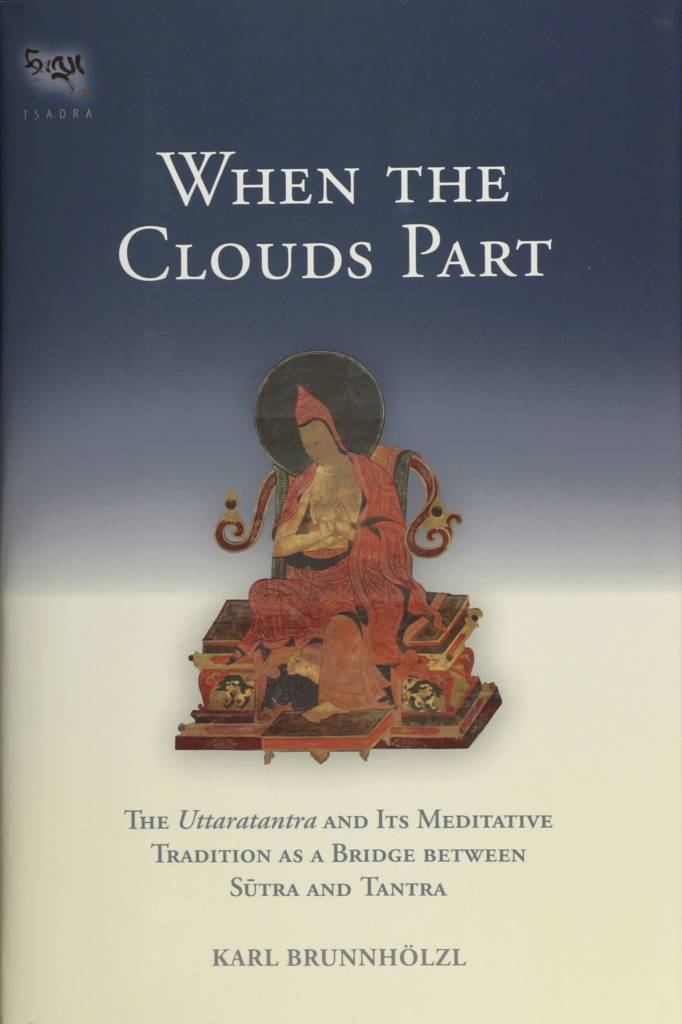
- Brunnhölzl, Karl, ed., trans. When the Clouds Part: The Uttaratantra and its Meditative Tradition as a Bridge between Sūtra and Tantra. Boston: Snow Lion Publications, an imprint of Shambhala Publications, 2014.
- Fuchs, Rosemarie. Buddha Nature: The Mahayana Uttaratantra Shastra. Commentary by Jamgön Kongtrül Lodrö Thayé "The Unassailable Lion's Roar." Ithaca, NY: Snow Lion Publications, 2000.
- Kilty, Gavin. The Tathāgata Essence Commentary to the First Chapter of the Uttaratantra, by Rinchen, Gyaltsap Darma (1364-1432). Unpublished, FPMT.
- Kano, Kazuo. "rNgog Blo‐ldan‐shes‐rabʹs Summary of the Ratnagotravibhāga: The First Tibetan Commentary on a Crucial Source for the Buddha‐nature Doctrine." Ph.D. Dissertation, University of Hamburg, 2006. Contains a critical edition in Wylie transliteration.
- Mathes, Klaus-Dieter. A Direct Path to the Buddha Within: Go Lotsāwa's Mahāmudrā Interpretation of the Ratnagotravibhāga. Boston: Wisdom Publications, 2008.
- Mathes, Klaus-Dieter. 'Gos Lo tsā ba gZhon nu dpal's Extensive Commentary on and Study of the Ratna-gotravibhāgavyākhyā. In Religion and Secular Culture in Tibet, 79-96. Proceedings of the Ninth Seminar of the International Association for Tibetan Studies (PIATS), Leiden, 2000. Brill's Tibetan Studies Library vol. 2, bk. 2 . Leiden : Brill, 2002.
- Mipham ('jam mgon 'ju mi pham rgya mtsho). A Commentary on the Uttaratantra Shastra (rgyud bla ma). Translated by Padmakara Translation Group, John Canti, forthcoming.
- Dzongsar Jamyang Khyentse Rinpoche. Buddha-Nature, Mahayana Uttaratantra Shastra, by Arya Maitreya. Edited by Alex Trisoglio. Khyentse Foundation, 2007.
- Obermiller, E., tr., Uttaratantra or Ratnagotra-vibhāga: The Sublime Science of the Great Vehicle to Salvation, Being a Manual of Buddhist Monism: The Work of Ārya Maitreya with a Commentary by Āryāsaṅga, Acta Orientalia 9 (1931): 81-306. Re-printed in Prasad, H. S., ed. The Uttaratantra of Maitreya, 1991. (Translated from Tibetan)
- Holmes, Ken and Katia Holmes. Maitreya on Buddha nature : A New Translation of Asaṅga's Mahāyāna Uttara Tantra Śāstra. Forres: Altea, 1999. (Translated from Tibetan)
- Holmes, Ken and Katia Holmes, trans. The Changeless Nature. Newcastle: Karma Kagyu Trust, 1985. (Translated from Tibetan)
- Prasad, H. S., ed. The Uttaratantra of Maitreya. Containing E.H. Johnston's Sanskrit text and E. Obermiller's English translation. Bibliotheca Indo-Buddhica, 79. Delhi: Sri Satguru Publications, 1991. (Translated from Tibetan)
- Takasaki, Jikido. A study on the Ratnagotravibhāga (Uttaratantra), being a treatise on the Tathāgatagarbha theory of Mahayana Buddhism. Serie Orientale Roma 33. Roma: Istituto Italiano per il Medio ed Estremo Oriente (ISMEO), 1966. (Translated from Sanskrit)
- Thrangu Rinpoche. The Uttara Tantra: A Treatise on Buddha Nature, translated by Ken Holmes and Katia Holmes, edited by Clark Johnson, Delhi: Sri Satguru Publications, 2001.
French Translations[edit]
- Loyon, Etienne, trans. Traité de la Continuité ultime du Grand Véhicule de Maitreya, avec le commentaire de Jamgœun Kongtrul Rimpoché, L'Inéluctable Rugissement du lion. With Commentary by Khenpo Tsultrim Gyamtso Rinpoche. 2007. Online Source: [1]
German Translations[edit]
- Buddha-Natur Mahayana-Uttaratantra-Shastra = Theg pa chen po rgyud bla maʼi bstan bcos kyi ʼgrel bśad. With Commentary by Dzongsar Jamyang Khyentse Rinpoche. Berlin Manjughosha Editions, 2017.
- Fuchs, Rosemarie, Tenzin Dordje. Ill., R. D. Salga, trans. Buddha-Natur : das Mahayana-Uttaratantra-Shastra Mit Kommentar "Das unerschütterliche Gebrüll des Löwen" / von Jamgön Kongtrül Lodrö Thaye und Erl. von Khenpo Tsültrim Gyamtso Rinpoche. Freiburg [Breisgau]; Eckernförde: Khampa-Ed., 2014.
The Mahāyānottaratantra Śāstra
ཐེག་པ་ཆེན་པོ་རྒྱུད་བླ་མའི་བསྟན་བཅོས།


Treatise on the Sublime Continuum or the Ratnagotravibhāga[edit]
The teaching that all sentient beings have Buddha-nature (tathāgatagarbha) was first proclaimed in the Tathāgatagarbhasūtra. Developed in a series of Mahāyāna sūtras, such as the Śrīmālādevīsūtra and Anūnatvāpūrṇatvanirdeśasūtra, it was then systematized in the Ratnagotravibhāga, which is also called the Mahāyānottaratantraśāstra or in Tibet, the Gyü Lama (རྒྱུད་བླ་མ་).[3]
How to Study[edit]
- Read
- Watch
- Study
Duis aute irure dolor in reprehenderit in voluptate velit esse cillum dolore eu fugiat nulla pariatur.
How to Contemplate[edit]
OMMMMMMMMMM MMMMMMMM MMMMMMMMMMM MMMMMMM. Excepteur sint occaecat cupidatat non proident, sunt in culpa qui officia deserunt mollit anim id est laborum.
How to Meditate[edit]
OMMMM MMMMMMM MMMMMMM MMMMMMMMM MMMMMMMMM. Excepteur sint occaecat cupidatat non proident, sunt in culpa qui officia deserunt mollit anim id est laborum.
The Gyü Lama[edit]
Author: Maitreya (Byams pa) or Maitreyanātha (Byams pa mgon po)
Sanskrit Title: Mahāyānottaratantraśāstra
Alternate Title: Ratnagotravibhāga
Tibetan Title: Theg pa chen po rgyud bla ma'i bstan bcos
Translated to Tibetan by: Sajjana and Blo ldan shes rab
Tibetan Catalogue: Tôh. no. 4024. Dergé Tanjur, vol. PHI, folios 54v.1-73r.7
The Gyü Lama (རྒྱུད་བླ་མ་), also called the Mahāyānottaratantra Śāstra (ཐེག་ཆེན་རྒྱུད་བླ་མའི་བསྟན་བཅོས་), the Ratnagotravibhāga (RGV), or simply the Uttaratantra, is one of the most important texts of the Yogācāra tradition that expounds the tathāgatagarbha (buddha nature) theory, the idea that all sentient beings possess the nature of a buddha.[4] The Tibetan Buddhist tradition holds the Ratnagotravibhāga to be one of the Five Treatises that Maitreya taught to Asaṅga (4th century?). According to Klaus-Dieter Mathes, the Ratnagotravibhāga was largely ignored until the eleventh century when Indian scholars and adepts attempted to bring the tantric teachings in line with mainstream Mahāyāna.[5] The Ratnagotravibhāga and buddha nature theory provided the necessary doctrinal support for this kind of work, paving the road for its entry and subsequent importance within the Tibetan Buddhist dialogue.
As a whole, the Ratnagotravibhāga consists of three parts: (1) basic verses, (2) commentarial verses and (3) prose commentary, the third being the vyākhyā, the commentary attributed to Asaṅga.[6] Issues with regards to authorship arise when comparing the Sanskrit, Chinese and Tibetan texts, as the only extant Sanskrit version[7] attributes no author, and the only Chinese version, translated by Ratnamati sometime after 508[8], attribues the entire text to Sāramati.[9] (You can see various interpretations of the RGV authorship here.)
The only extant Tibetan version of the Ratnagotravibhāga was translated by rNgog Blo-ldan-shes-rab (1059–1109) and Sajjana (late 11th cent.),[10] though according to gZhon-nu-dpal there were a total of six translations made, the first by Atiśa (982–1054) and Nag-tsho Tshul-khrims-rgyal-ba (1011–1064).[11] rNgog Blo-ldan-shes-rab wrote the first commentary on the RGV[12] officially bringing it into Tibetan discourse at the end of the 11th century, from which point, the various Tibetan interpretations of the buddha nature theory take off. Mathes points to the main issue in the various interpretations as being whether the teaching that all beings are buddhas is provisional or definitive in meaning.[13] Over the next nine centuries, 45 commentaries were written on the Ratnagotravibhāga alone[14], and the text was referenced in "different ways to doctrinally support disputed traditions, such as the zhentong (gzhan stong) ("empty of other") of the Jonangpas (Jo nang pa) or sūtra-based mahāmudrā."[15] The text also serves as an important basis for both the Dzogchen tradition of Longchenpa and the Mahamudra tradition of the Kagyüpas.[16]
| Version | Catalogue # | Category | Vol. | Folio #'s | Alt |
|---|---|---|---|---|---|
| Peking | 5525 | sems tsam | phi | 54b7-74b6 | (vol.108, p.24-32) |
| Dergé (Tôh.) | 4024 | sems tsam | phi | 54b1-73a7 | |
| Narthang | 4314 | sems tsam | phi | 48b3-69a3. | |
| Kinsha [18] | 3524 | sems tsam | phi | 64b1 | (p.33-3-1) |
| Cone | 3991 | sems tsam | phi | 51b1-69b1. |
The emphasis of this site is to provide information on the resources available in the study of the Ratnagotravibhāga and all of its interpretations within the Tibetan Buddhist milieu. The information presented here is far from complete and will continue to develop as new scholarship arises. We welcome any feedback, and if you see any omissions or errors, please let us know via email.
The Five Dharmas of Maitreya[edit]
- The Ornament of Clear Realization
- Skt. Abhisamayālaṃkāra
- Tib. མངོན་རྟོགས་པའི་རྒྱན་
- Wyl. mngon par rtogs pa'i rgyan
- The Ornament of the Mahayana Sutras
- Skt. Māhayānasūtrālaṃkāra
- Tib. ཐེག་པ་ཆེན་པོའི་མདོ་སྡེ་རྒྱན་
- Wyl. theg pa chen po'i mdo sde rgyan
- Distinguishing the Middle from the Extremes
- Skt. Madhyāntavibhāga
- Tib. དབུས་དང་མཐའ་རྣམ་པར་འབྱེད་པ་
- Wyl. dbus dang mtha' rnam par 'byed pa
- Distinguishing Dharma and Dharmata
- Skt. Dharma-dharmatā-vibhāga
- Tib. ཆོས་དང་ཆོས་ཉིད་
- Wyl. chos dang chos nyid rnam par 'byed pa
- The Sublime Continuum
- Skt. Uttaratantra Śāstra
- Tib. རྒྱུད་བླ་མ་
- Wyl. rgyud bla ma
Resources[edit]
- Maitreya's Mahāyānottaratantraśāstra, Texts & Translations
- Asaṅga's Mahāyānottaratantraśāstravyākhyā, Texts & Translations
- Select Tibetan Commentaries & Translations
- Selected Bibliography of Books, Articles, Dissertations & Other Resources
- Tibetan Catalogue of Mahāyānottaratantraśāstra
- Tibetan Catalogue of Mahāyānottaratantraśāstravyākhyā
- Extensive List of Tibetan Commentaries
- Transmission Lineages of the Ratnagotravibhāga according to Jamgon Kongtrol
BDRC Content[edit]

- Bibliographical Title
- theg pa chen po rgyud bla ma'i bstan bcos
- Other Title
- mahayanottaratantrasastra
- Page Numbers
- 109-148 in Volume 123 of Work W23703
- Location
- ff. 54v-73r
- Authorship
- byams pa (author); sajjana (translator); blo ldan shes rab
- Tohoku Catalog Num.
- 4024
- Citation
- tshul khrims rin chen. "theg pa chen po rgyud bla ma'i bstan bcos." In bstan 'gyur (sde dge). TBRC W23703. 123: 109 - 148. delhi: delhi karmapae choedhey, gyalwae sungrab partun khang, 1982-1985. http://tbrc.org/link?RID=O1GS6011%7CO1GS601137645$W23703
- Bibliographical Title
- theg pa chen po rgyud bla ma'i bstan bcos/
- Title Page Title
- mahayana uttara tantara sastra
- Page Numbers
- 100-141 in Volume 132 of Work W22704
- Location
- vol.132,ff.48v-69r (pp.96-137)
- Colophon
- theg pa chen po rgyud bla ma'i bstan bcos/ mgon po byams pas mdzad pa rdzogs so/ /dpal grong khyer dpe med kyi mkhas pa chen po/ bram ze rin chen rdo rje'i dpon po paN+Di ta mkhas pa chen po sa dza na dang / lo tsA ba shAkya'i dge slong blo ldan shes rab kyis/ grong khyer dpe med de nyid du bsgyur pa'o//
- gSer bris Catalog Num.
- 3528
- Otani, Beijing Catalog Num.
- 5525
- Citation
- "theg pa chen po rgyud bla ma'i bstan bcos/." In bstan 'gyur (snar thang). TBRC W22704. 132: 100 - 141. [narthang]: [s.n.], [1800?]. http://tbrc.org/link?RID=O2DB75712%7CO2DB757122DB79425$W22704
- Bibliographical Title
- theg pa chen po rgyud bla ma'i bstan bcos/
- Other Title
- mahayanottaratantrasastra
- Page Numbers
- 109-143 in Volume 123 of Work W1GS66030
- Location
- ff. 51r-68r
- Authorship
- byams pa (author); sajjana (translator); blo ldan shes rab
- Tohoku Catalog Num.
- 4024
- Citation
- grags pa bshad sgrub . "theg pa chen po rgyud bla ma'i bstan bcos/." In bstan 'gyur (co ne). TBRC W1GS66030. 123: 109 - 143. [co ne dgon chen]: [co ne], [1926]. http://tbrc.org/link?RID=O2DB20796%7CO2DB207962DB24440$W1GS66030
- Bibliographical Title
- theg pa chen po rgyud bla ma'i bstan bcos/
- Other Title
- mahayanottaratantrasastra
- Page Numbers
- 958-1009 in Volume 70 of Work W1PD95844
- Location
- pp. 935-986
- Authorship
- byams pa (author); sajjana (translator); blo ldan shes rab
- Tohoku Catalog Num.
- 4024
- Bibliographical Title
- theg pa chen po rgyud bla ma'i bstan bcos
- Title Page Title
- mahayana uttara tantara sastra
- Page Numbers
- 129-180 in Volume 132
- Location
- vol.132,ff.64r-89v(pp.127-178)
- Colophon
- theg pa chen po rgyud bla ma'i bstan bcos/ mgon po byams pas mdzad pa rdzogs so/ /dpal grong khyer dpe med kyi mkhas pa chen po/ bram ze rin chen rdo rje'i dpon po paN+Di ta mkhas pa chen po sa dza na dang / lo tsA ba shAkya'i dge slong blo ldan shes rab kyis/ grong khyer dpe med de nyid du bsgyur pa'o
- gSer bris Catalog Num.
- 3528
- Otani, Beijing Catalog Num.
- 5525
- Citation
- "theg pa chen po rgyud bla ma'i bstan bcos." In bstan 'gyur/?gser bris ma/?. TBRC W23702. 132: 129 - 180. tibet: [snar thang], [17-?]. http://tbrc.org/link?RID=O00CR0008%7CO00CR000800CR034422$W23702
When The Clouds Part by Karl Brunnhölzl[edit]
Secondary Sources and Further Studies[edit]
- Duckworth, Douglas. Mipam on Buddha-Nature: The Ground of the Nyingma Tradition. New York: SUNY Press, 2008.
- Dzongsar Jamyang Khyentse Rinpoche. Buddha-Nature, Mahayana Uttaratantra Shastra, by Arya Maitreya. Edited by Alex Trisoglio. Khyentse Foundation, 2007.
- Fuchs, Rosemarie. Buddha Nature: The Mahayana Uttaratantra Shastra. Commentary by Jamgön Kongtrül Lodrö Thayé "The Unassailable Lion's Roar." Ithaca, NY: Snow Lion Publications, 2000.
- Holmes, Ken and Katia Holmes. Maitreya on Buddha nature : A New Translation of Asaṅga's Mahāyāna Uttara Tantra Śāstra. Forres: Altea, 1999. (Translated from Tibetan)
- Holmes, Ken and Katia Holmes, trans. The Changeless Nature. Newcastle: Karma Kagyu Trust, 1985. (Translated from Tibetan)
- Kilty, Gavin. The Tathāgata Essence Commentary to the First Chapter of the Uttaratantra, by Rinchen, Gyaltsap Darma (1364-1432). Unpublished, FPMT.
- Kano, Kazuo. "rNgog Blo‐ldan‐shes‐rabʹs Summary of the Ratnagotravibhāga: The First Tibetan Commentary on a Crucial Source for the Buddha‐nature Doctrine." Ph.D. Dissertation, University of Hamburg, 2006. Contains a critical edition in Wylie transliteration.
- Kano, Kazuo. "Buddha-Nature and Emptiness: rNgog Blo-ldan-shes-rab and A Transmission of the Ratnagotravibhāga from India to Tibet." WSTB 91. Wiener Studien zur Tibetologie und Buddhismuskunde (Vienna Series for Tibetan and Buddhist Studies). Vienna: Arbeitskreis für Tibetische und Buddhistische Studien, 2016.
- Mathes, Klaus-Dieter. A Direct Path to the Buddha Within: Go Lotsāwa's Mahāmudrā Interpretation of the Ratnagotravibhāga. Boston: Wisdom Publications, 2008.
- Mathes, Klaus-Dieter. 'Gos Lo tsā ba gZhon nu dpal's Extensive Commentary on and Study of the Ratna-gotravibhāgavyākhyā. In Religion and Secular Culture in Tibet, 79-96. Proceedings of the Ninth Seminar of the International Association for Tibetan Studies (PIATS), Leiden, 2000. Brill's Tibetan Studies Library vol. 2, bk. 2 . Leiden : Brill, 2002.
- Mipham ('jam mgon 'ju mi pham rgya mtsho). A Commentary on the Uttaratantra Shastra (rgyud bla ma). Translated by Padmakara Translation Group, John Canti, forthcoming.
- Obermiller, E., tr., Uttaratantra or Ratnagotra-vibhāga: The Sublime Science of the Great Vehicle to Salvation, Being a Manual of Buddhist Monism: The Work of Ārya Maitreya with a Commentary by Āryāsaṅga, Acta Orientalia 9 (1931): 81-306. Re-printed in Prasad, H. S., ed. The Uttaratantra of Maitreya, 1991. (Translated from Tibetan)
- Prasad, H. S., ed. The Uttaratantra of Maitreya. Containing E.H. Johnston's Sanskrit text and E. Obermiller's English translation. Bibliotheca Indo-Buddhica, 79. Delhi: Sri Satguru Publications, 1991. (Translated from Tibetan)
- Stearns, Cyrus. The Buddha From Dolpo: A Study of the Life and Thought of the Tibetan Master Dolpopa Sherab Gyaltsen. Tsadra Foundation Series. Ithaca, NY: Snow Lion Publications, 2010.
- Takasaki, Jikido. A study on the Ratnagotravibhāga (Uttaratantra), being a treatise on the Tathāgatagarbha theory of Mahayana Buddhism. Serie Orientale Roma 33. Roma: Istituto Italiano per il Medio ed Estremo Oriente (ISMEO), 1966. (Translated from Sanskrit)
- Thrangu Rinpoche. The Uttara Tantra: A Treatise on Buddha Nature, translated by Ken Holmes and Katia Holmes, edited by Clark Johnson, Delhi: Sri Satguru Publications, 2001.
Videos[edit]
Notes[edit]
- Besides this text, the only other two known Indian “commentaries” on the Uttaratantra are Vairocanarakṣita’s (eleventh century) very brief ahāyānottaratantraṭippaṇī (eight folios) and Sajjana’s (eleventh/twelfth century) Mahāyānottaratantraśāstropadeśa (a summary in thirty-seven verses). Brunnholzl, K. Luminous Heart pg 403 note 24
- For an extensive list of Tibetan Commentaries, see A List of the Commentaries on the Ratnagotravibhāga
- Kano, Kazuo, rṄog Blo ldan śes rab's position on the Buddha-nature doctrine and its influence on the early gSaṅ phu tradition. Journal of the International Association of Buddhist Studies 32, no. 1-2 (2009) 2010: 249-283.
- Mathes, A Direct Path to the Buddha Within, 2
- Ibid.
- Kano, RNgog Blo‐ldan‐shes‐rabʹs Summary of the Ratnagotravibhāga: The First Tibetan Commentary on a Crucial Source for the Buddha‐nature Doctrine, 17
- critically edited by Johnston in Prasad, H. S., ed. The Uttaratantra of Maitreya. Containing E.H. Johnson's Sanskrit text and E. Obermiller's English translation. Bibliotheca Indo-Buddhica, 79. Delhi: Sri Satguru Publications, 1991.
- Kano, RNgog Blo‐ldan‐shes‐rabʹs Summary of the Ratnagotravibhāga, 17
- For a detailed discussion regarding the authorship of the verses and prose, see Kano, RNgog Blo‐ldan‐shes‐rabʹs Summary of the Ratnagotravibhāga; Takasaki, A study on the Ratnagotravibhāga (Uttaratantra), being a treatise on the Tathāgatagarbha theory of Mahayana Buddhism
- Kano, RNgog Blo‐ldan‐shes‐rabʹs Summary of the Ratnagotravibhāga, 89
- Ibid. 90
- (a) Atiśa (982–1054) and Nag-tsho Tshul-khrims-rgyal-ba (1011–1064)
- (b) rNgog Blo-ldan-shes-rab (1059–1109) and Sajjana (late 11th cent.)
- (c) sPa-tshab Nyi-ma-grags (b.1055)
- (d) Mar-pa Do-pa Chos-kyi-dbang-phyug (1042–1136)
- (e) Jo-nang Lo-tsā-ba Blo-gros-dpal (1299–1353 or 1300–1355)
- (f) Yar-klungs Lo-tsā-ba Grags-pa-rgyal-mtshan (1242–1346)
- Translated in Kazuo's Ph.D. dissertation, "rNgog Blo‐ldan‐shes‐rabʹs Summary of the Ratnagotravibhāga: The First Tibetan Commentary on a Crucial Source for the Buddha‐nature Doctrine
- Mathes, A Direct Path to the Buddha Within, 3
- Burchardi, A Provisional List of Tibetan Commentaries on the Ratnagotravibhāga; Kano, RNgog Blo‐ldan‐shes‐rabʹs Summary of the Ratnagotravibhāga (See Appendix G)
- Mathes, A Direct Path to the Buddha Within, 3
- Ibid., 1
- Catalogue information from Phil Stanley and http://web.otani.ac.jp/cri/twrp/tibdate/Peking_online_search.html
- Golden Manuscript - Tengyur